Ion Șinca · The places
Where he painted
Of the 216 documented works, 83 also say where they were painted — in the title, in a note, or among the motifs. This page puts them on a map.
What shows up at once: his world was small. Not poor — small. Most of it came out of a circle some twenty-five kilometres across, between Brebu, Cornu and Pietriceaua, which you can drive across in half an hour. He went back to the same places for twenty years.
The one distant place he returned to just as stubbornly is the sea. The whole „Țărm” (Shore) series — eight works between 1990 and 2010 — was painted at Vama Veche, from the same cliff, always looking down. The white cliff in the title of the 1990 work is that cliff.
The country
At the scale of Romania. The larger the dot, the more works; the nine places in Prahova sit in a single dot.
The circle
The same places in Prahova, at their true scale. No country outline: at twenty kilometres, borders say nothing — distances do.
Ploiești
Prahova County25 works1988—2014
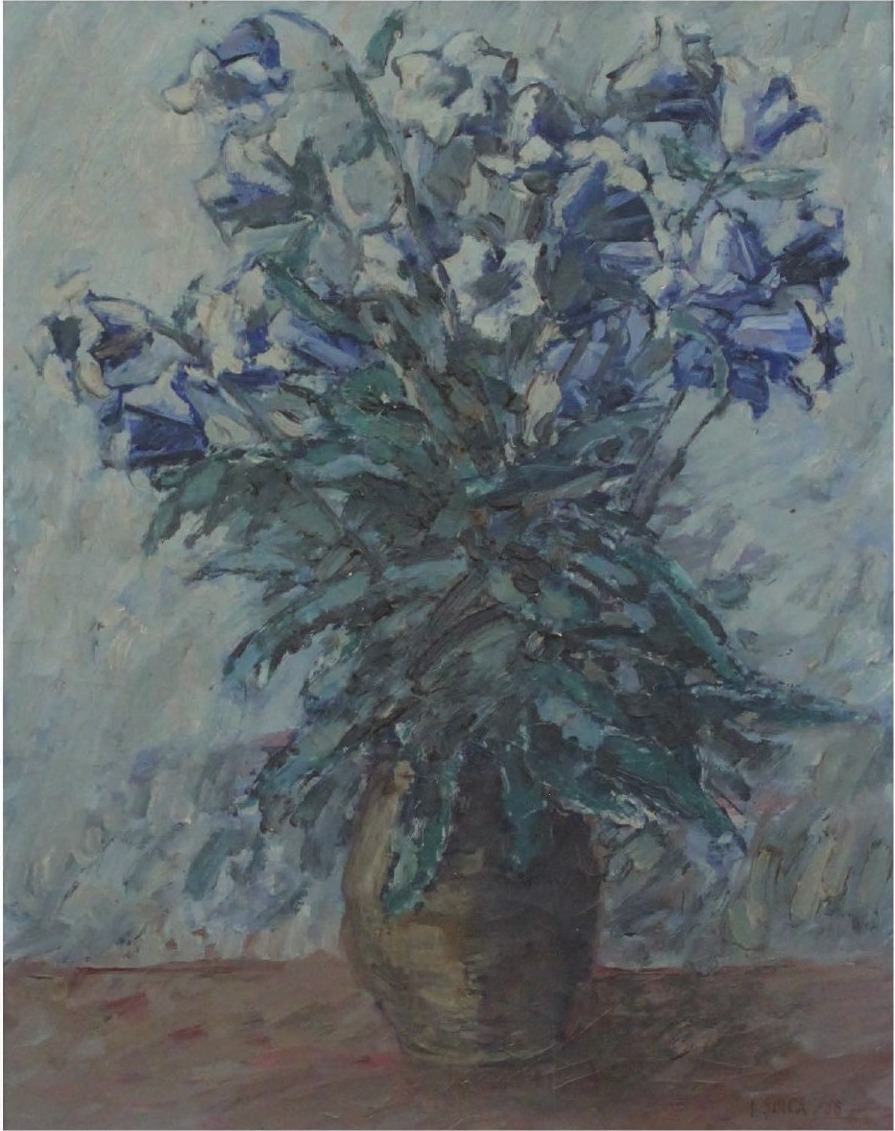
Blue Flowers
1988 · oil on canvas · 32 × 40 cm
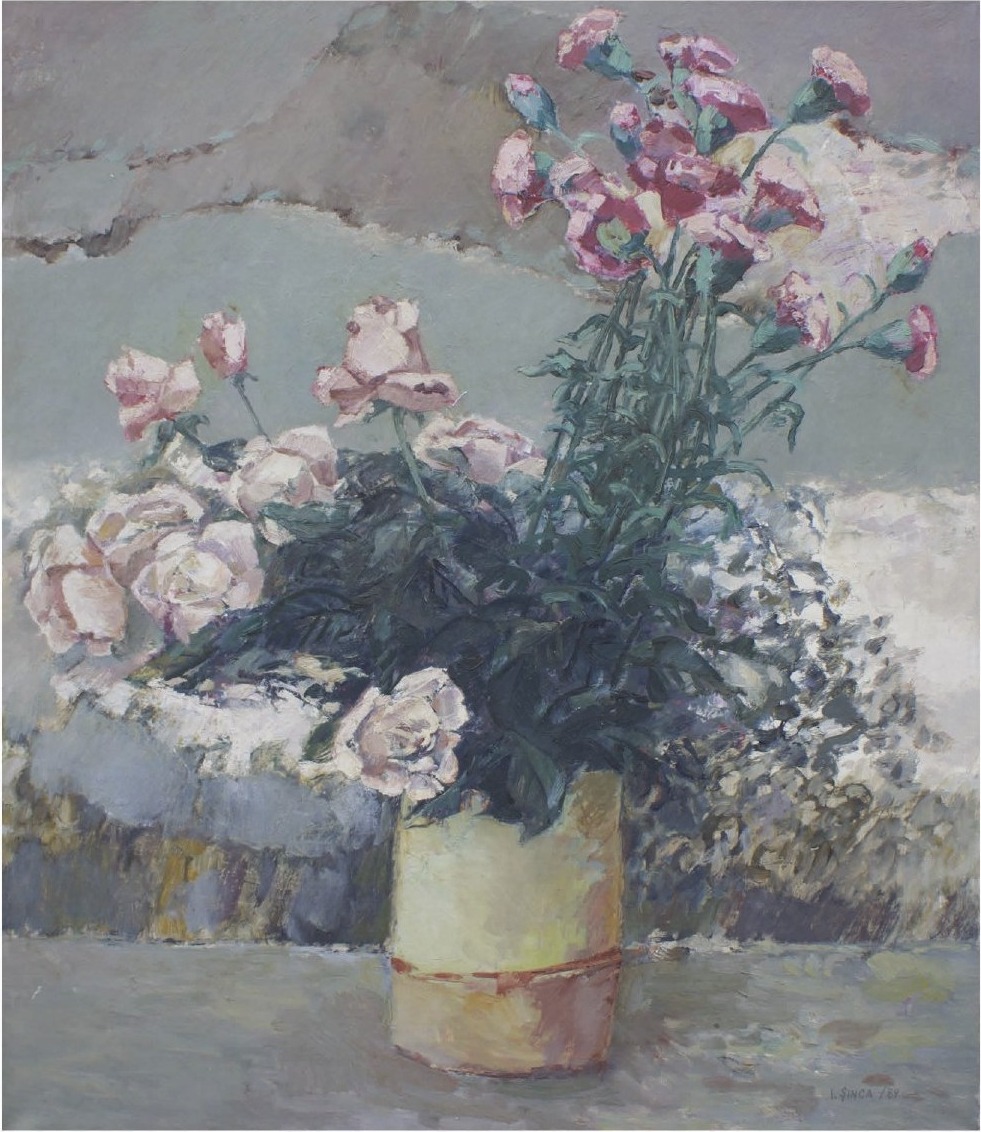
Homage
1989 · oil on canvas · 54 × 65 cm
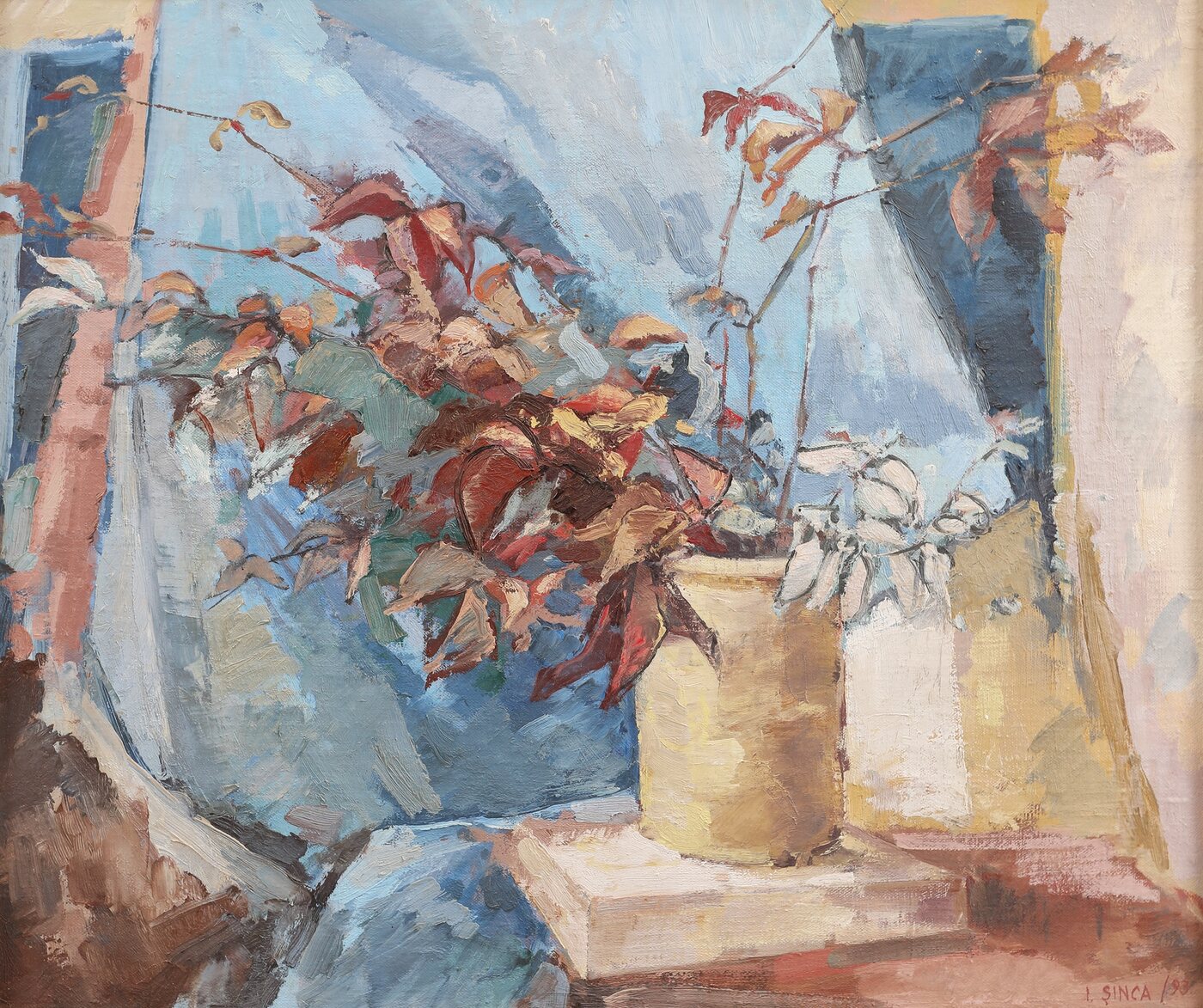
Still Life with Flowers
1993 · oil on canvas · 54.5 × 47.5 cm
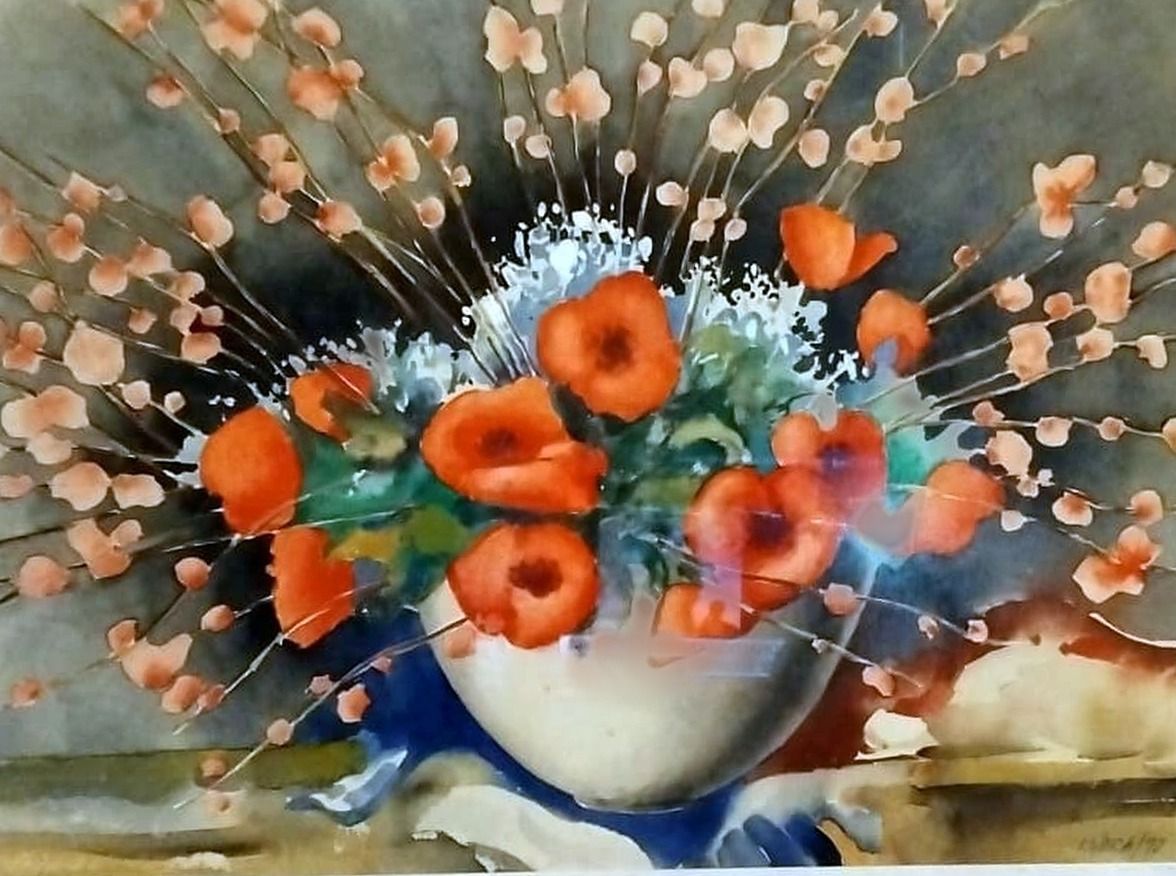
Poppies
1997 · watercolour · 40 × 30 cm
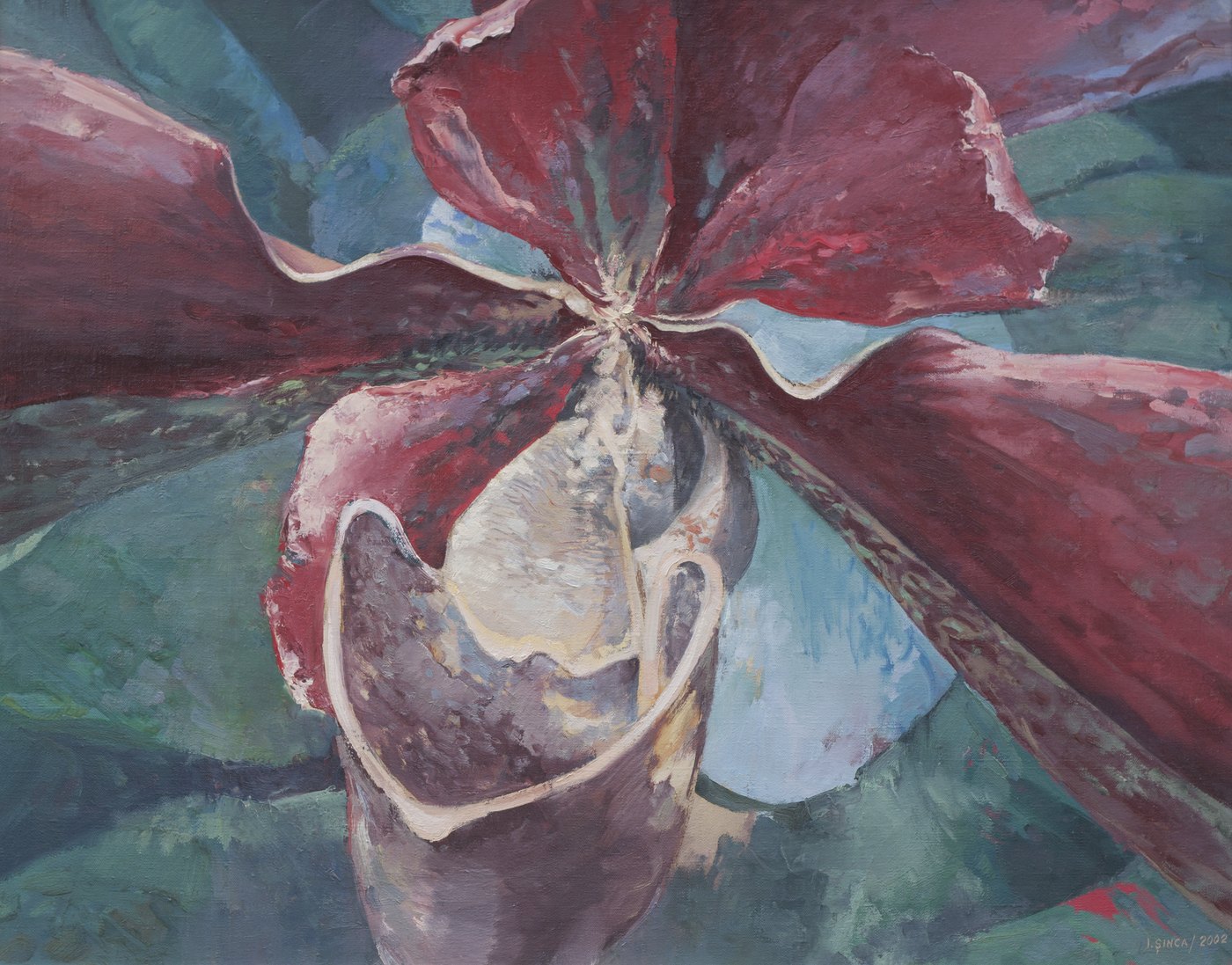
Flower (detail) / Orchid
2002 · oil on canvas · 81 × 65 cm
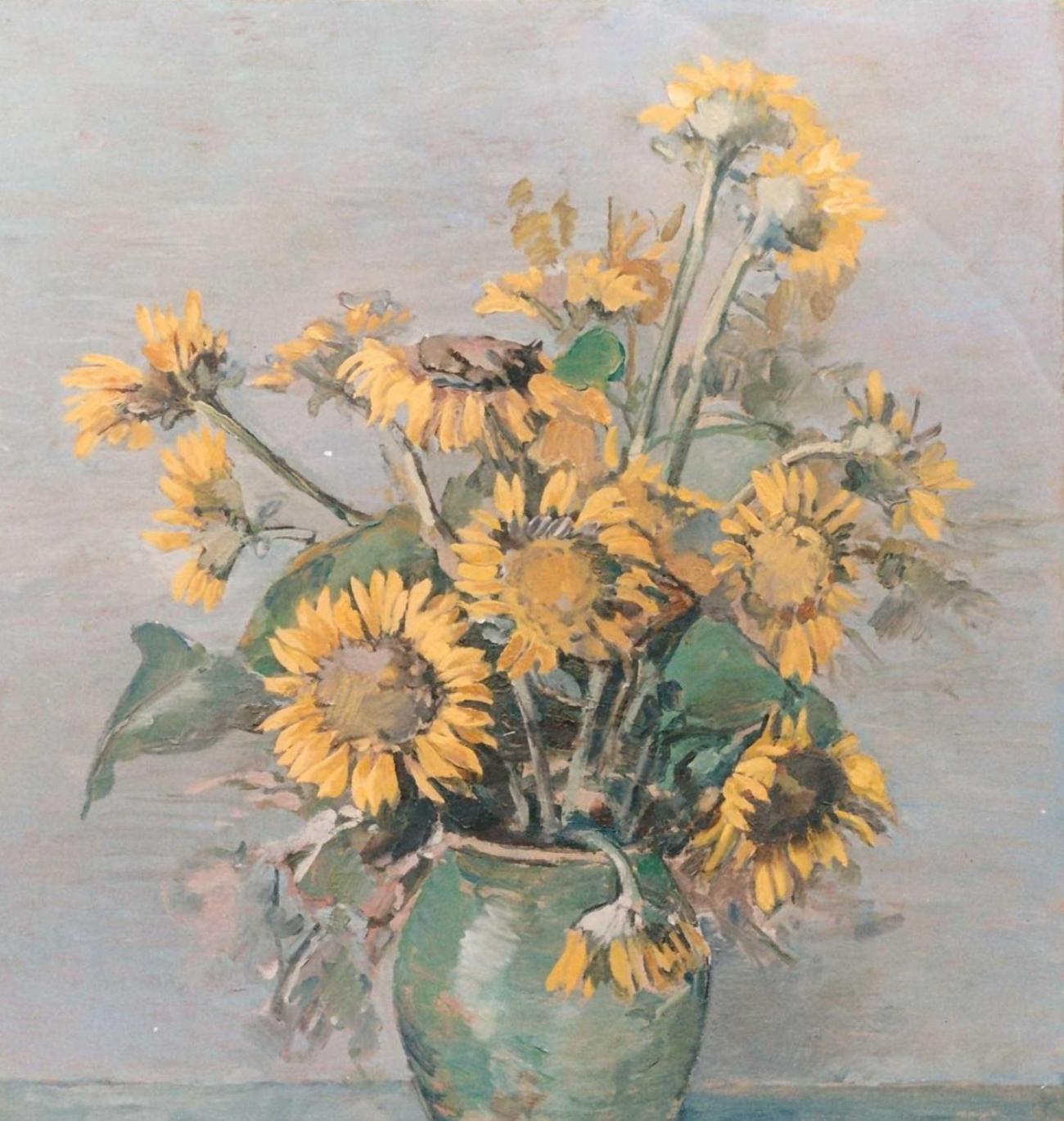
Sunflower
2002 · oil on canvas · approx. 64 × 61 cm
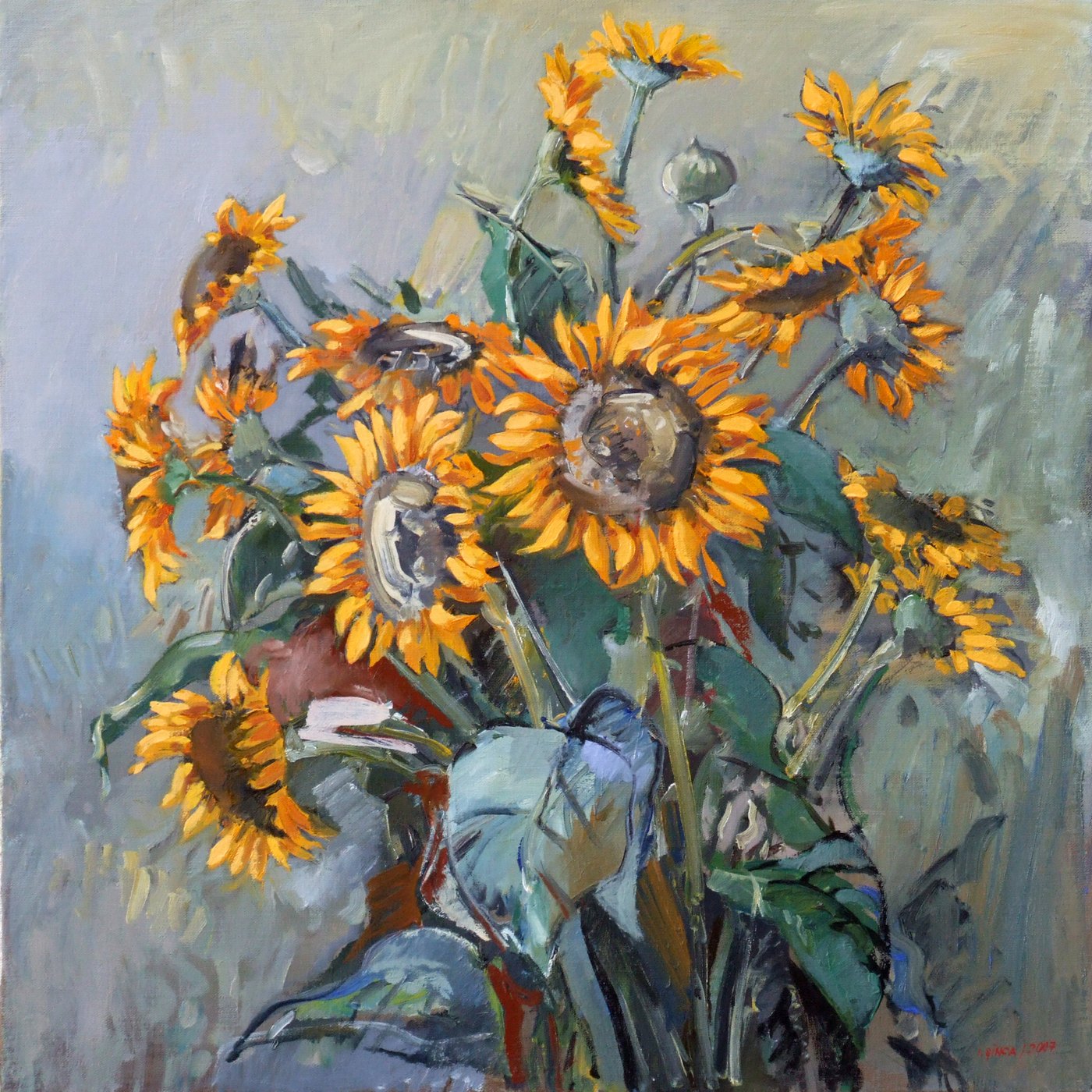
Sunflower
2007 · oil on canvas, 55 × 55 cm
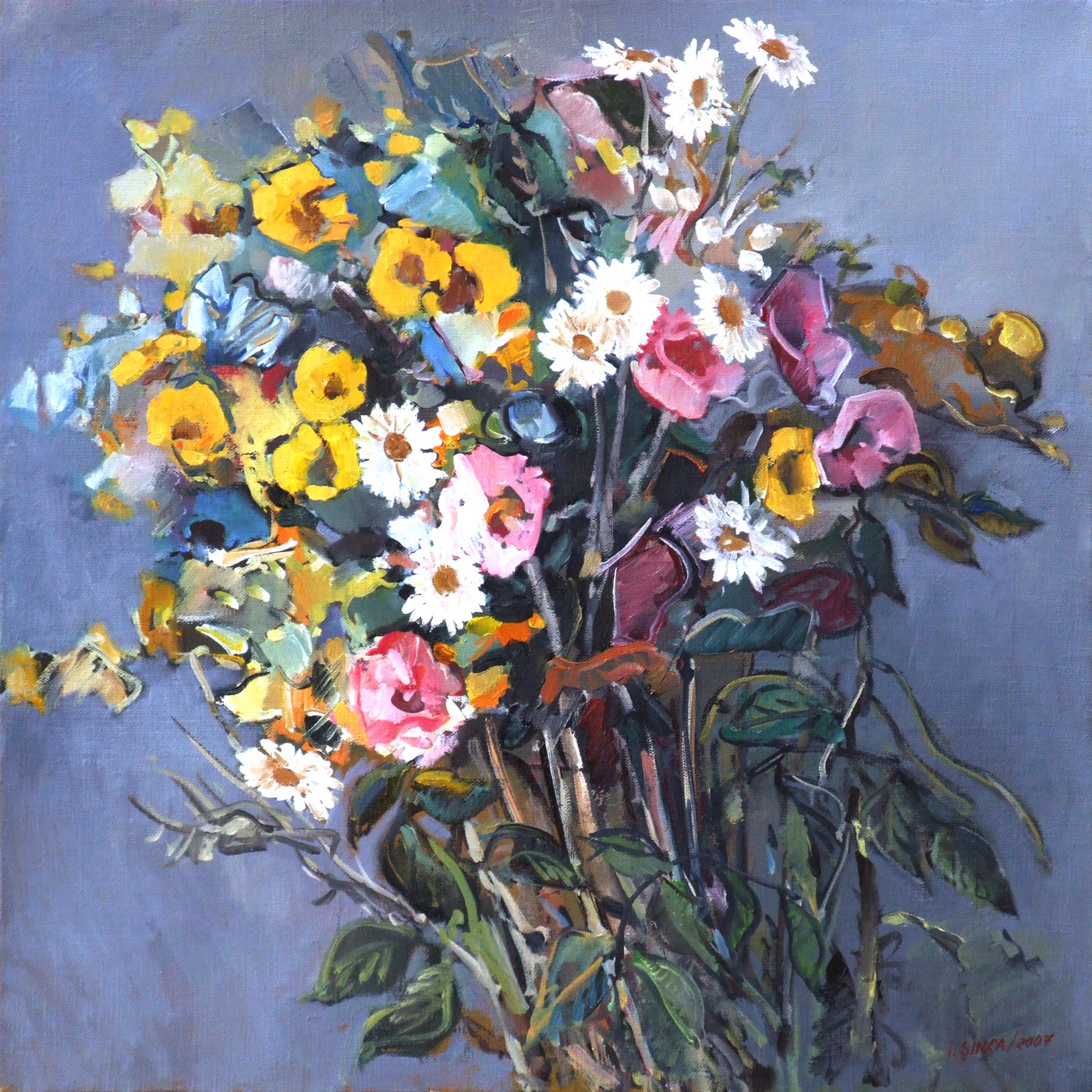
Flowers
2007 · oil on canvas, 50 × 50 cm
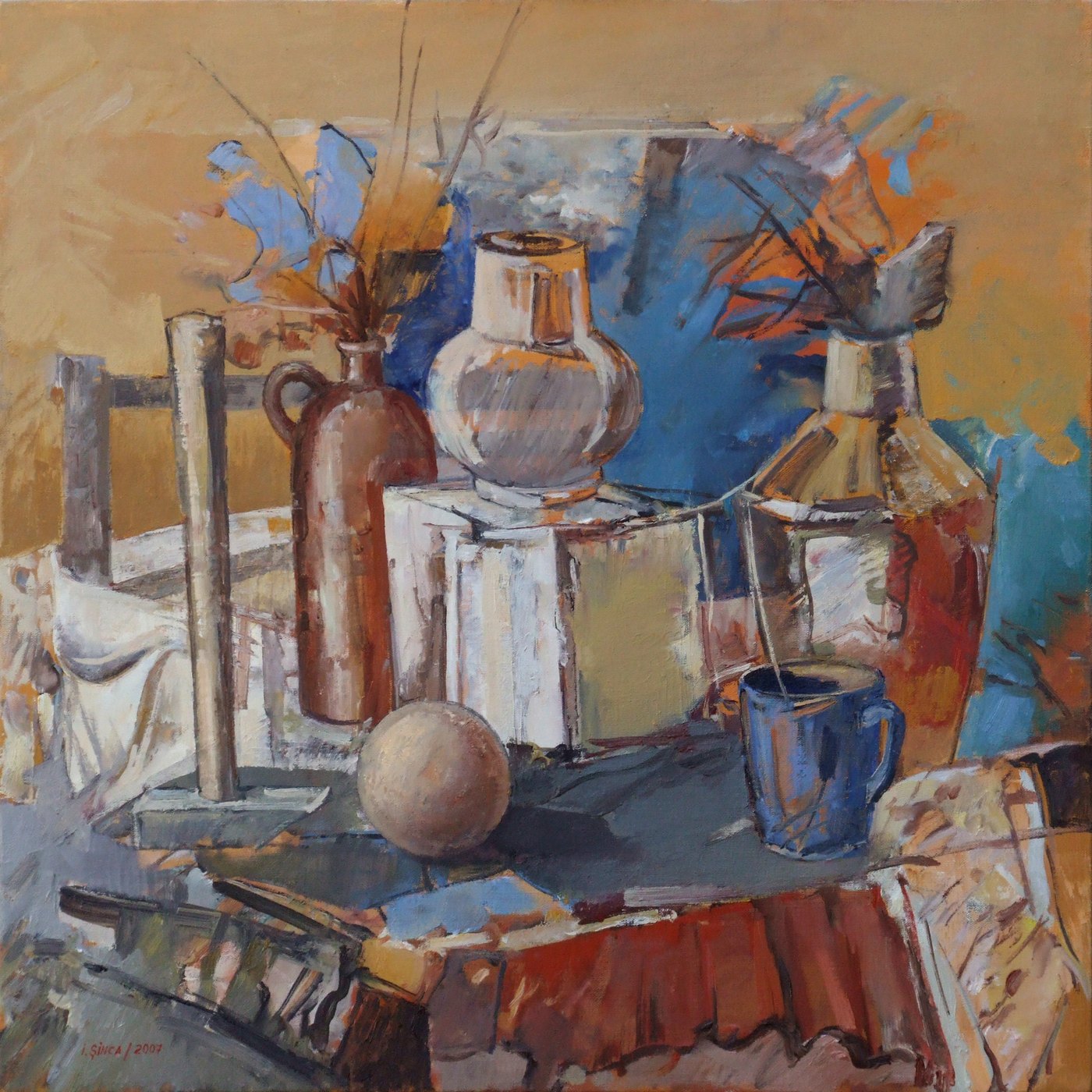
Group of Objects with Sphere
2007 · oil on canvas, 65 × 65 cm
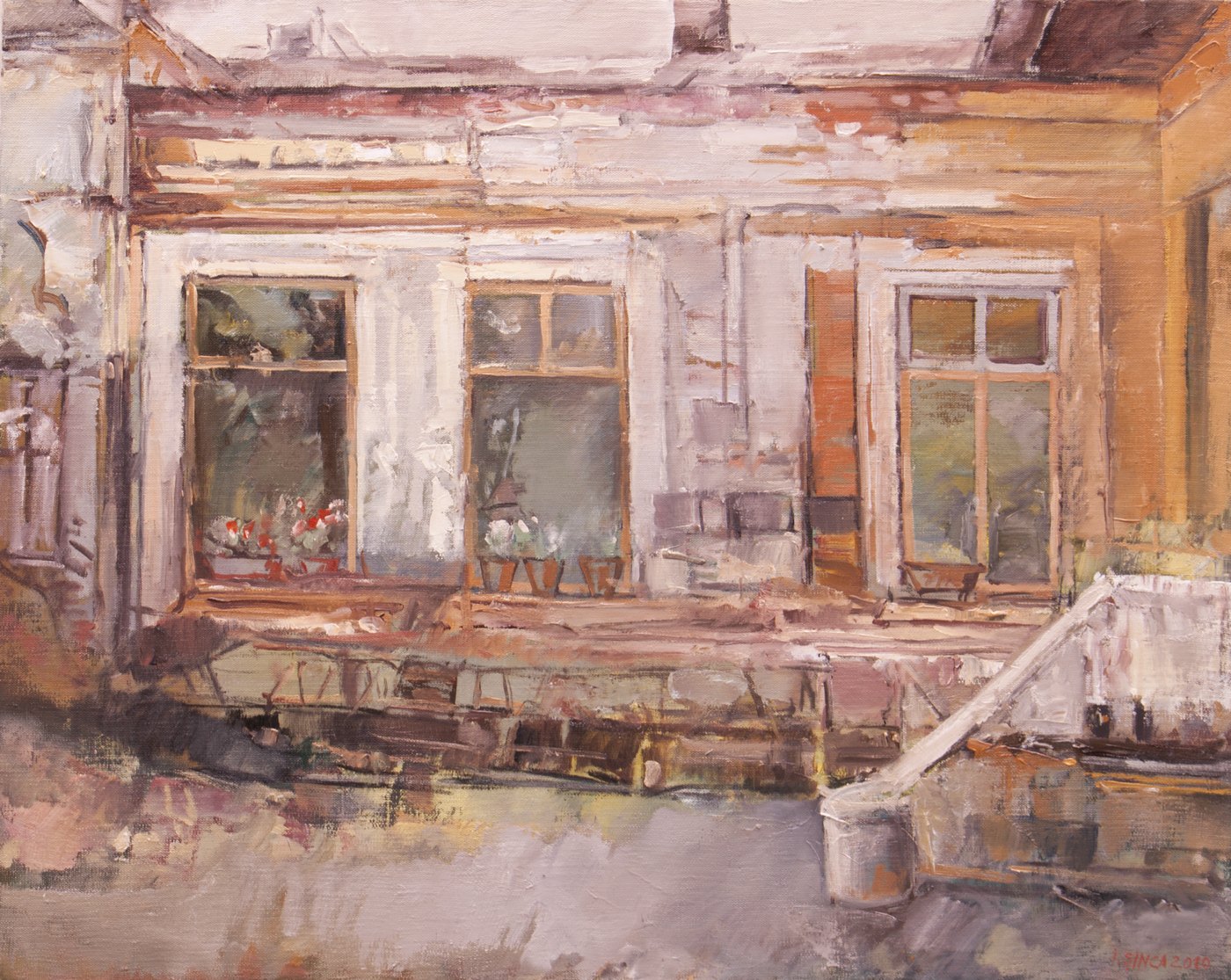
Ion Creangă 15 (the studio)
2010 · oil on canvas · 72 × 57 cm
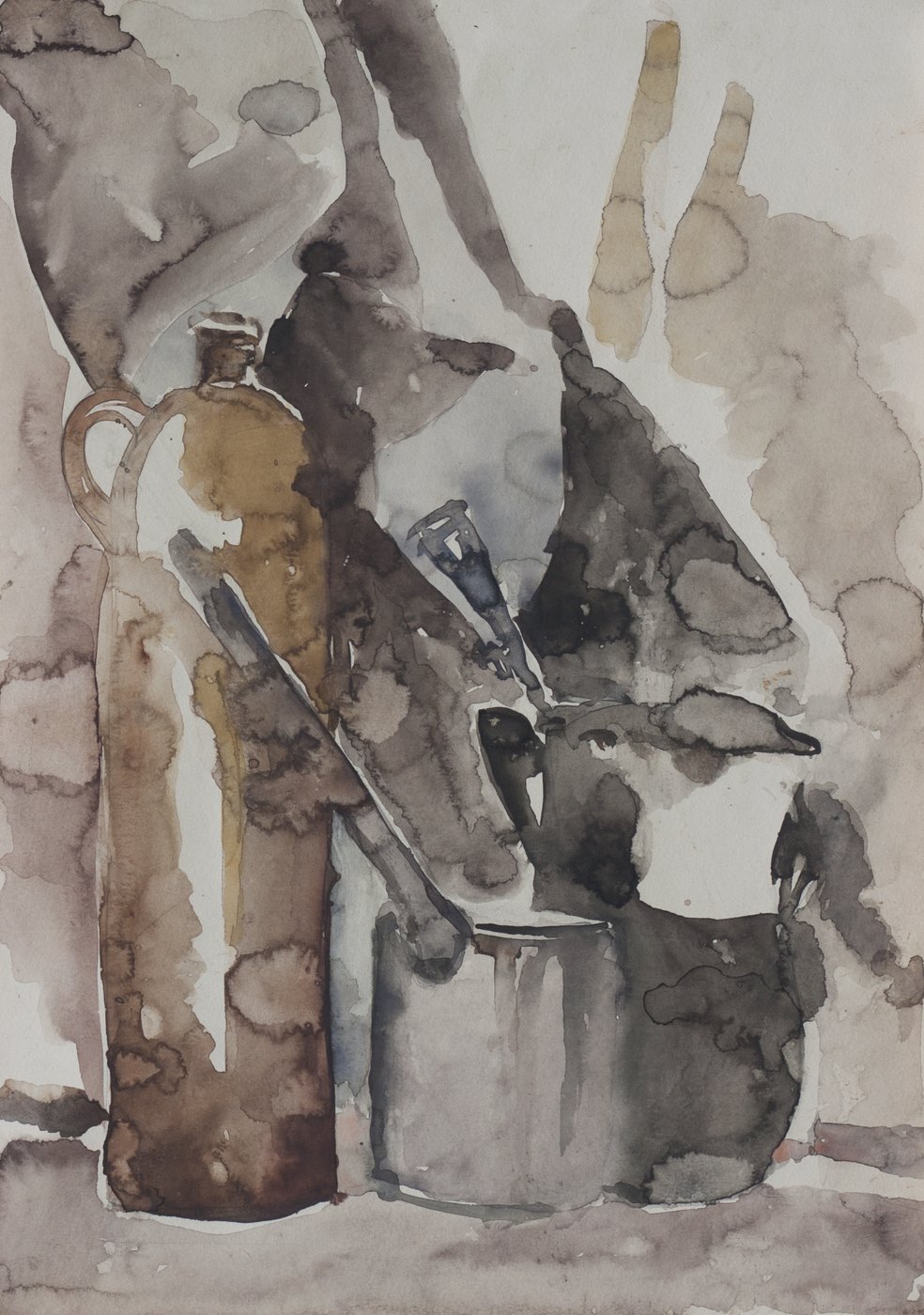
Still Life
2011 · watercolour · 30 × 42 cm
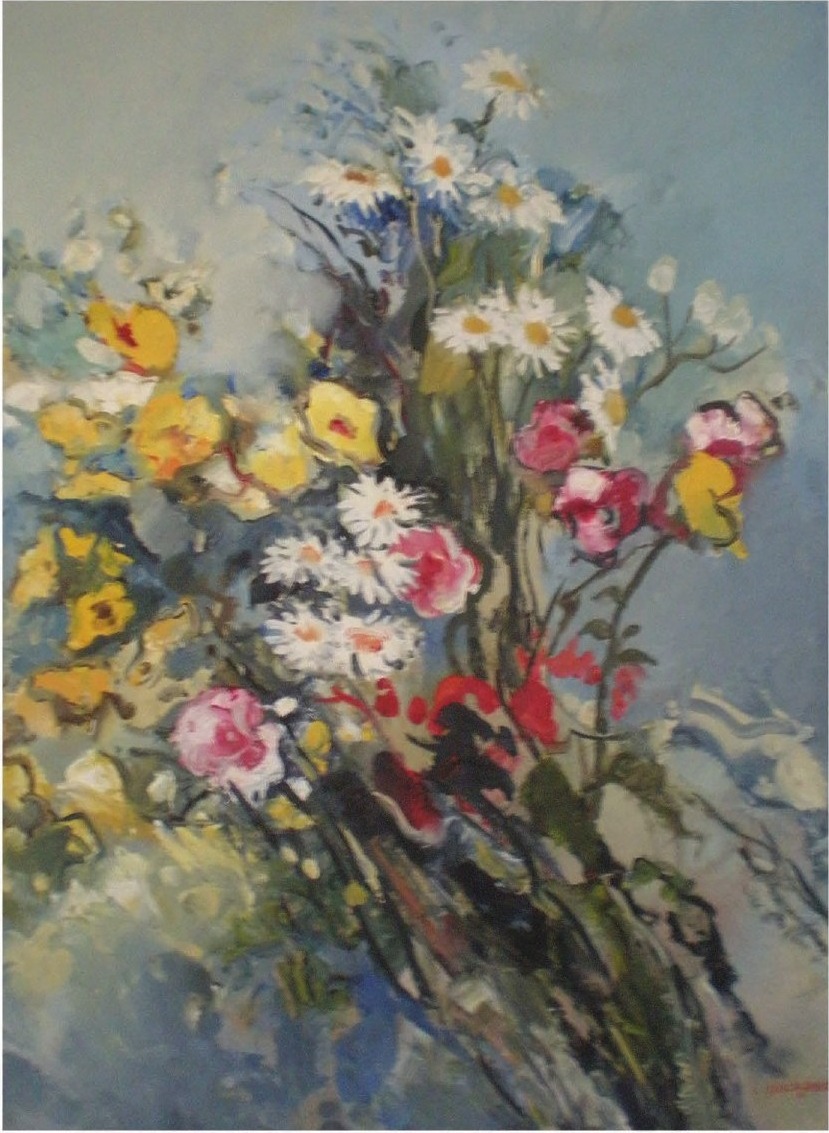
Flowers
2012 · oil on canvas · 45 × 55 cm
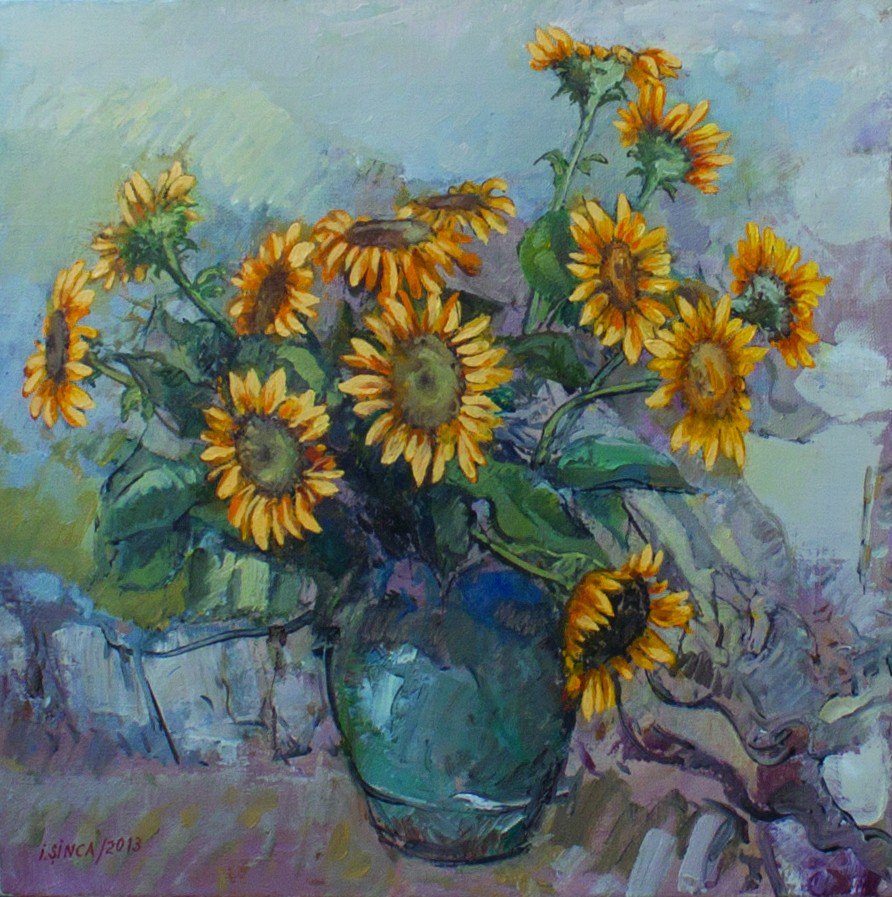
Sunflower
2013 · oil on canvas · 43.5 × 43.5 cm
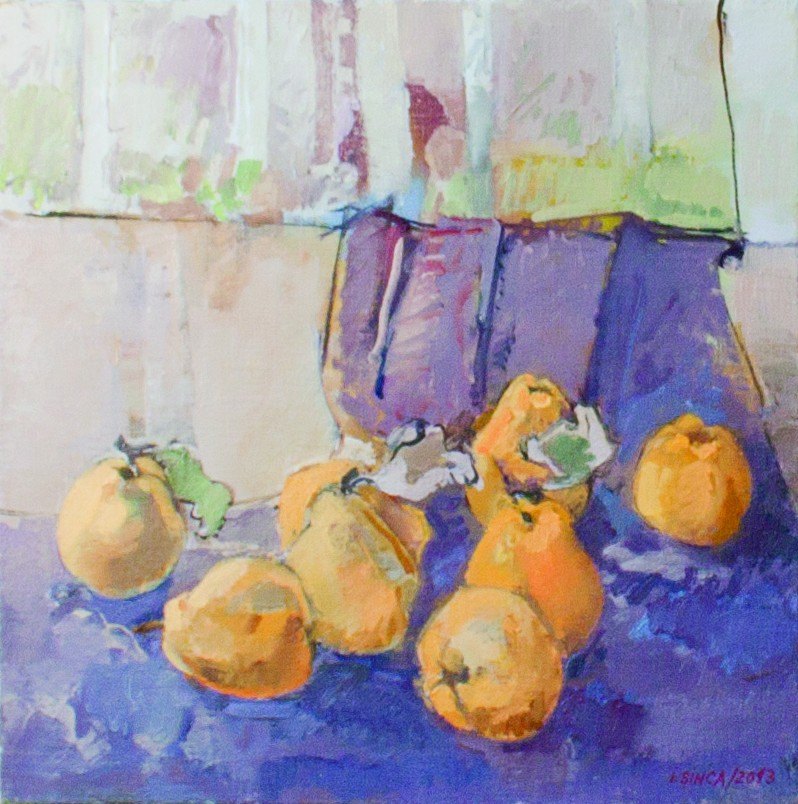
Quince Tree
2013 · oil on canvas · 39 × 39 cm
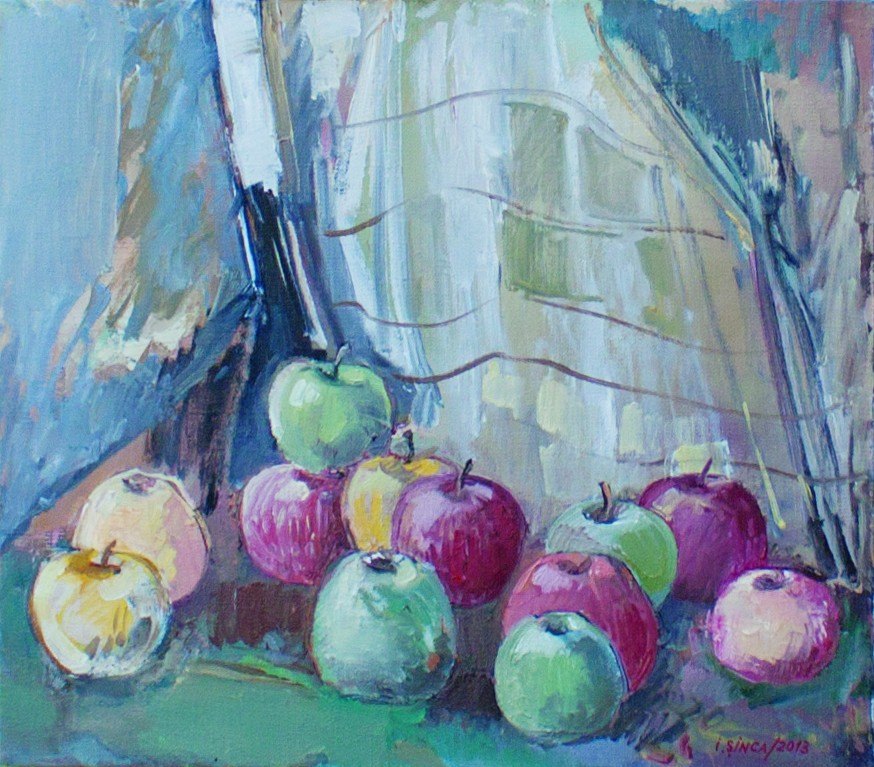
Mere și draperie
2013 · oil on canvas · 42 × 37 cm
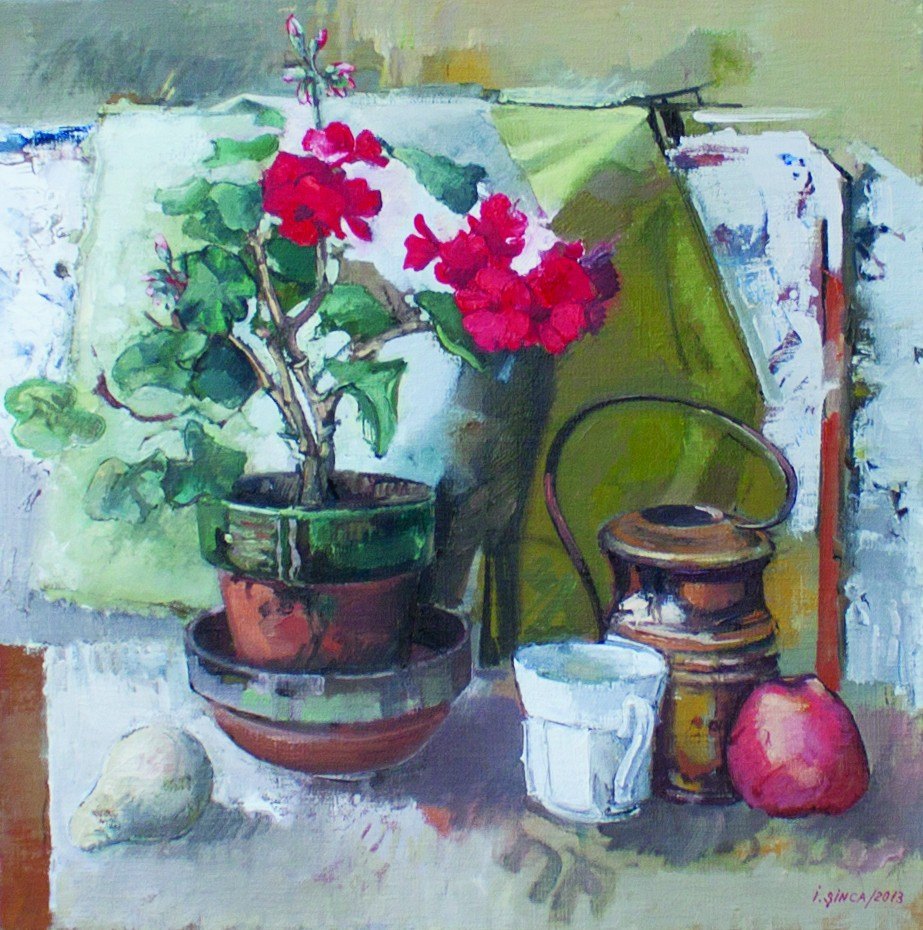
Geranium
2013 · oil on canvas · 45 × 45 cm
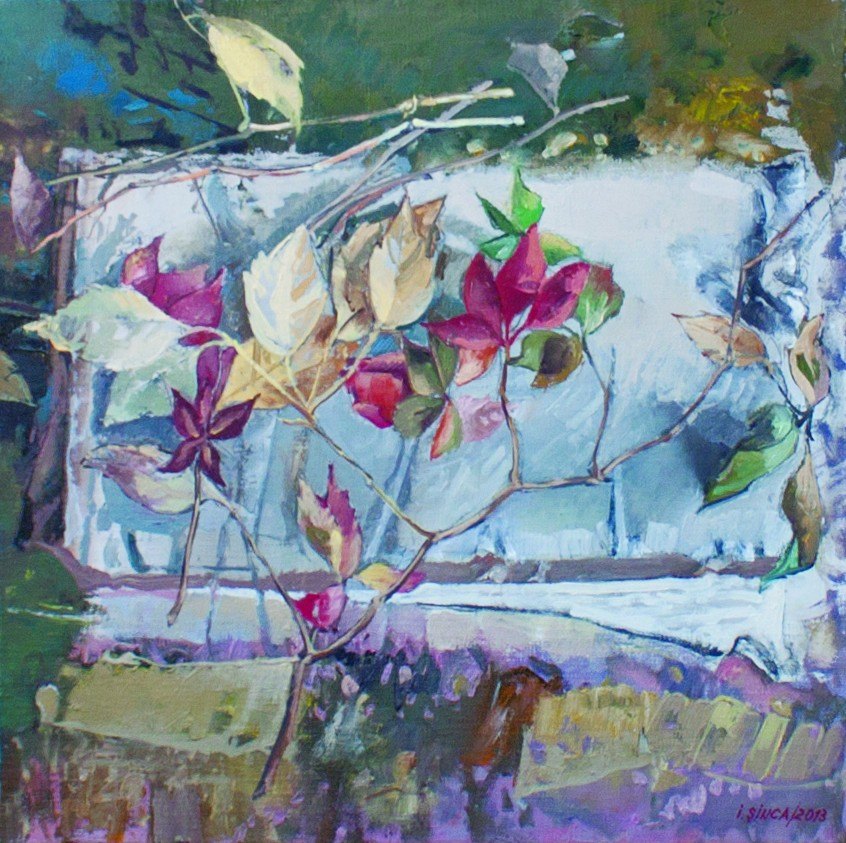
On a Drape
2013 · oil on canvas · 41 × 41 cm
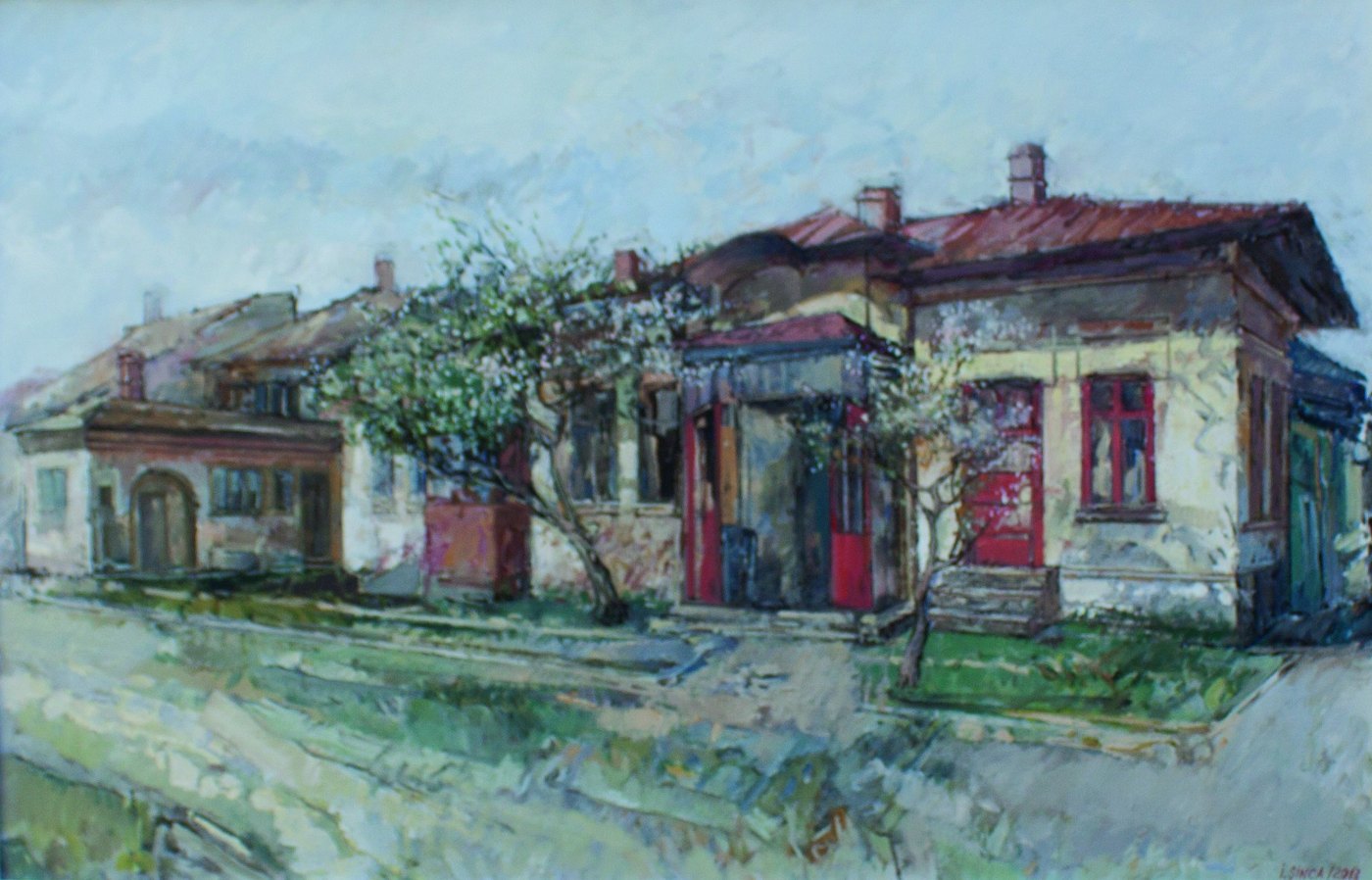
Strada Fortunei
2013 · oil on canvas · 92 × 60 cm
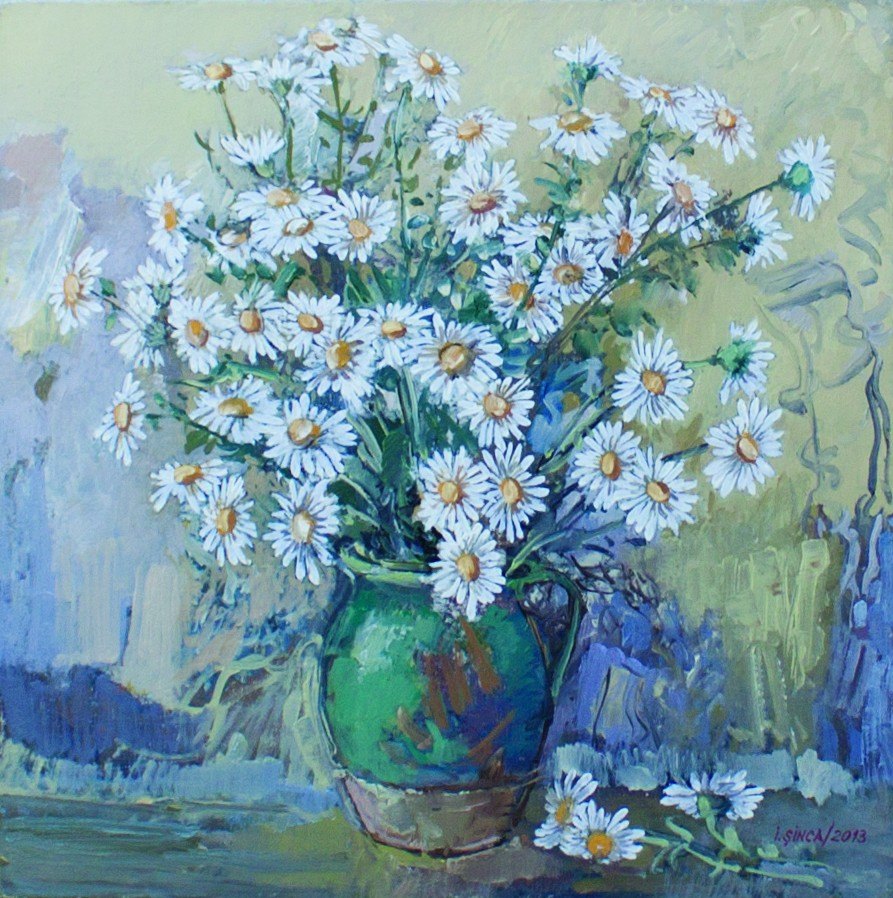
Small Jug with Flowers
2013 · oil on canvas · 43.5 × 43.5 cm
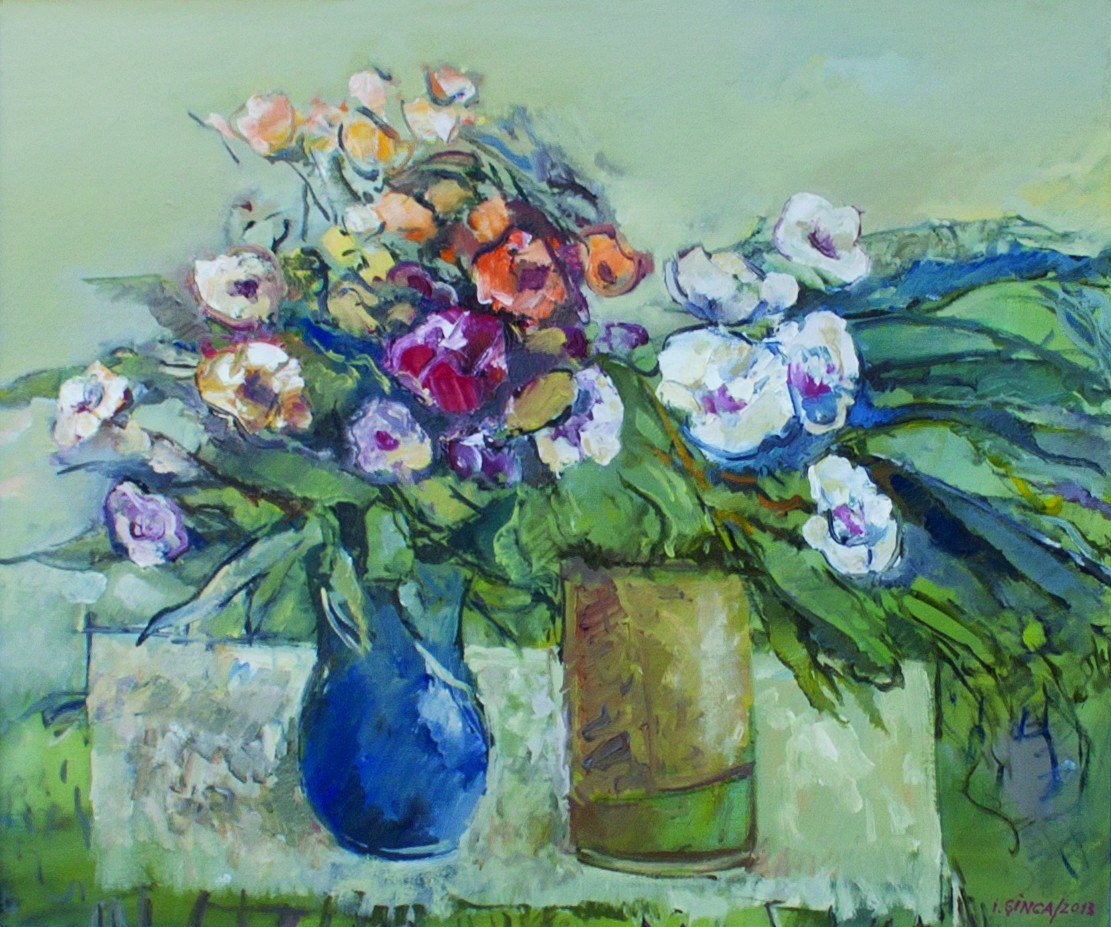
Vases with Flowers 1
2013 · oil on canvas · 55 × 46 cm
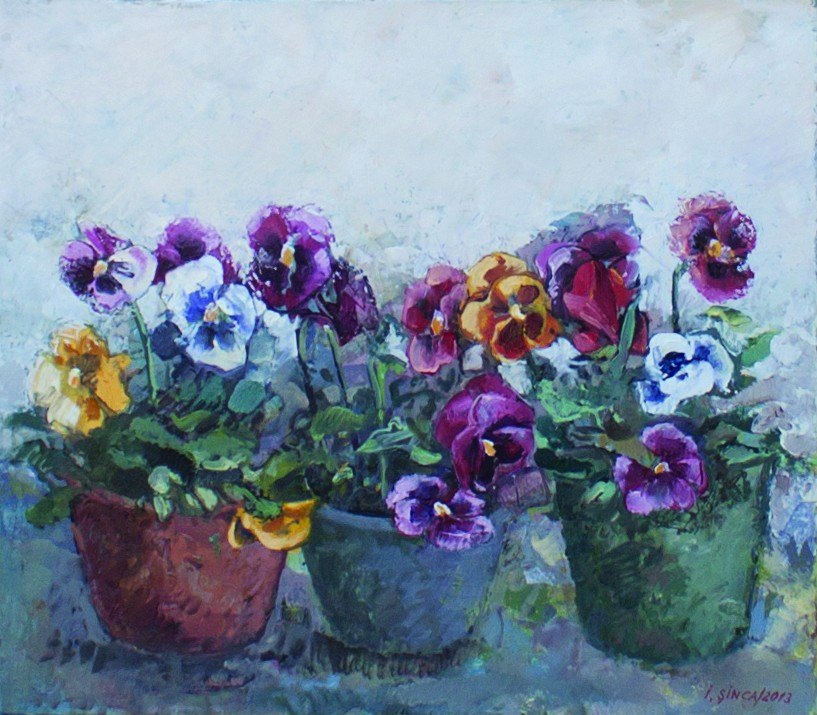
Vases with Flowers 2
2013 · oil on canvas · 40 × 35 cm
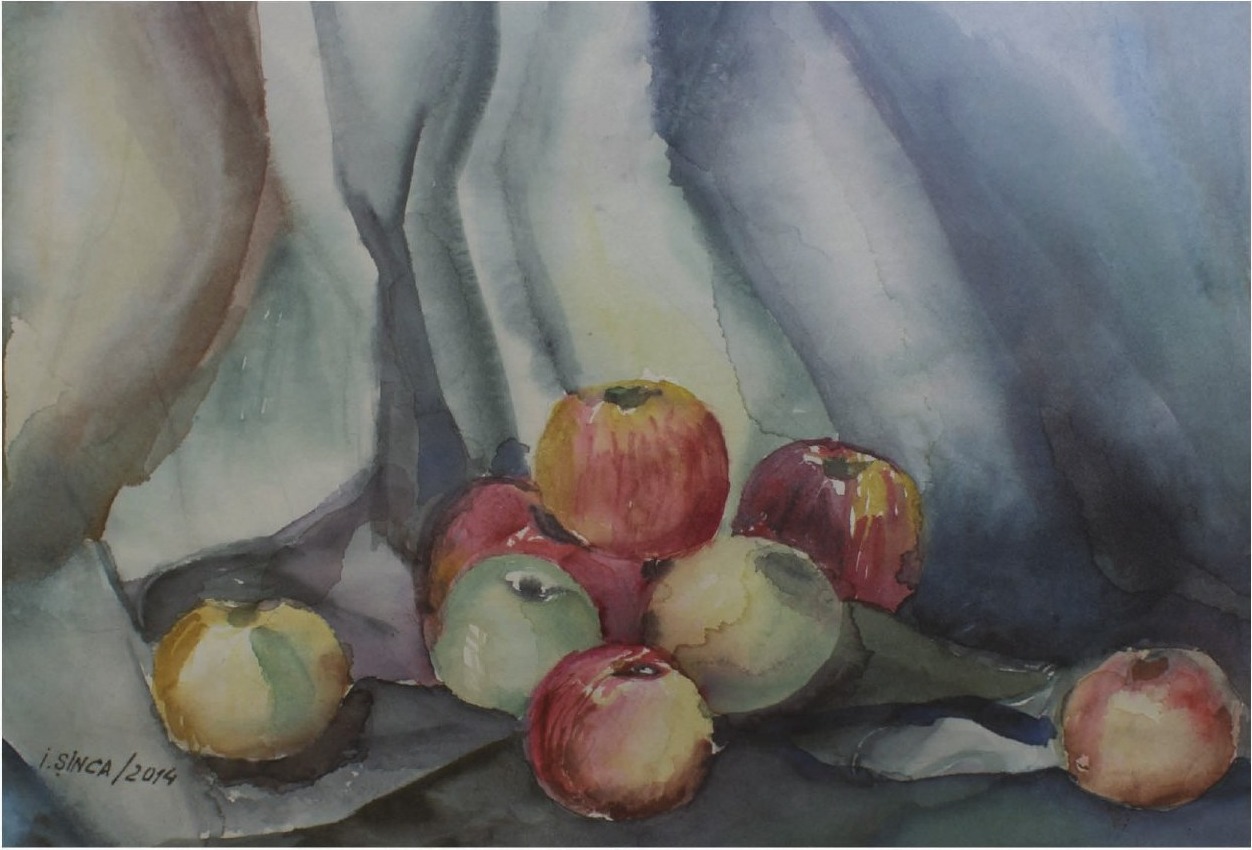
Apples
2014 · watercolour · 42 × 30 cm
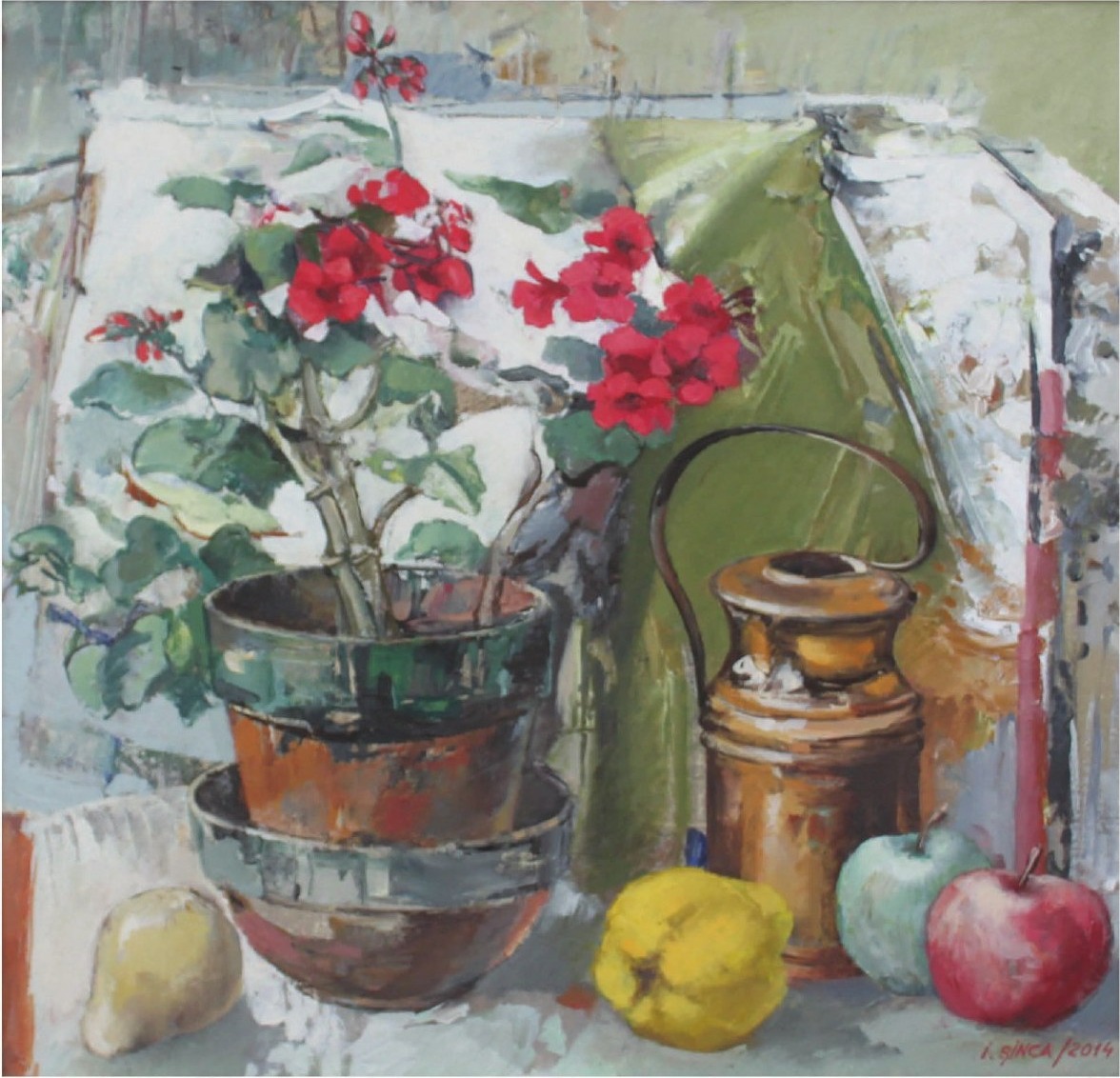
Geranium in a Pot
2014 · oil on canvas · 42 × 40 cm
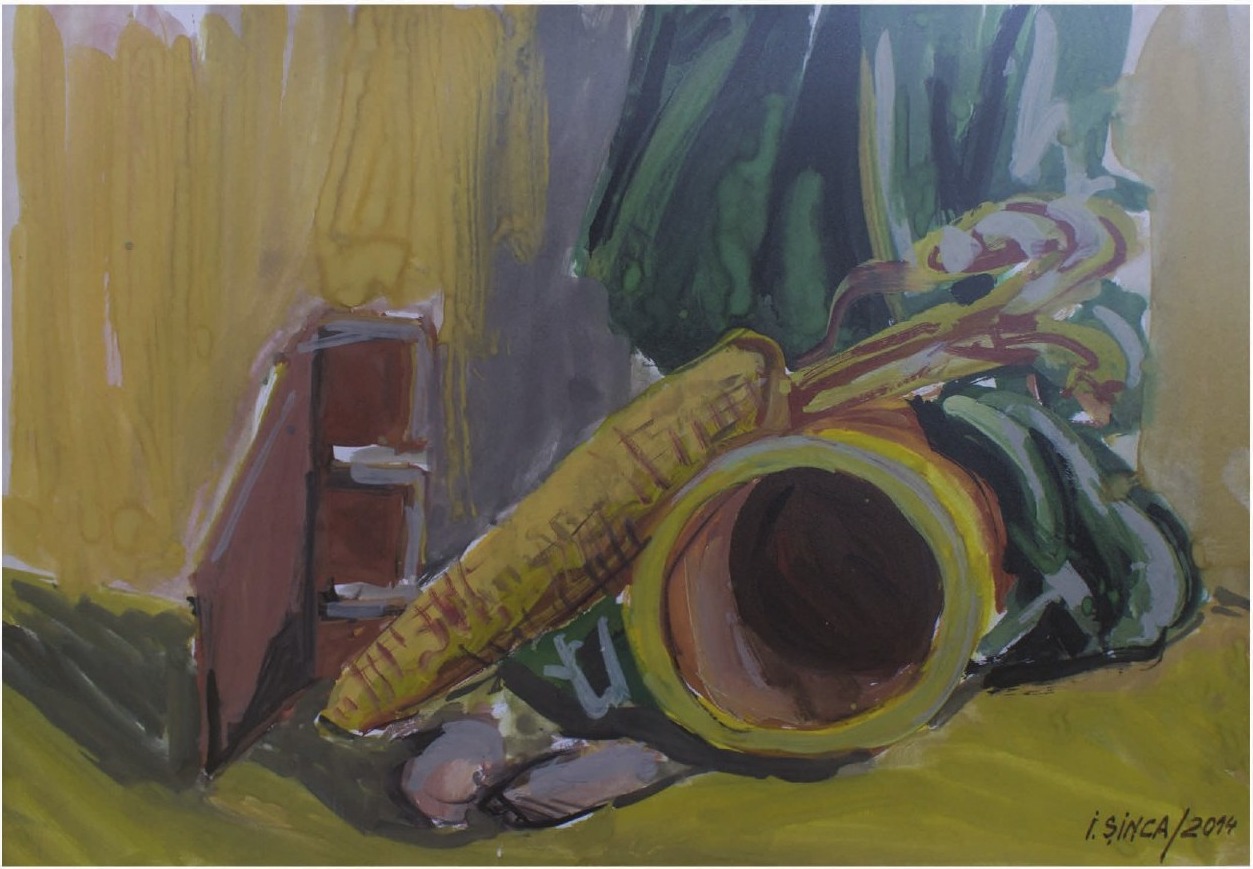
Still Life with Corn
2014 · watercolour · 42 × 30 cm
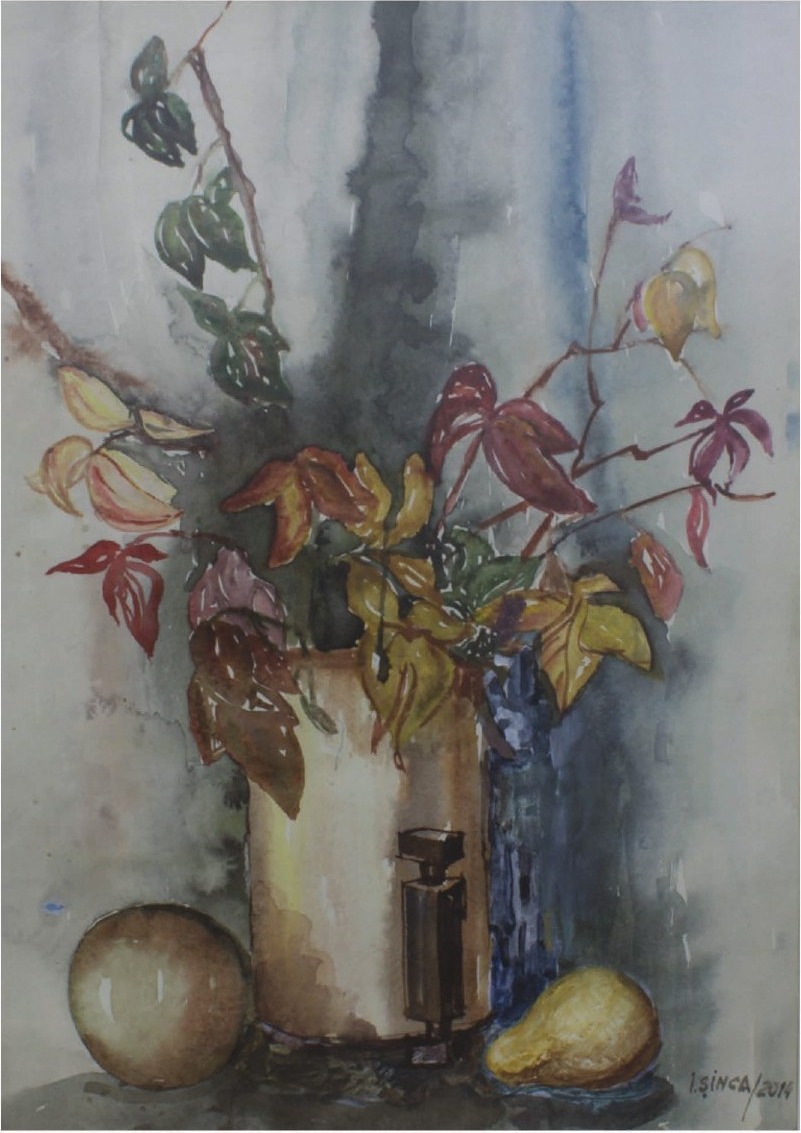
Vase with Leaves
2014 · watercolour · 35 × 49 cm
Brebu
Prahova County10 works1994—2012
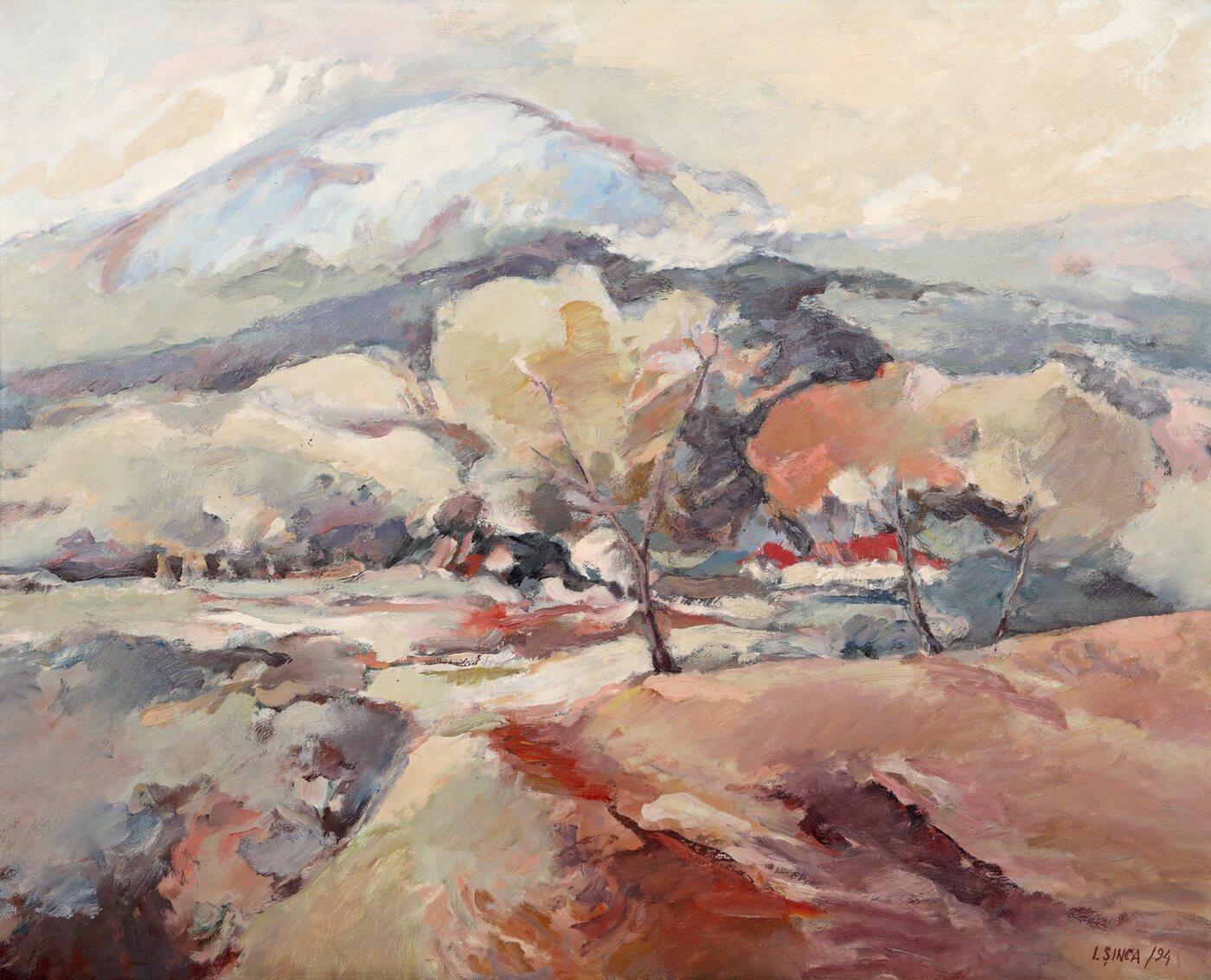
View from Brebu
1994 · oil on canvas · 64 × 51.5 cm
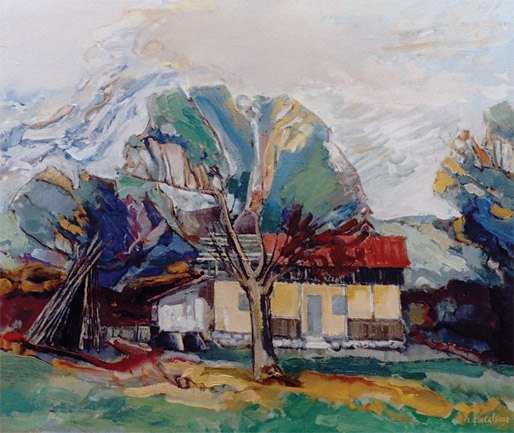
The Old House at Brebu
2002 · oil on canvas · 55 × 47 cm
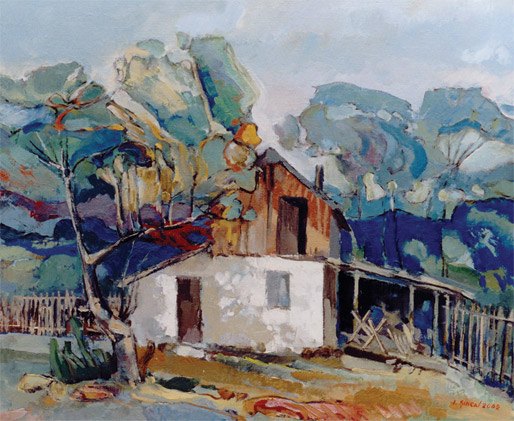
The “Cucu” House in Brebu
2002 · oil on canvas, 49.5 × 42.5 cm
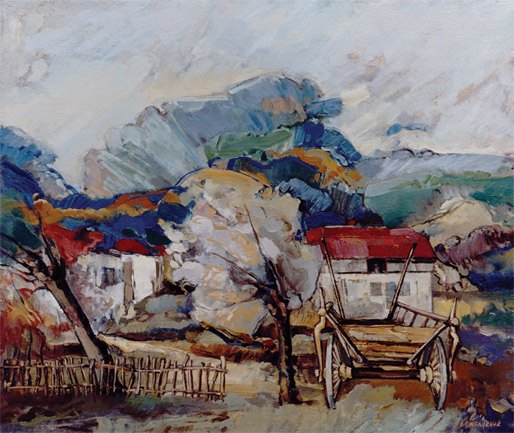
Peasant Courtyard at Brebu
2002 · oil on canvas · 58 × 50.5 cm
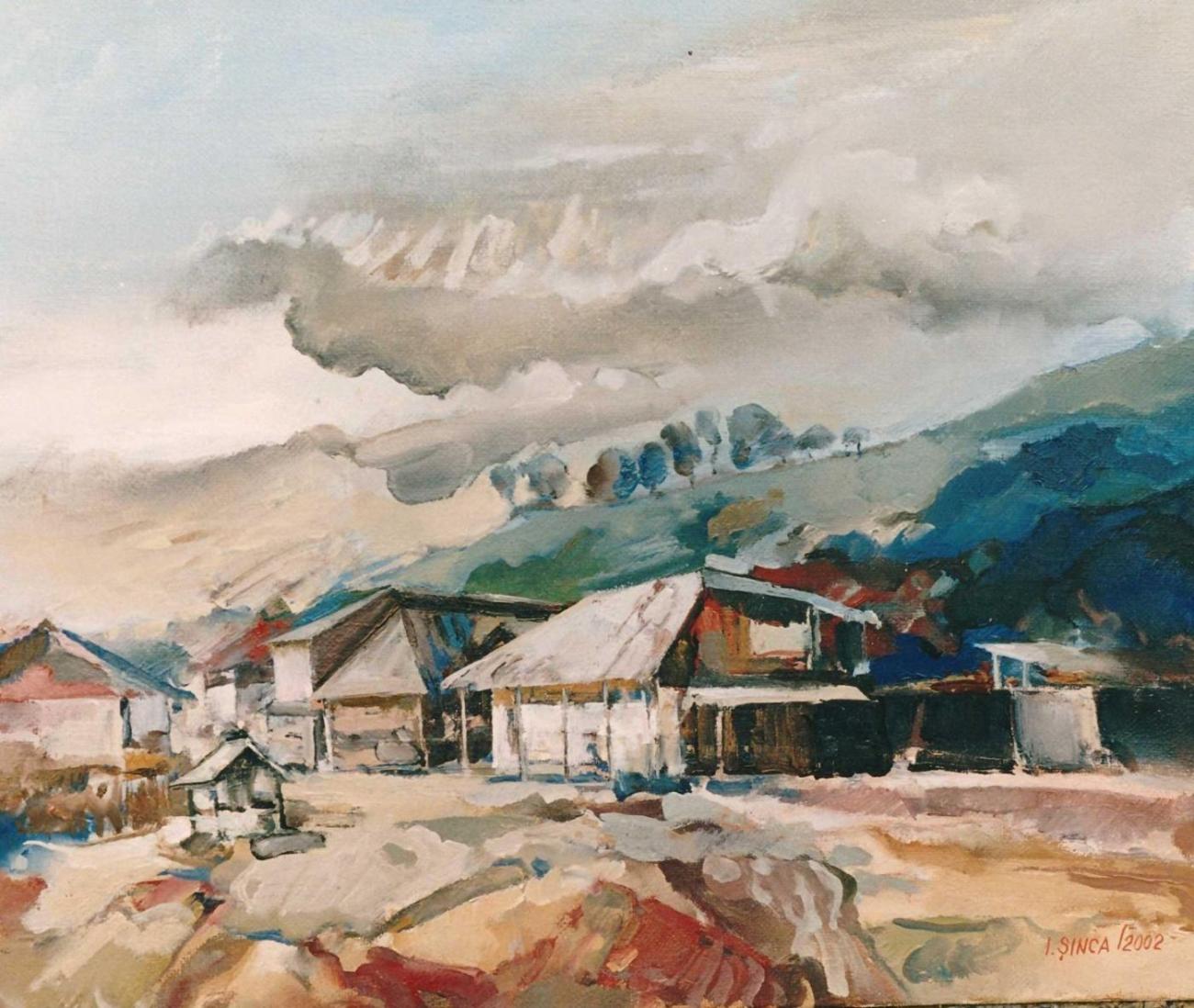
Phantasm in November (Brebu)
2002 · oil on canvas · 43 × 36 cm
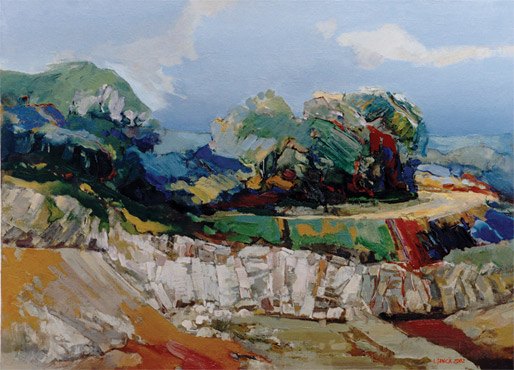
The Salt Spring and the Road to Podiac (Brebu)
2002 · oil on canvas · 64 × 50.5 cm
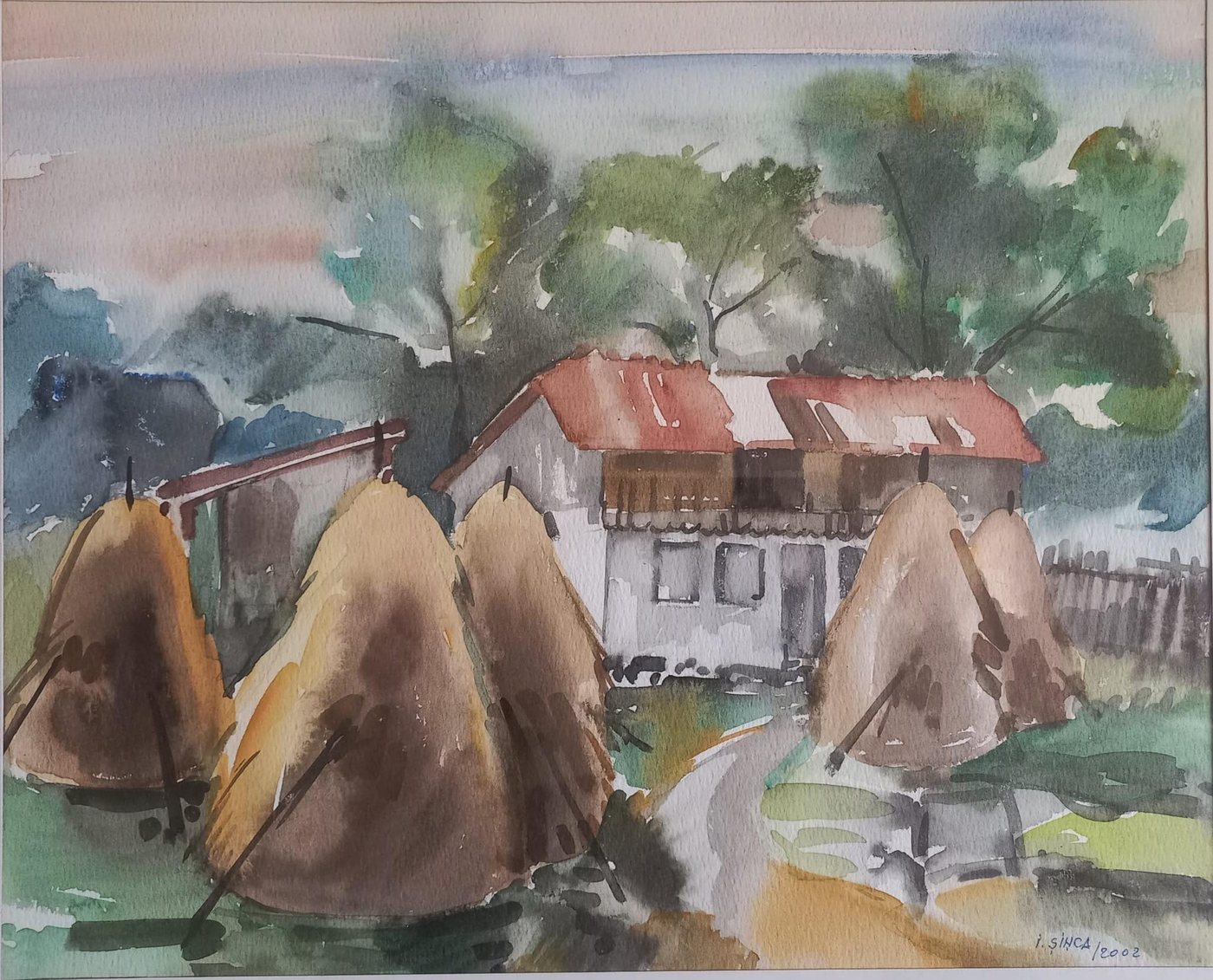
Landscape at Brebu
2002 · watercolour · 41 × 34 cm
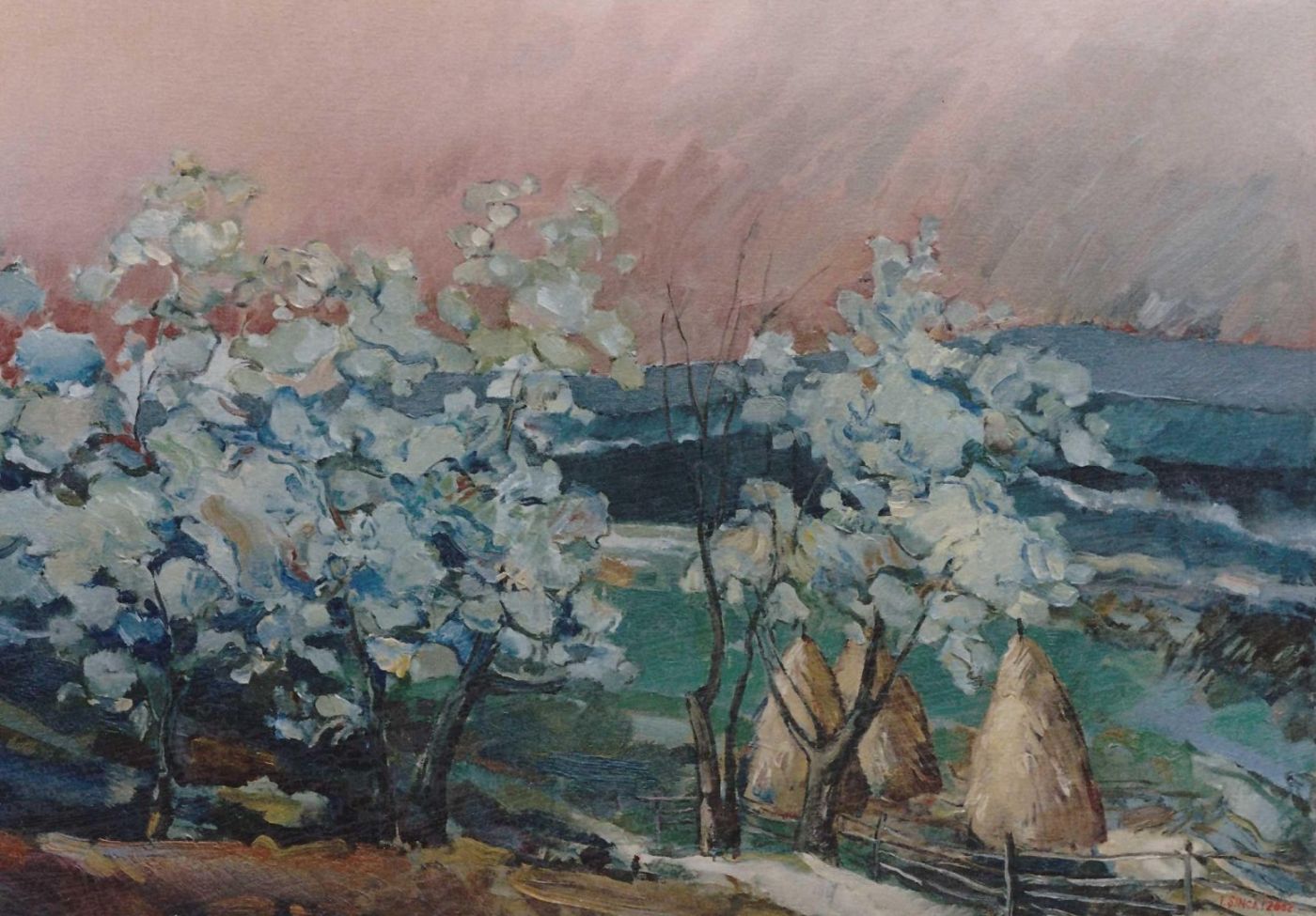
Silver Willows (Brebu)
2002 · oil on canvas · 70 × 50 cm
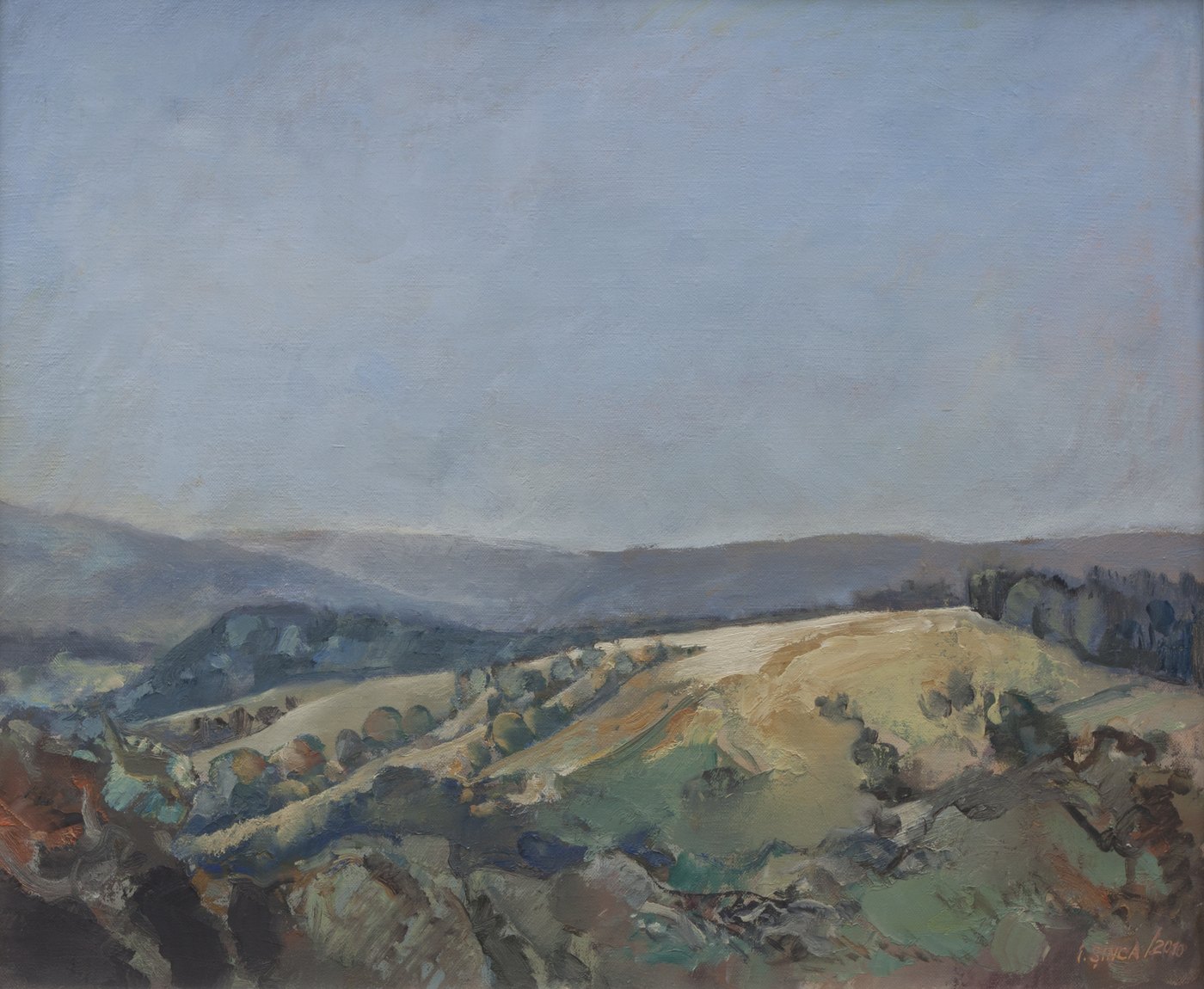
Landscape at Brebu
2010 · oil on canvas · 50 × 42 cm
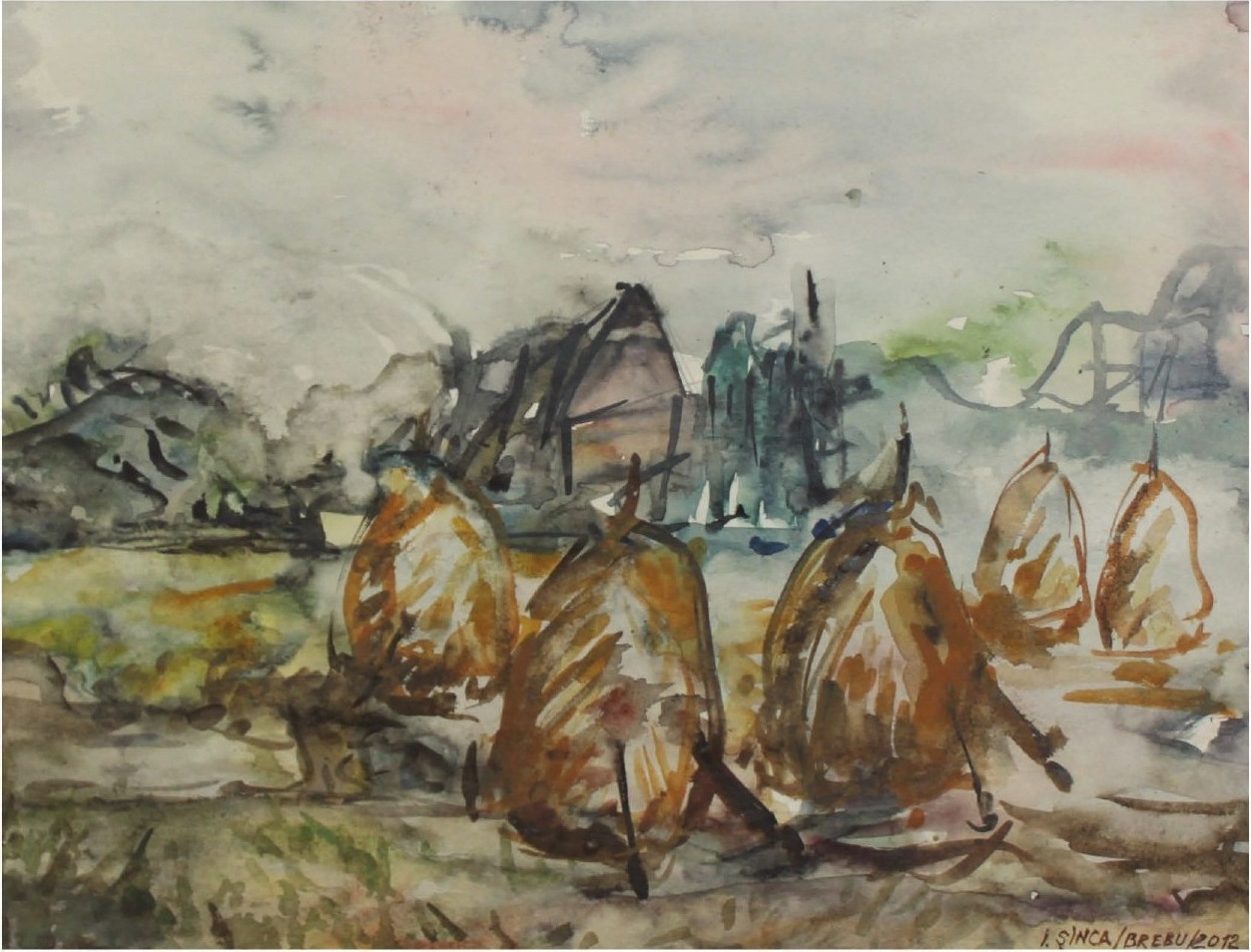
Landscape at Brebu
2012 · watercolour · 36 × 28 cm
Cornu
Prahova County10 works1994—2011
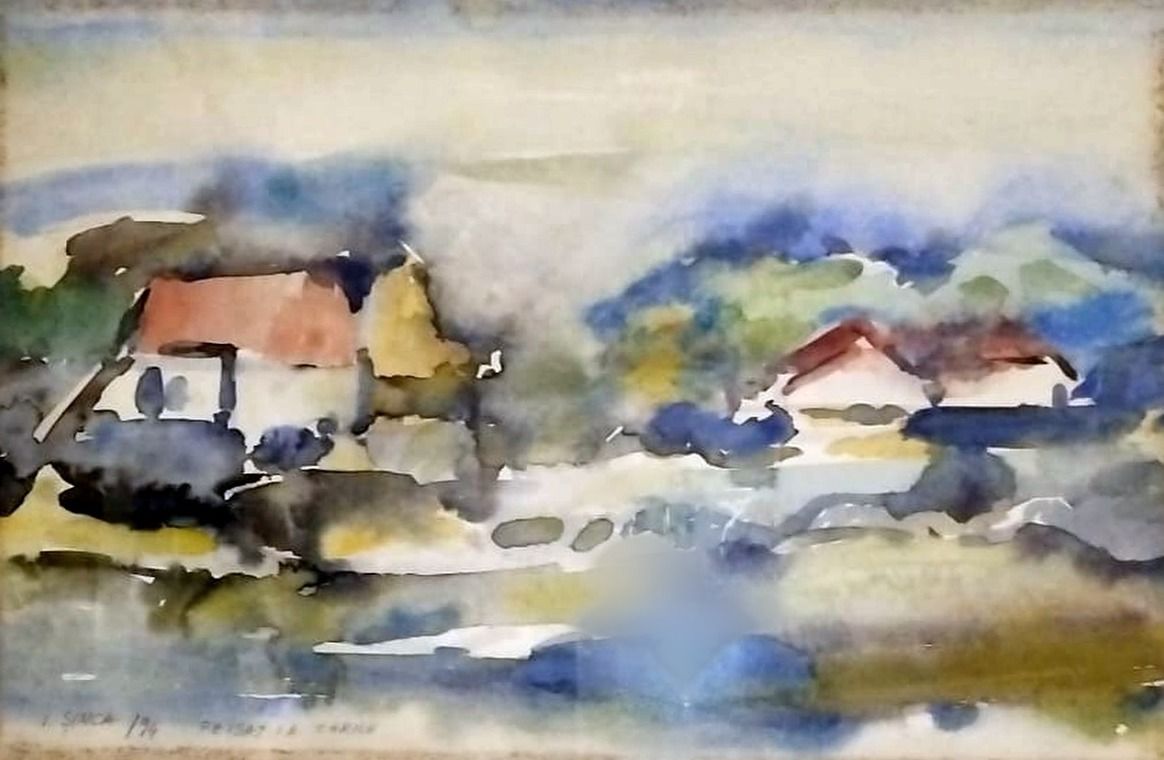
Landscape at Cornu
1994 · watercolour · 30 × 20 cm
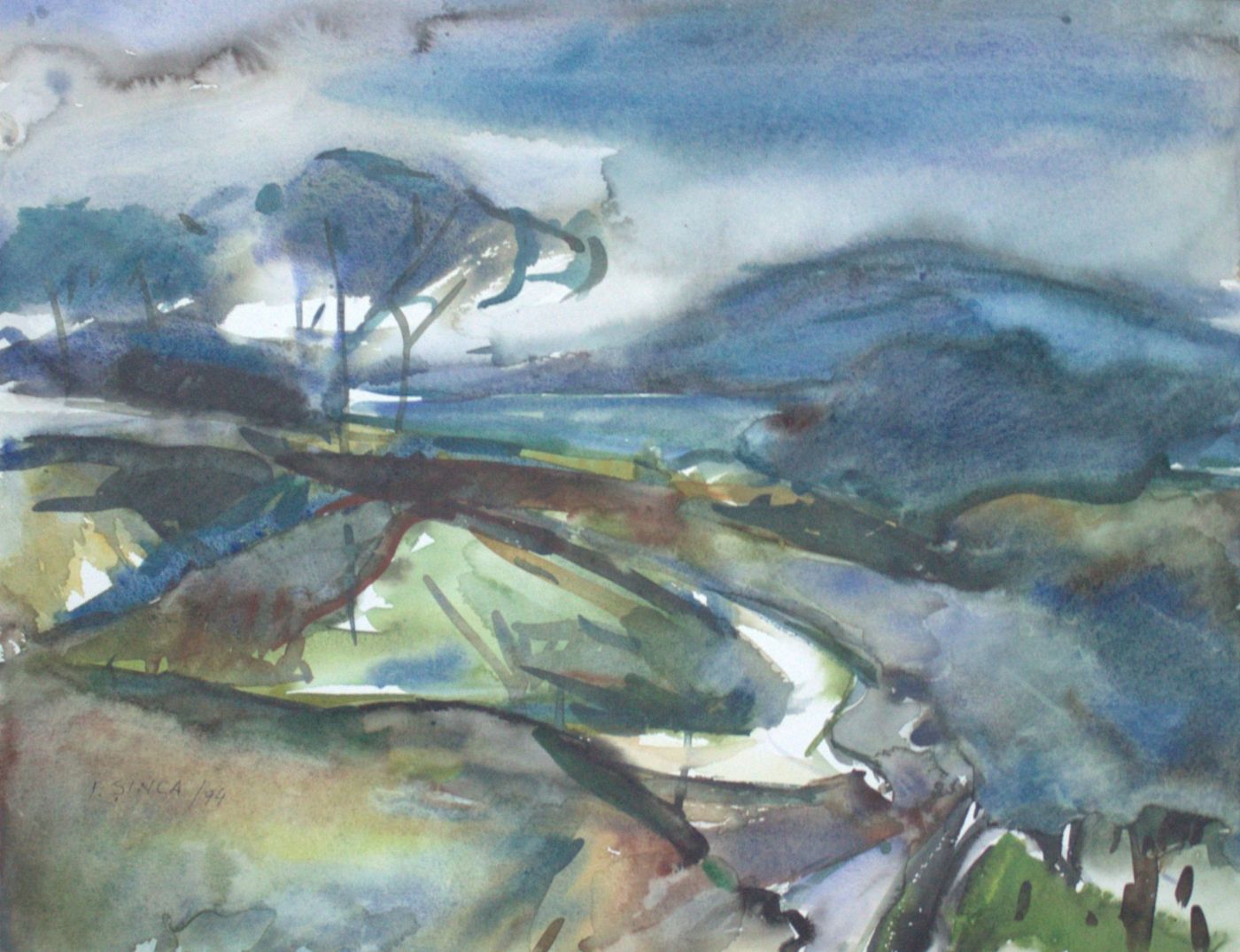
Cloudy Landscape at Cornu
1994 · watercolour · 35 × 27 cm
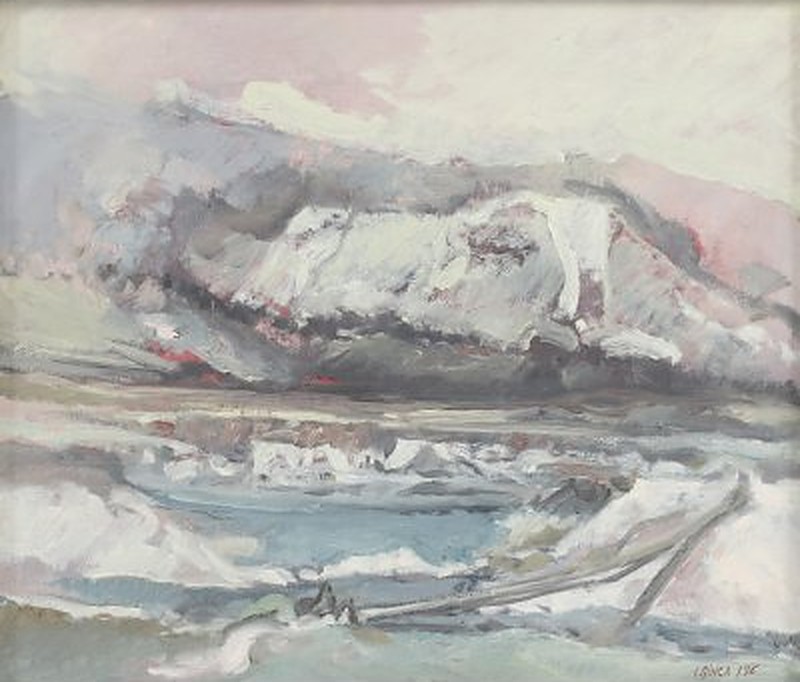
The Cornu Valley
1996 · oil on canvas · 43 × 37 cm
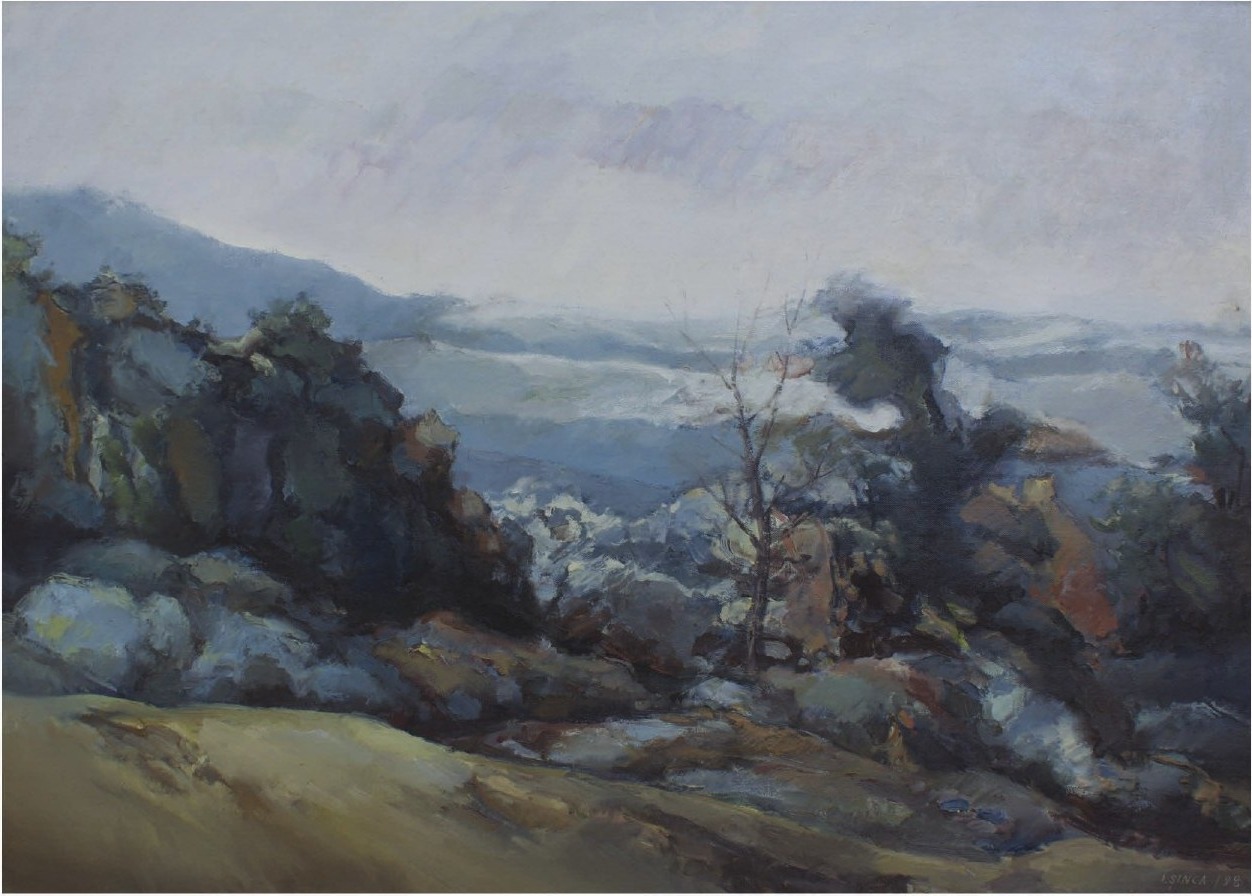
Landscape at Cornu
1998 · oil on canvas · 81 × 60 cm
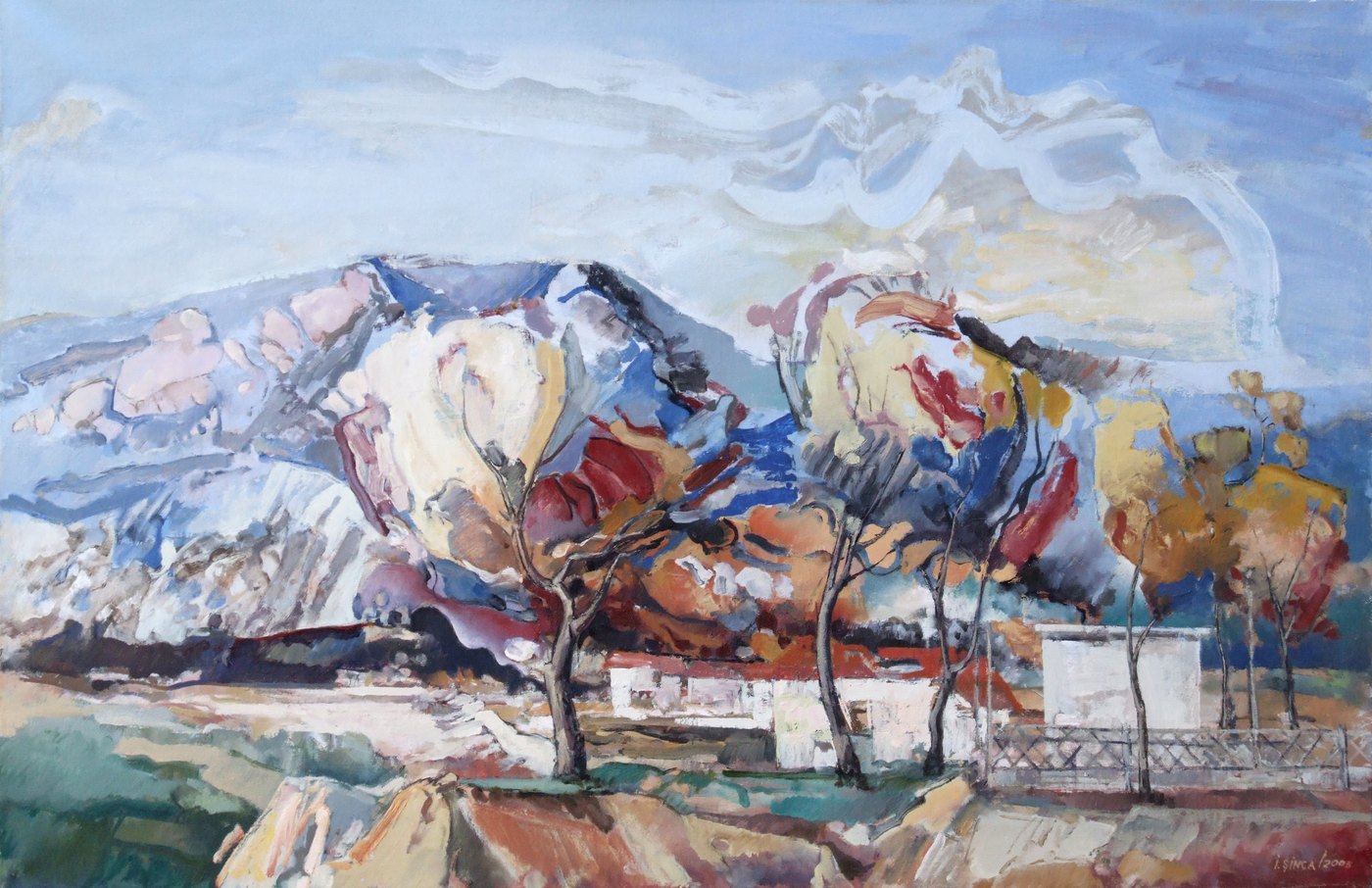
Phantasm at Cornu
2002 · oil on canvas · 100 × 65 cm
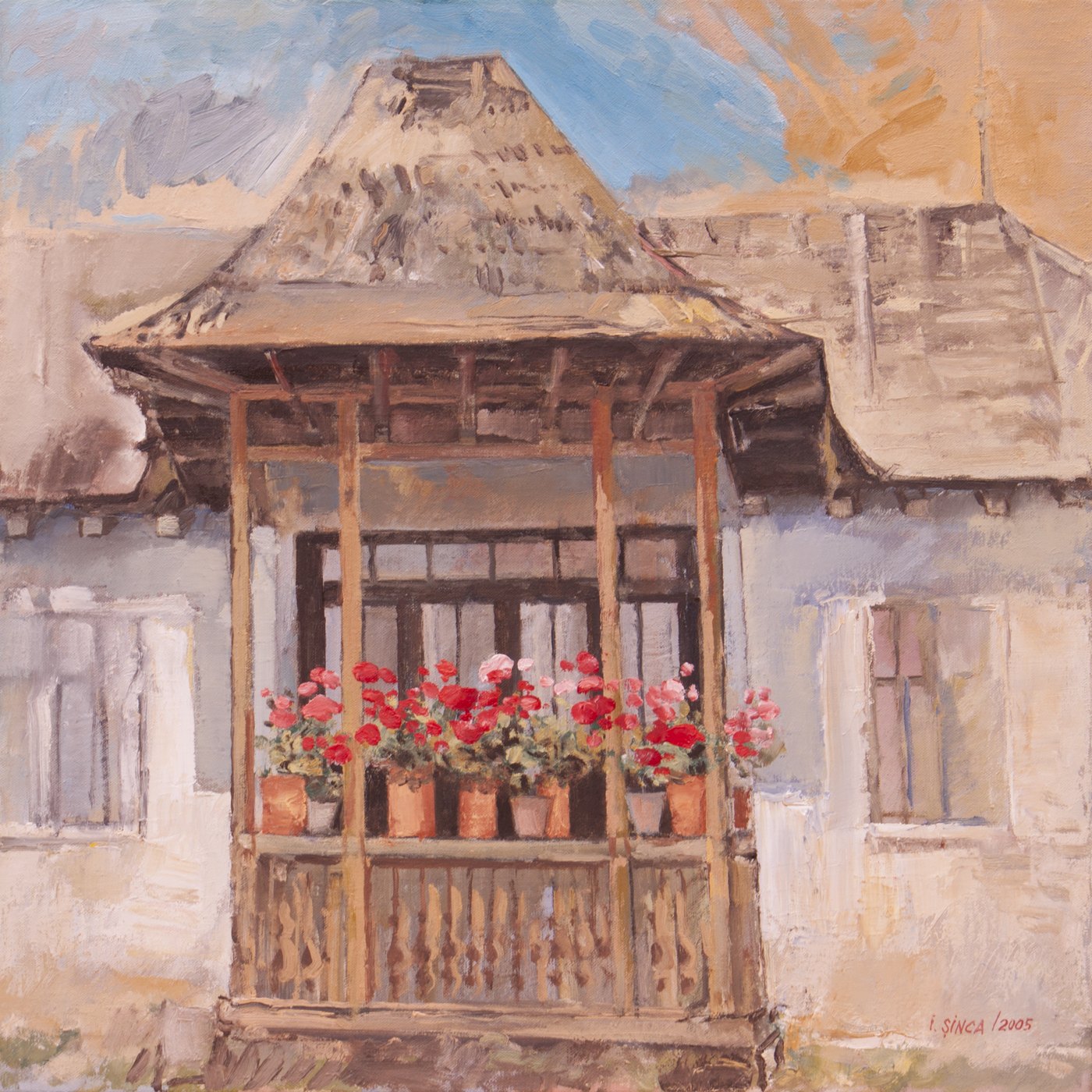
The Old House at Cornu
2005 · oil on canvas · 50 × 50 cm
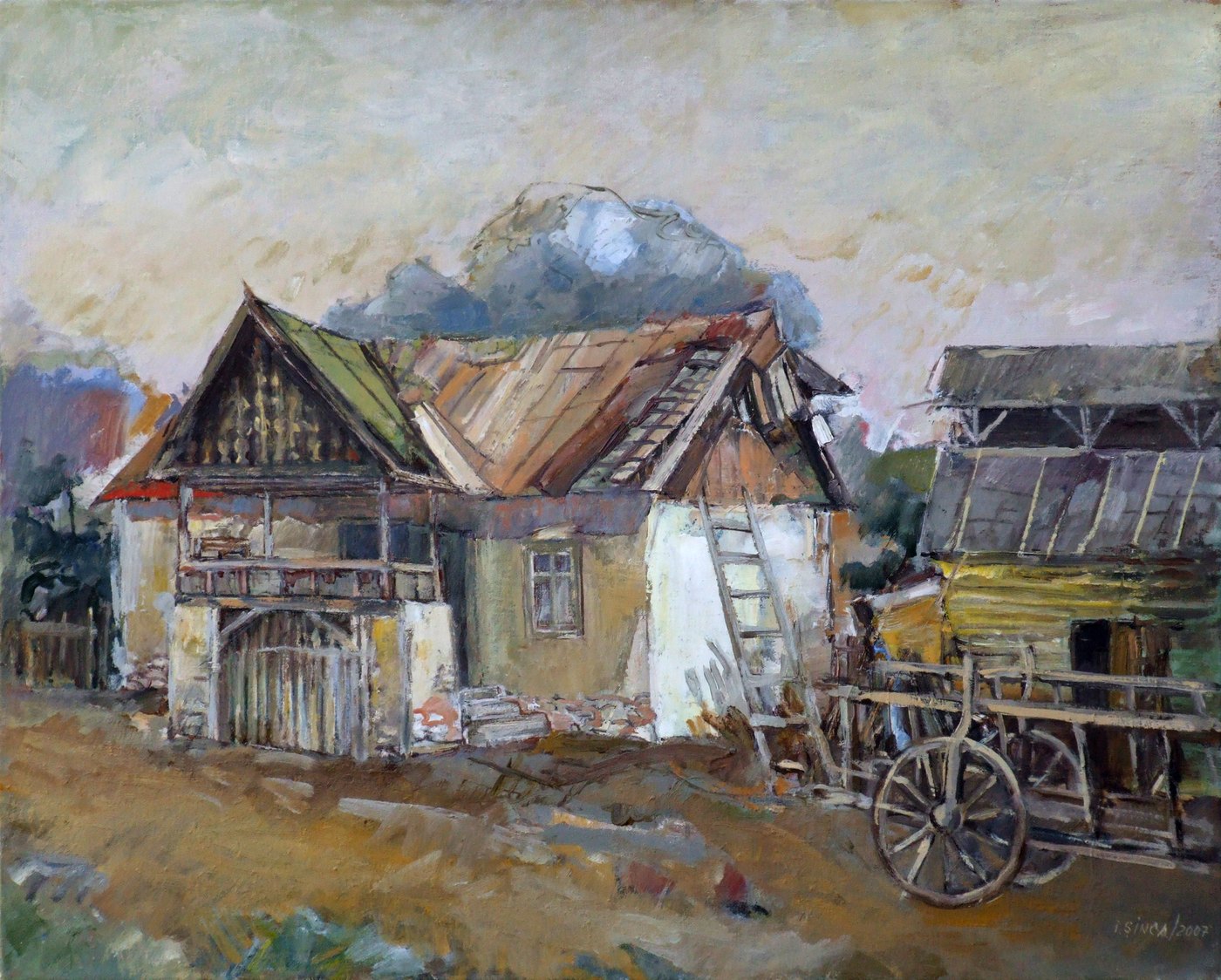
The Old House at Cornu
2007 · oil on canvas, 66 × 53 cm
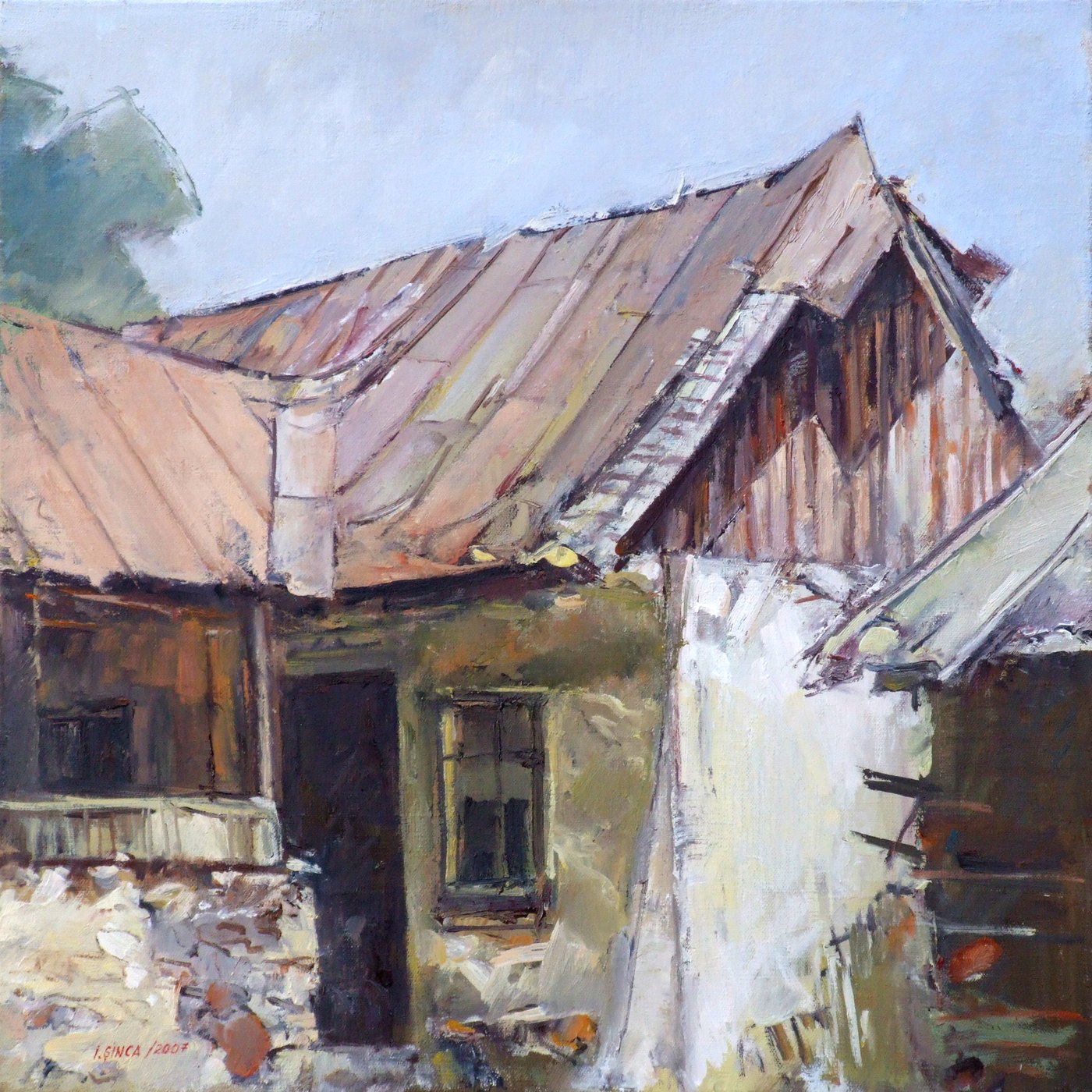
The Old House at Cornu (detail)
2007 · oil on canvas, 50 × 50 cm
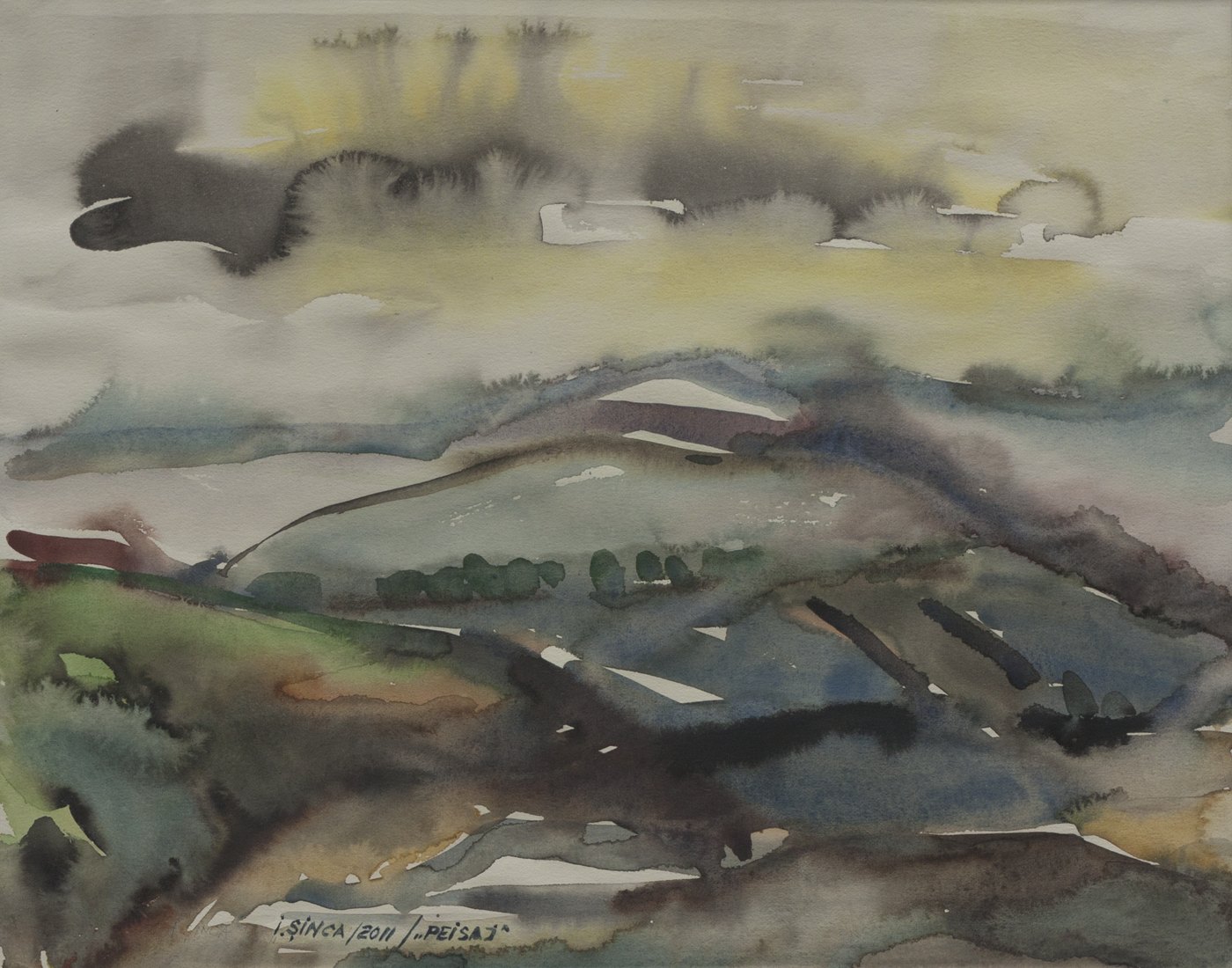
Landscape at Cornu
2011 · watercolour · 40 × 31 cm
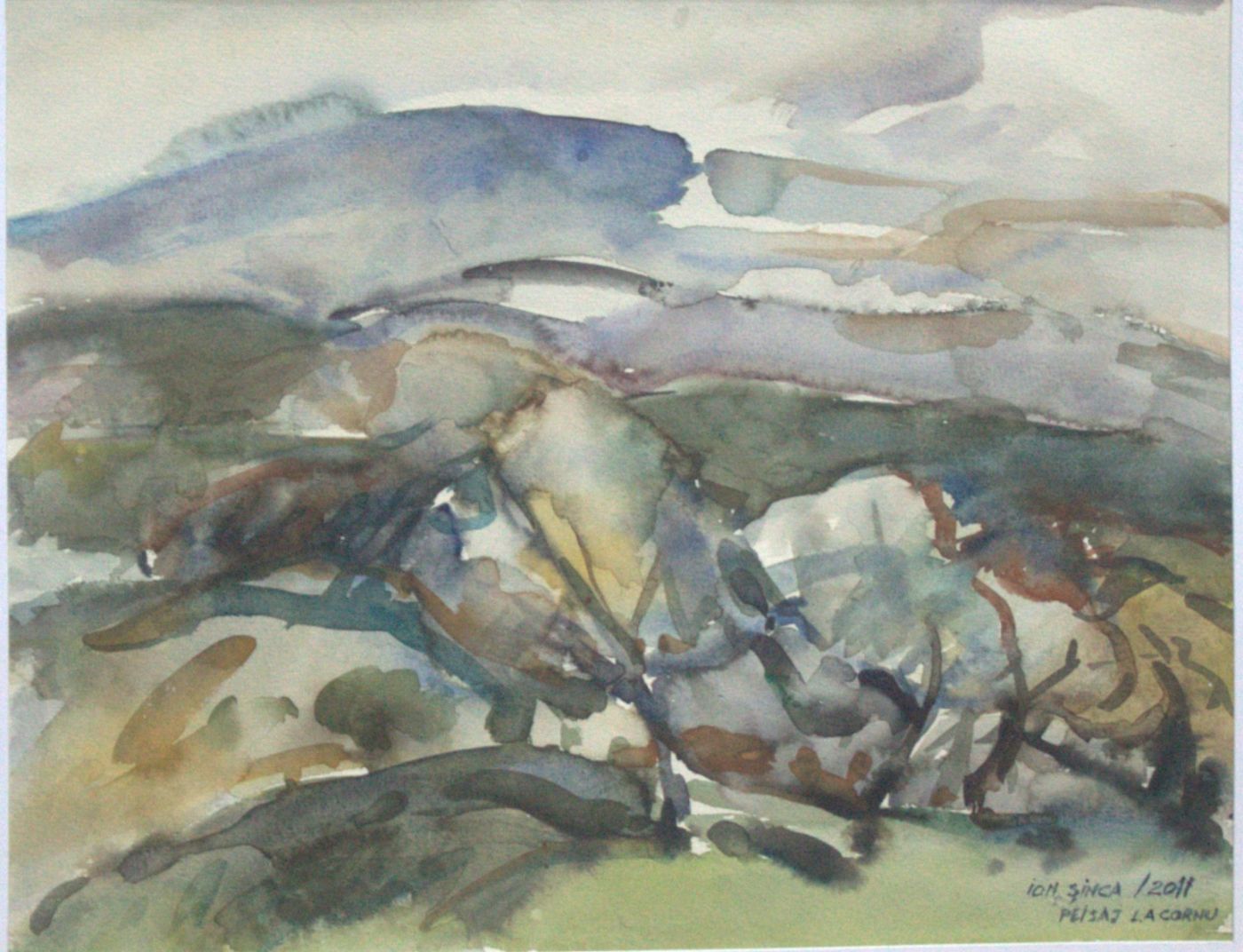
Landscape at Cornu
2011 · watercolour · approx. 36 × 28 cm
Pietriceaua
Brebu, Prahova County10 works2002—2009
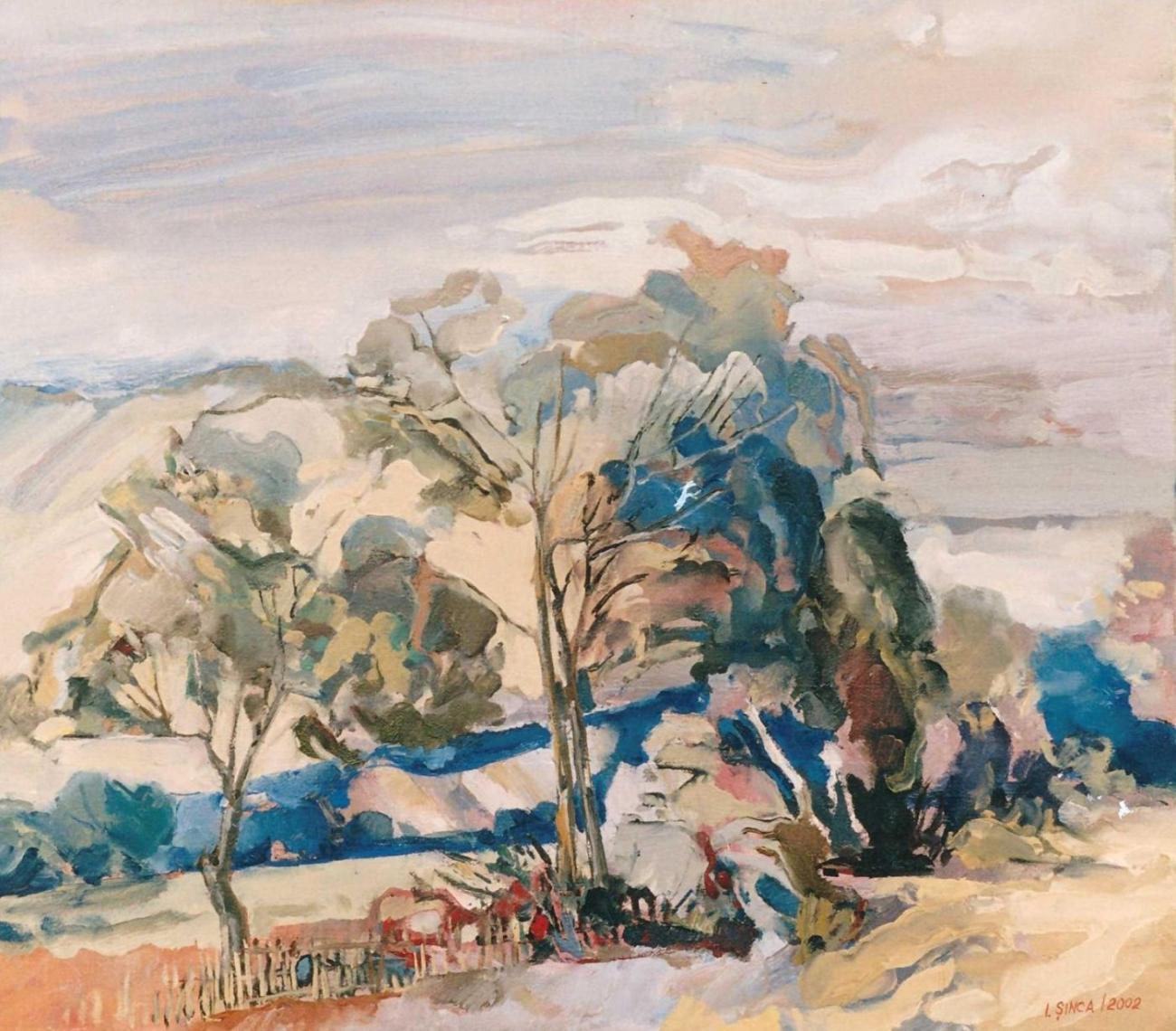
Fantasmă prin sălcii la Pietriceaua
2002 · oil on canvas · 53 × 47 cm
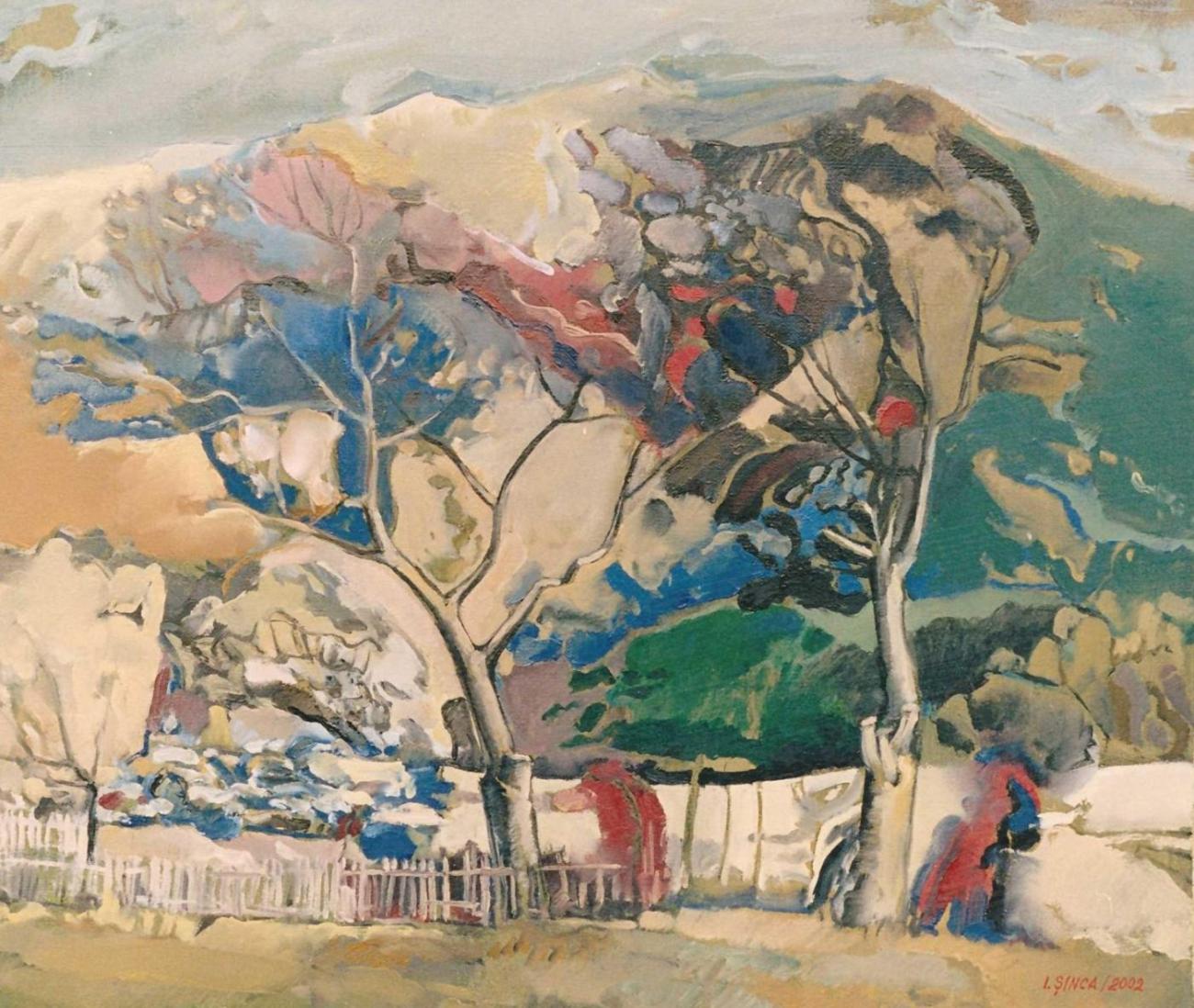
Phantasm through the apricot trees at Pietriceaua
2002 · oil on canvas · 55 × 47 cm
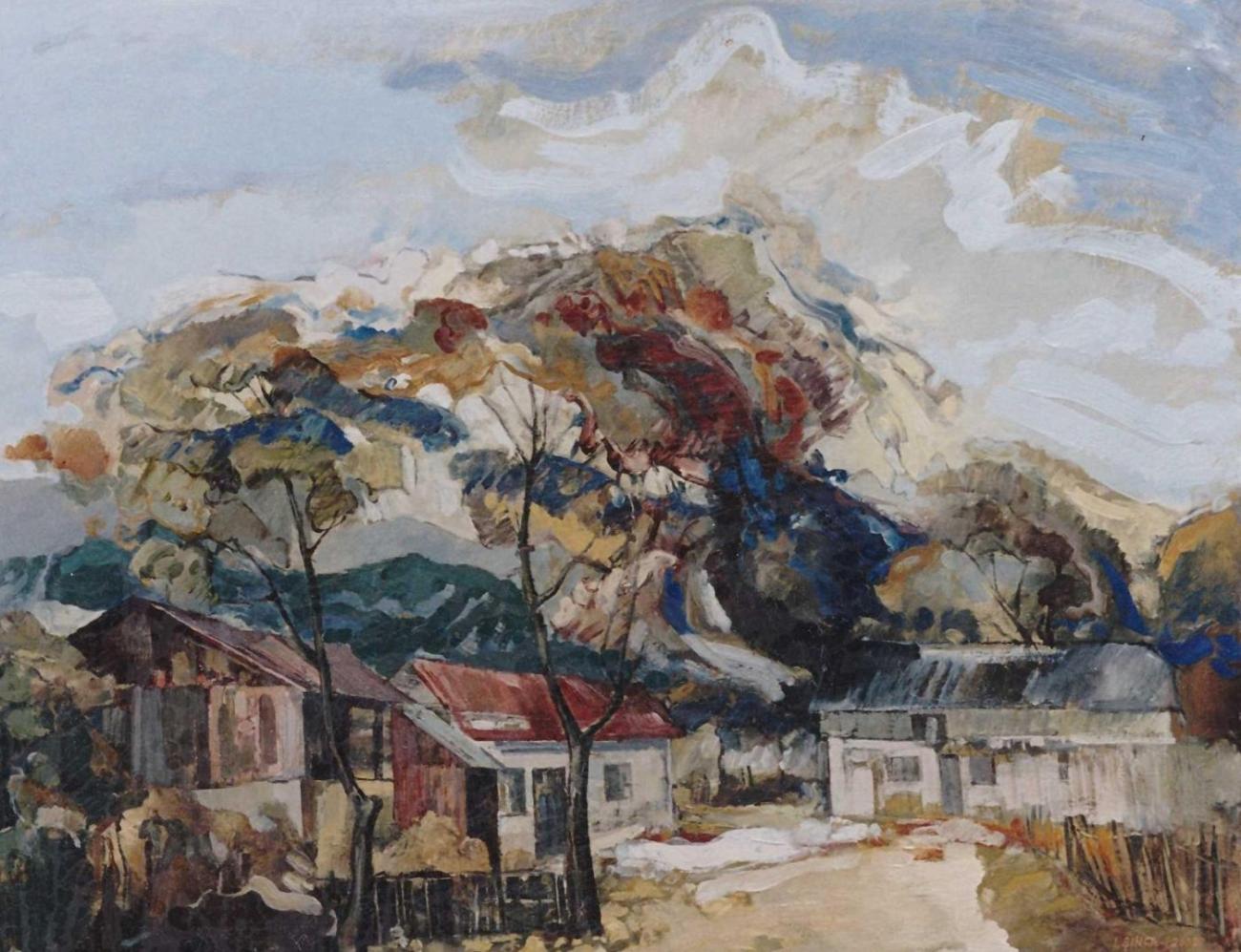
Landscape at Pietriceaua
2002 · oil on canvas · 81 × 65 cm
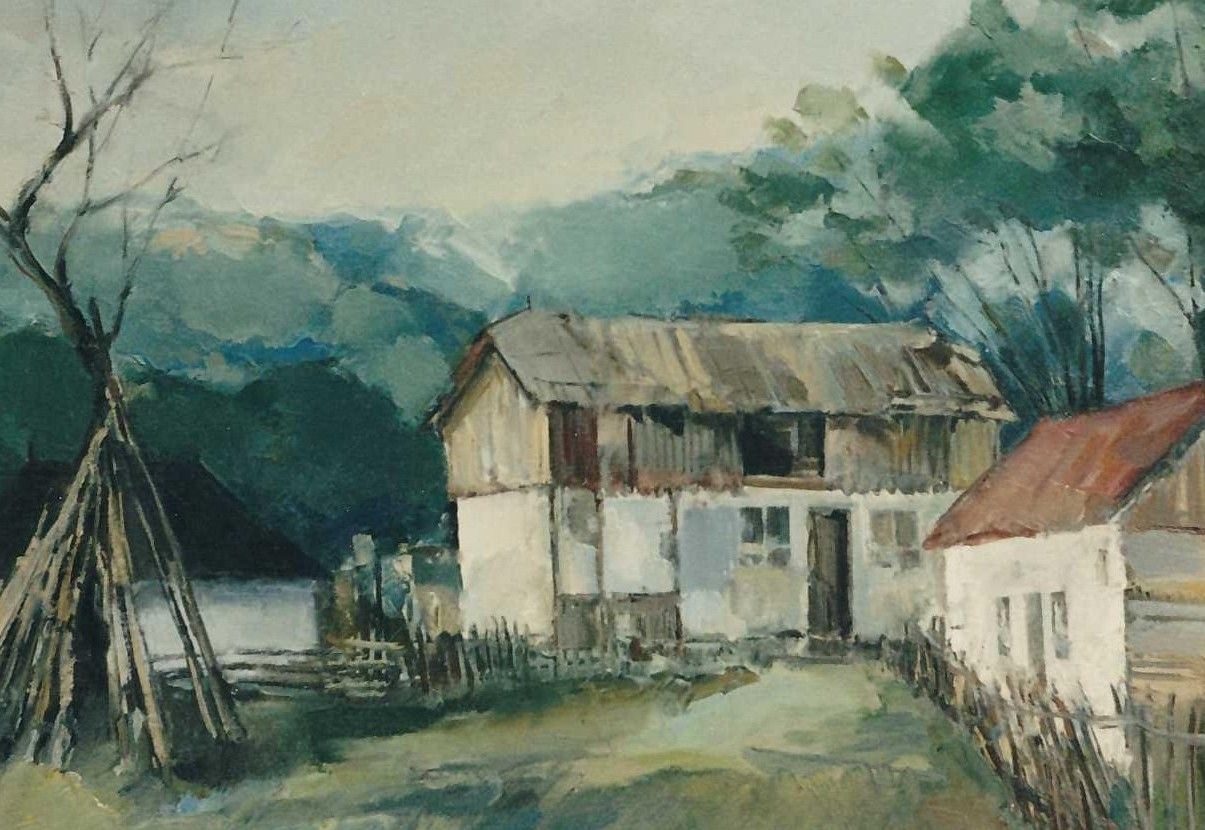
Landscape at Pietriceaua
2002 · oil on canvas · 70 × 50 cm
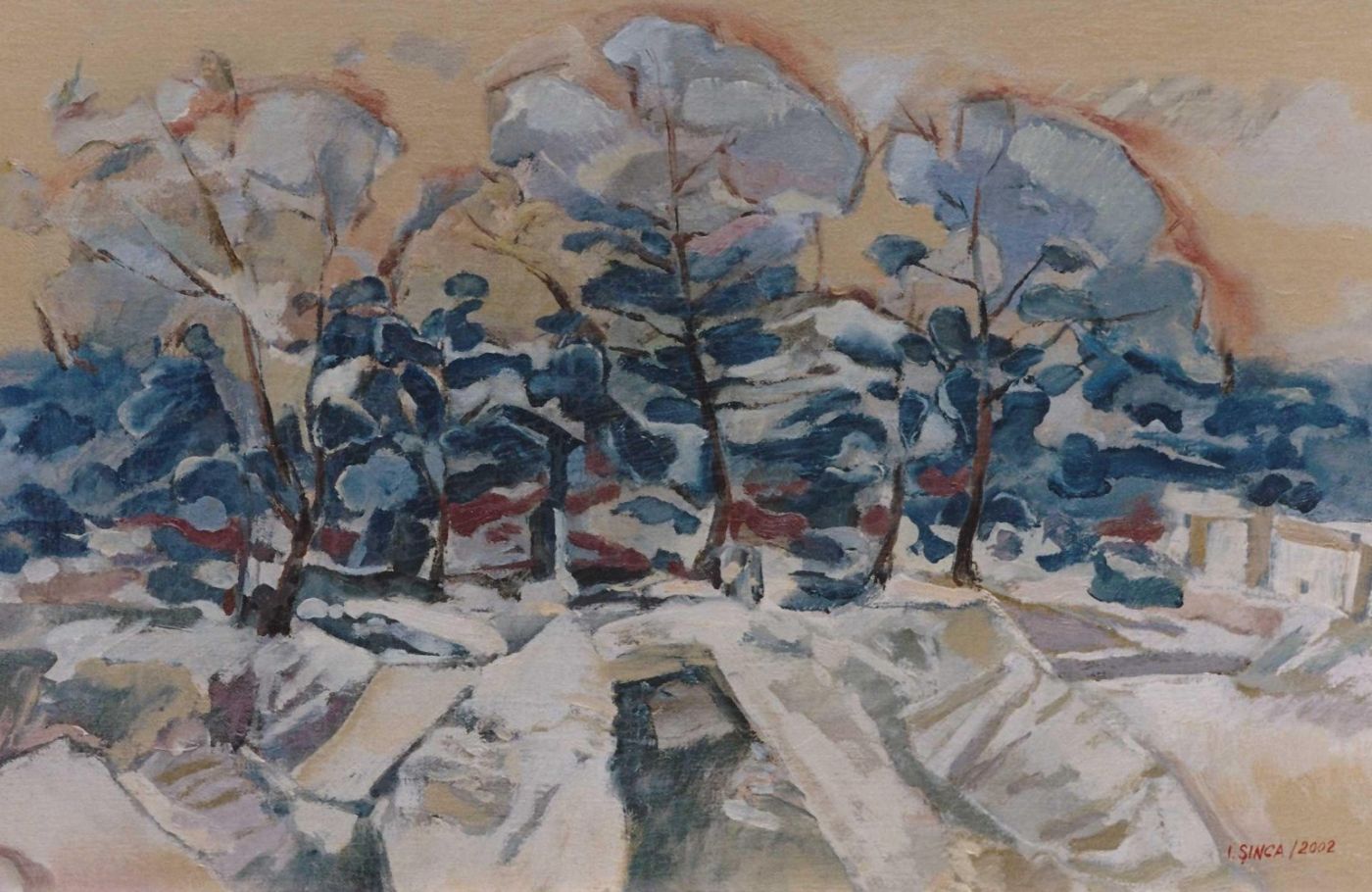
Acacias at Pietriceaua
2002 · oil on canvas · 56 × 34 cm
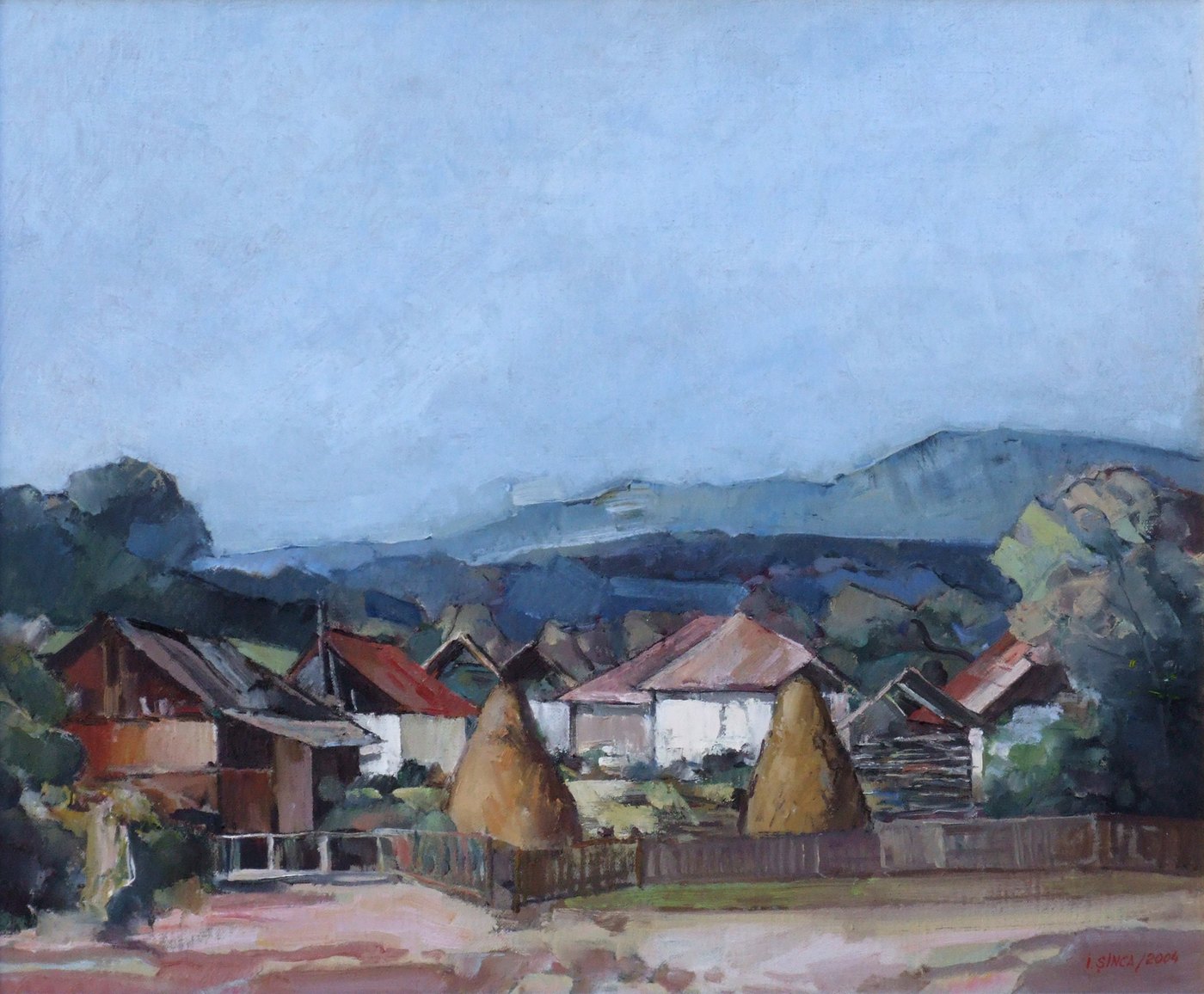
Landscape at Pietriceaua
2004 · oil on canvas, 60 × 50 cm
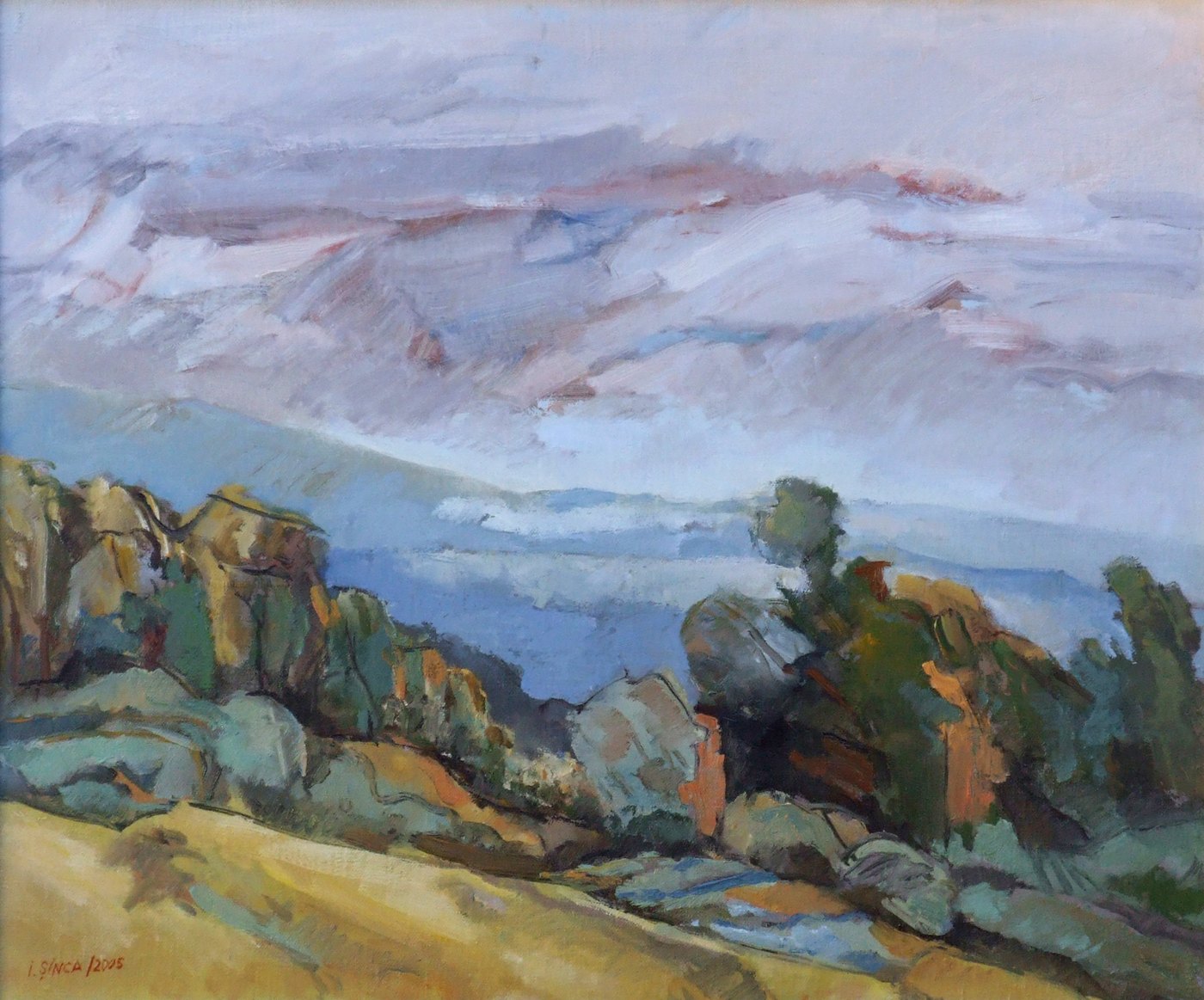
Pietriceaua Panorama
2005 · oil on canvas, 50 × 42 cm
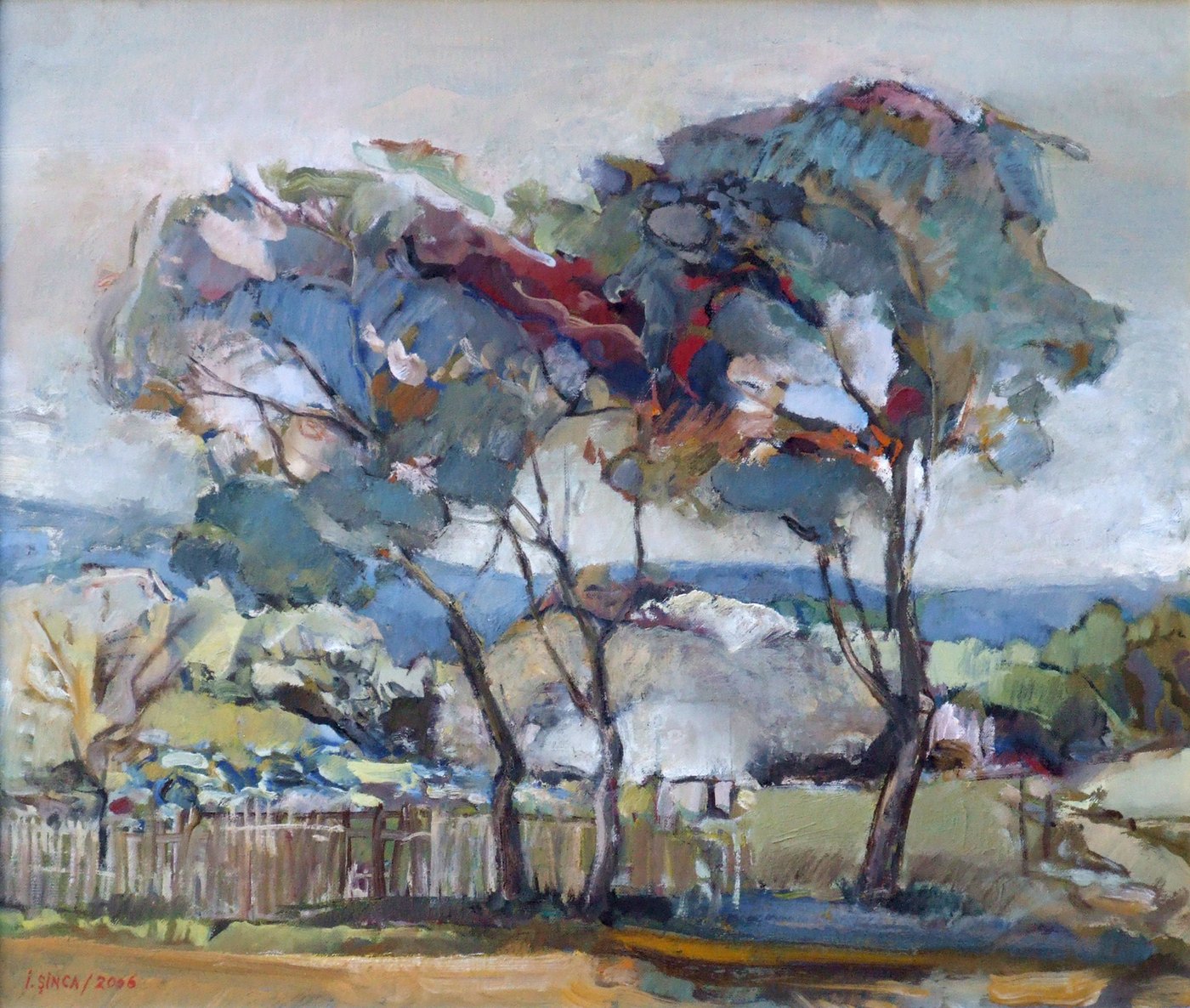
Acacias at Pietriceaua
2006 · oil on canvas, 55 × 47 cm
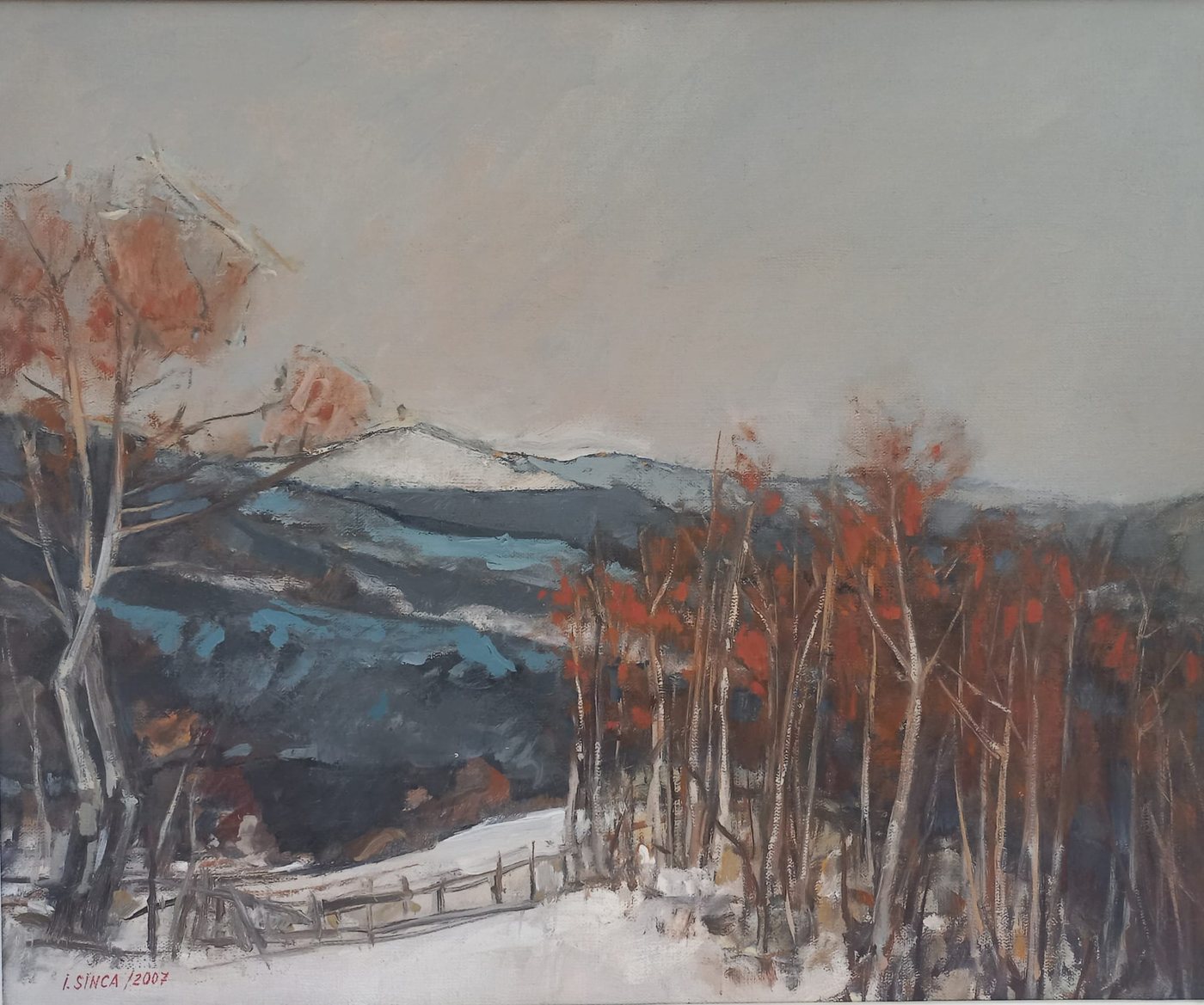
Birches, Pietriceaua
2007 · oil on canvas, 50.5 × 41.5 cm
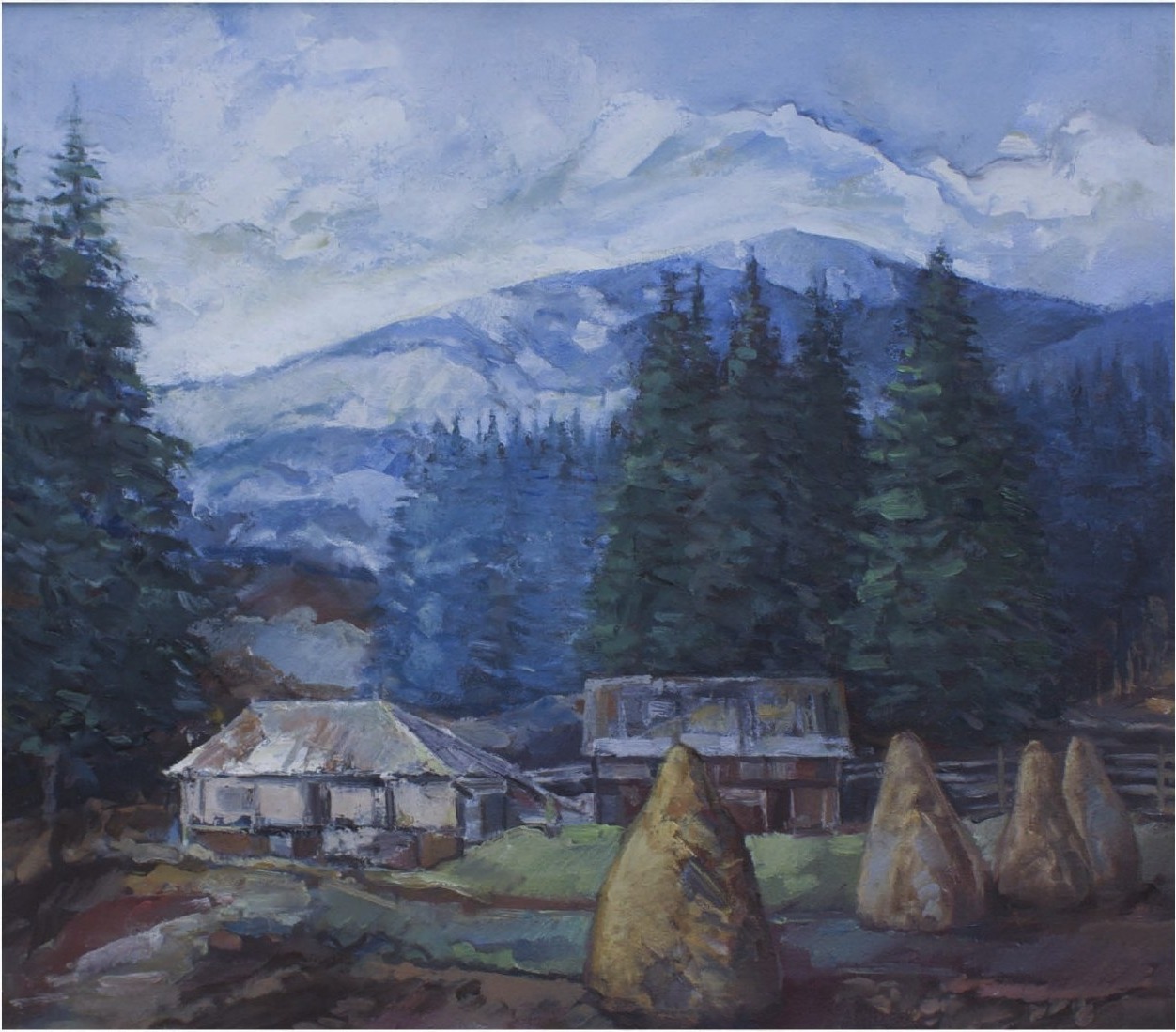
Landscape at Pietriceaua
2009 · oil on canvas · 50 × 43.5 cm
Vama Veche
Limanu, Constanța County9 works1990—2010
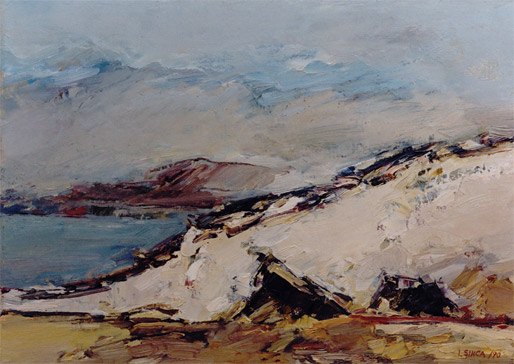
Țărm 1 / Marină 2 / Fantasma râpei albe
1990 · oil on canvas, 41 × 33 cm
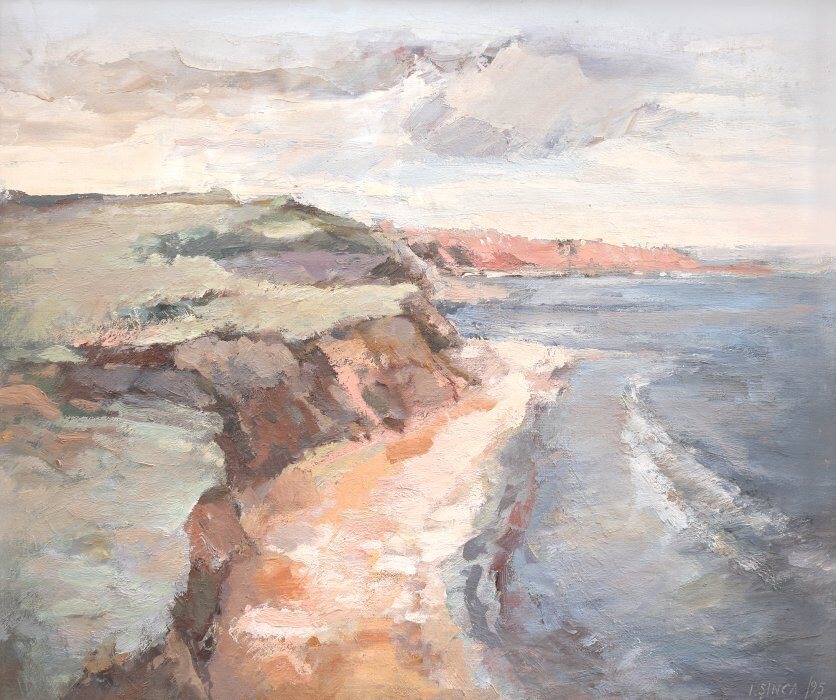
The Cliff at Vama Veche
1995 · oil on canvas · 55.5 × 46 cm
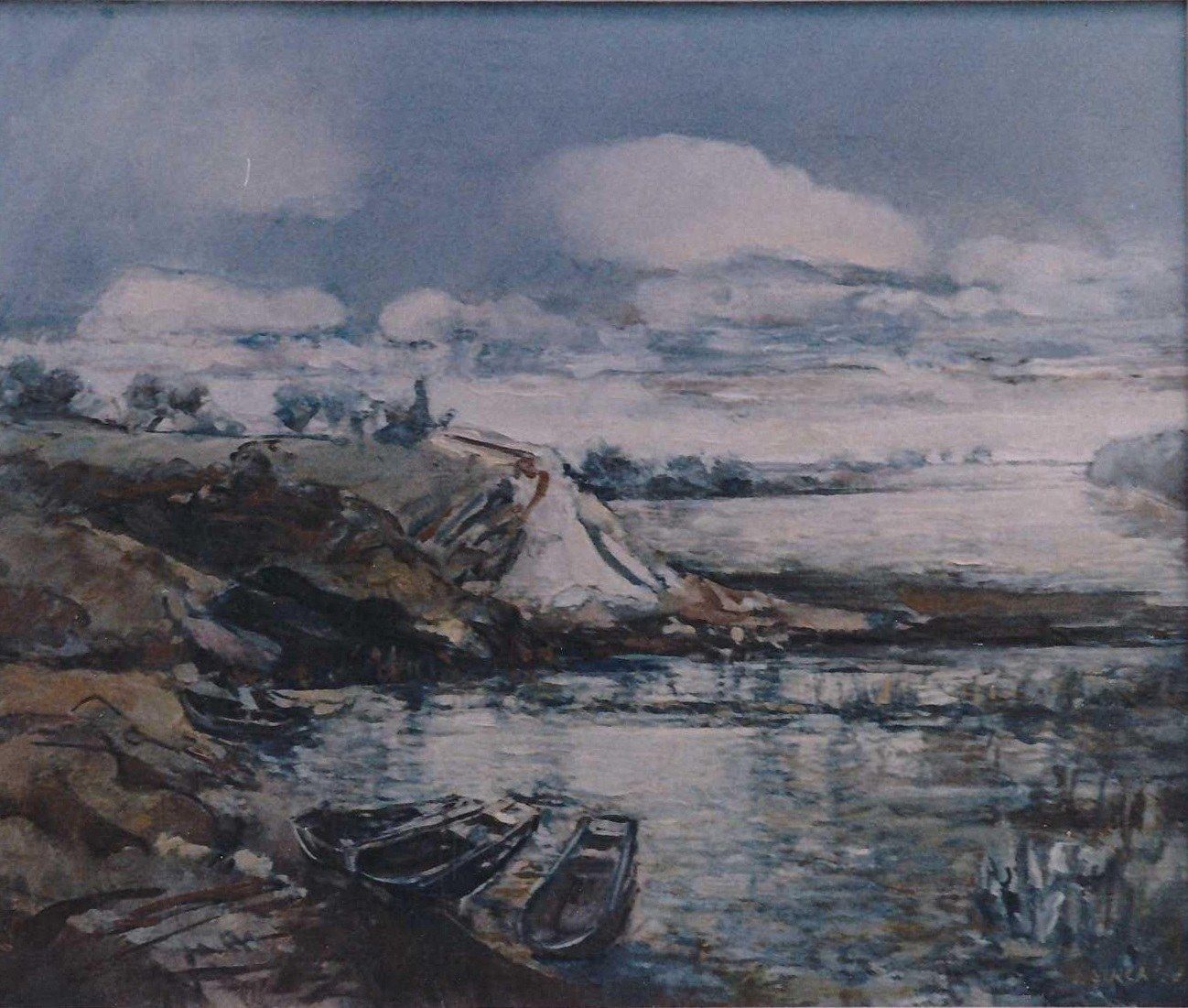
Shore 8
1998 · oil on canvas · approx. 50 × 42 cm
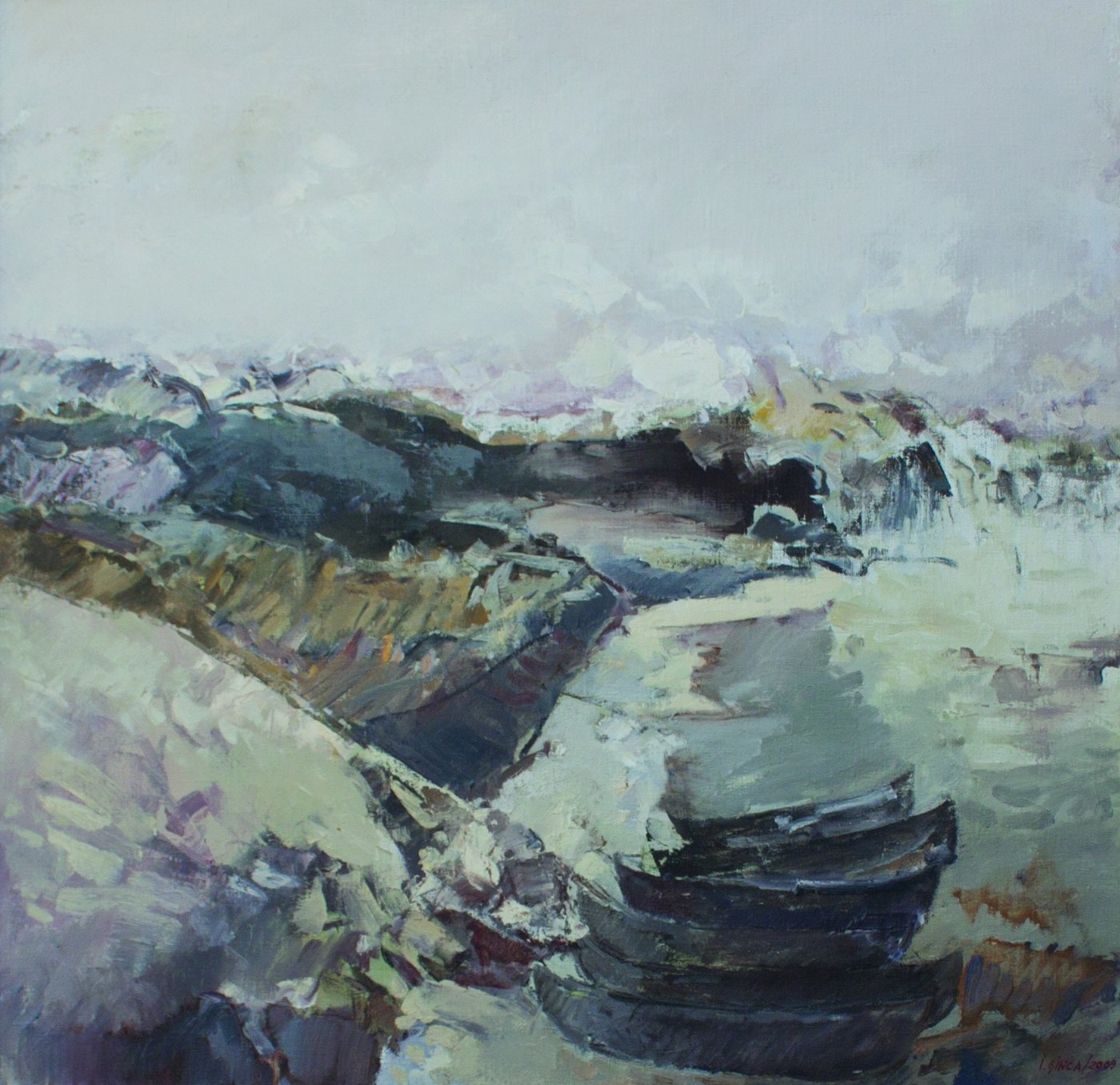
Shore 2
2009 · oil on canvas · 76 × 74 cm
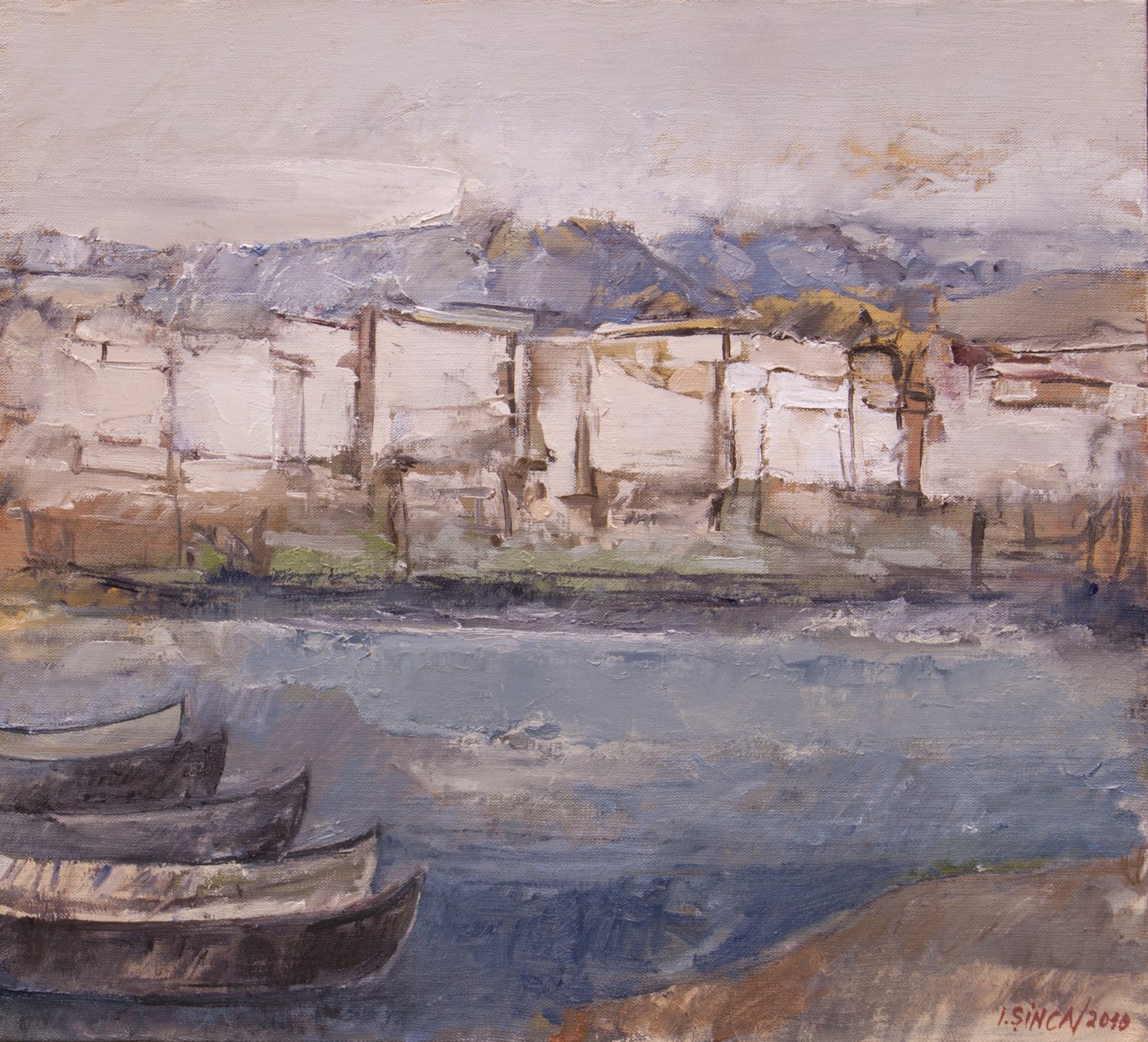
Shore 3
2010 · oil on canvas · 50 × 45 cm
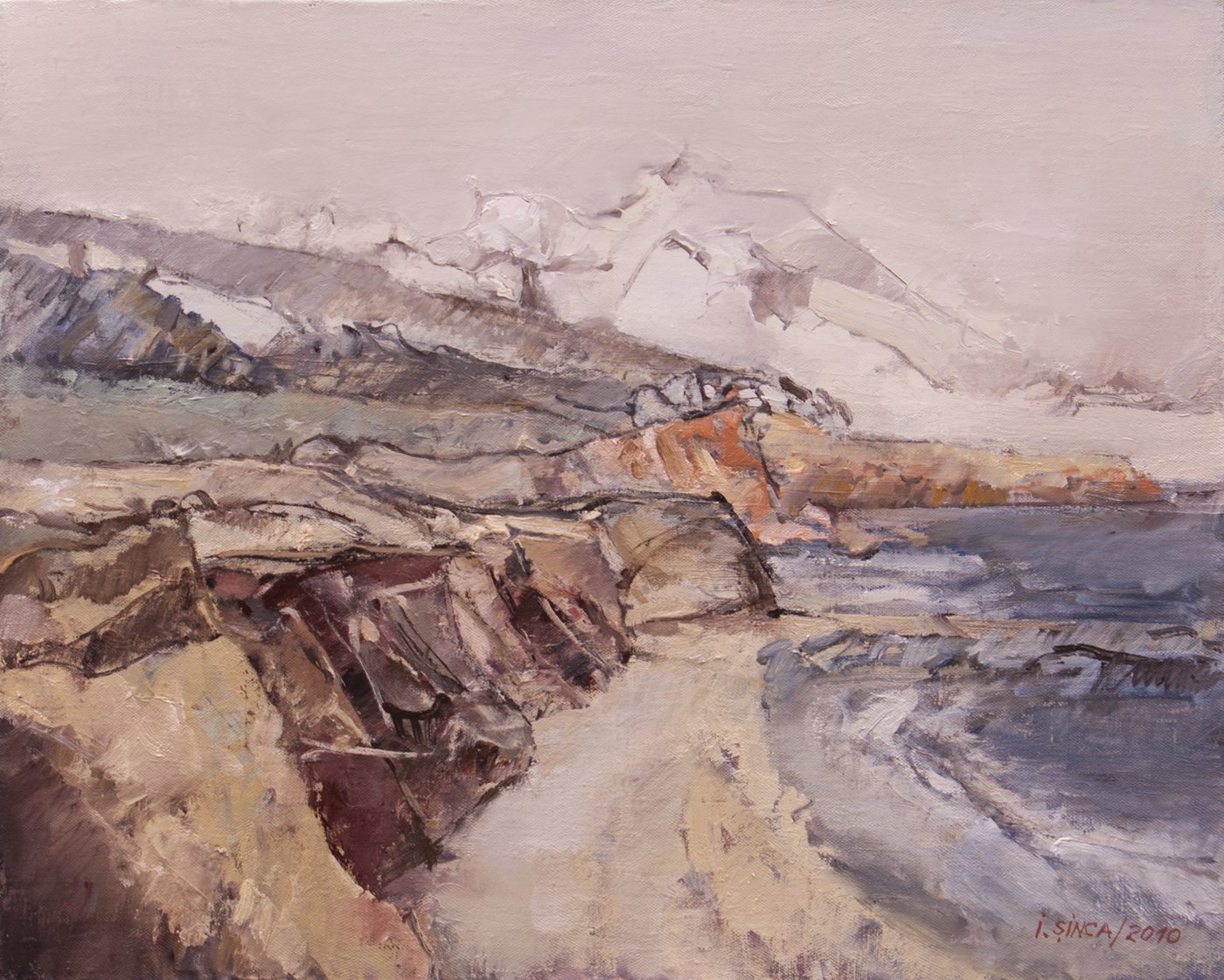
Shore 4
2010 · oil on canvas · 50 × 39 cm
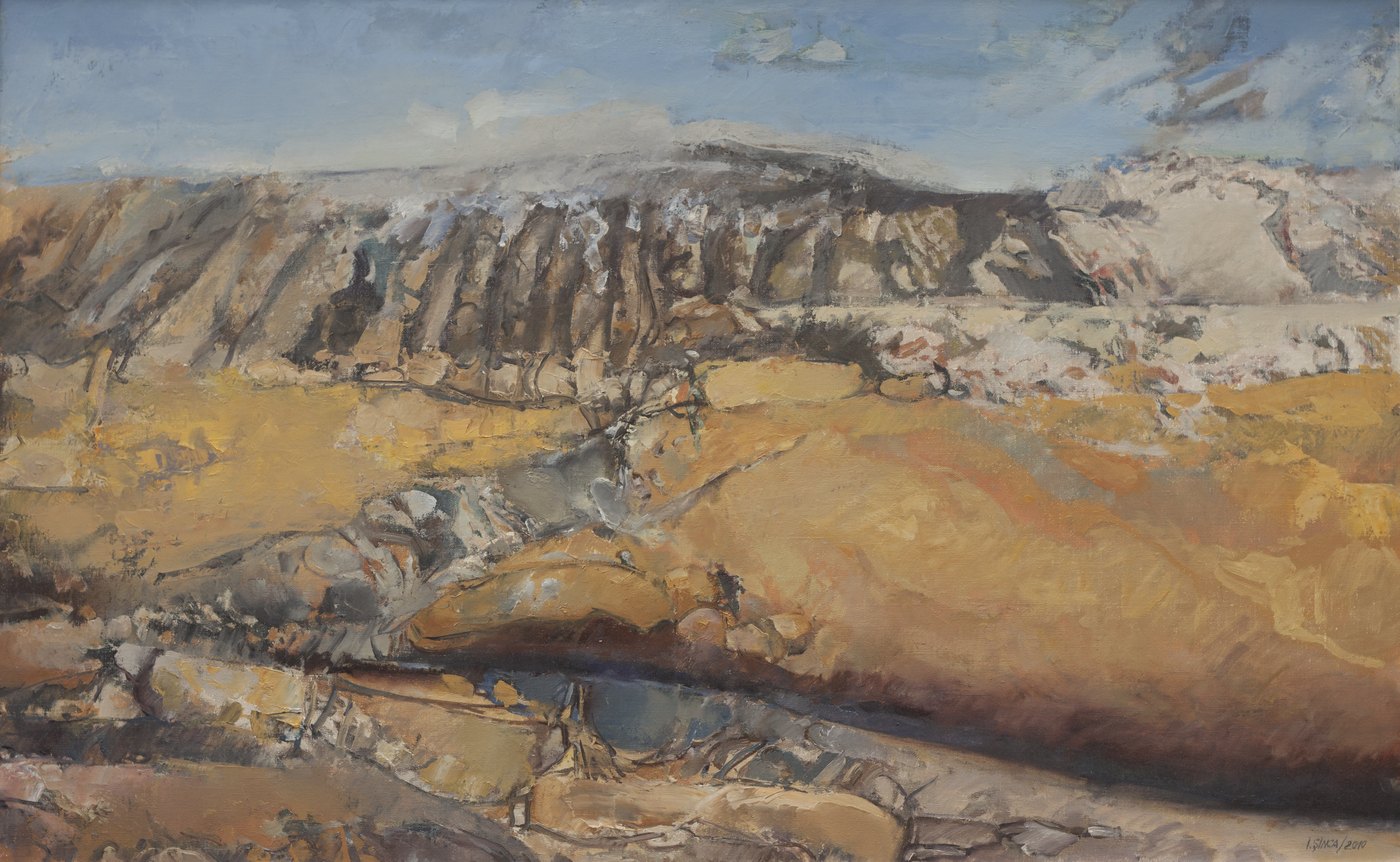
Shore 5
2010 · oil on canvas · 110 × 69 cm
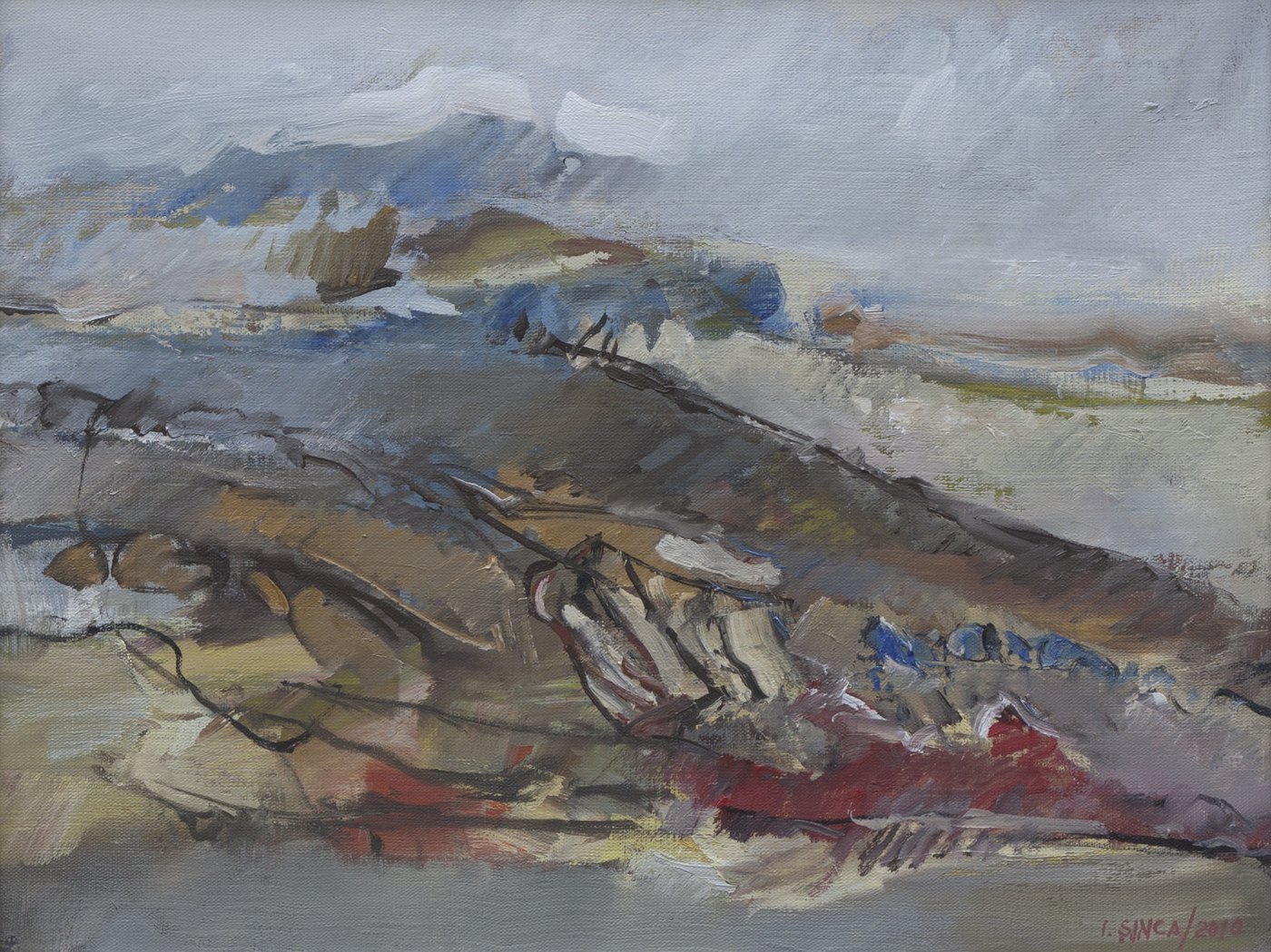
Shore 6
2010 · oil on canvas · 50 × 39 cm
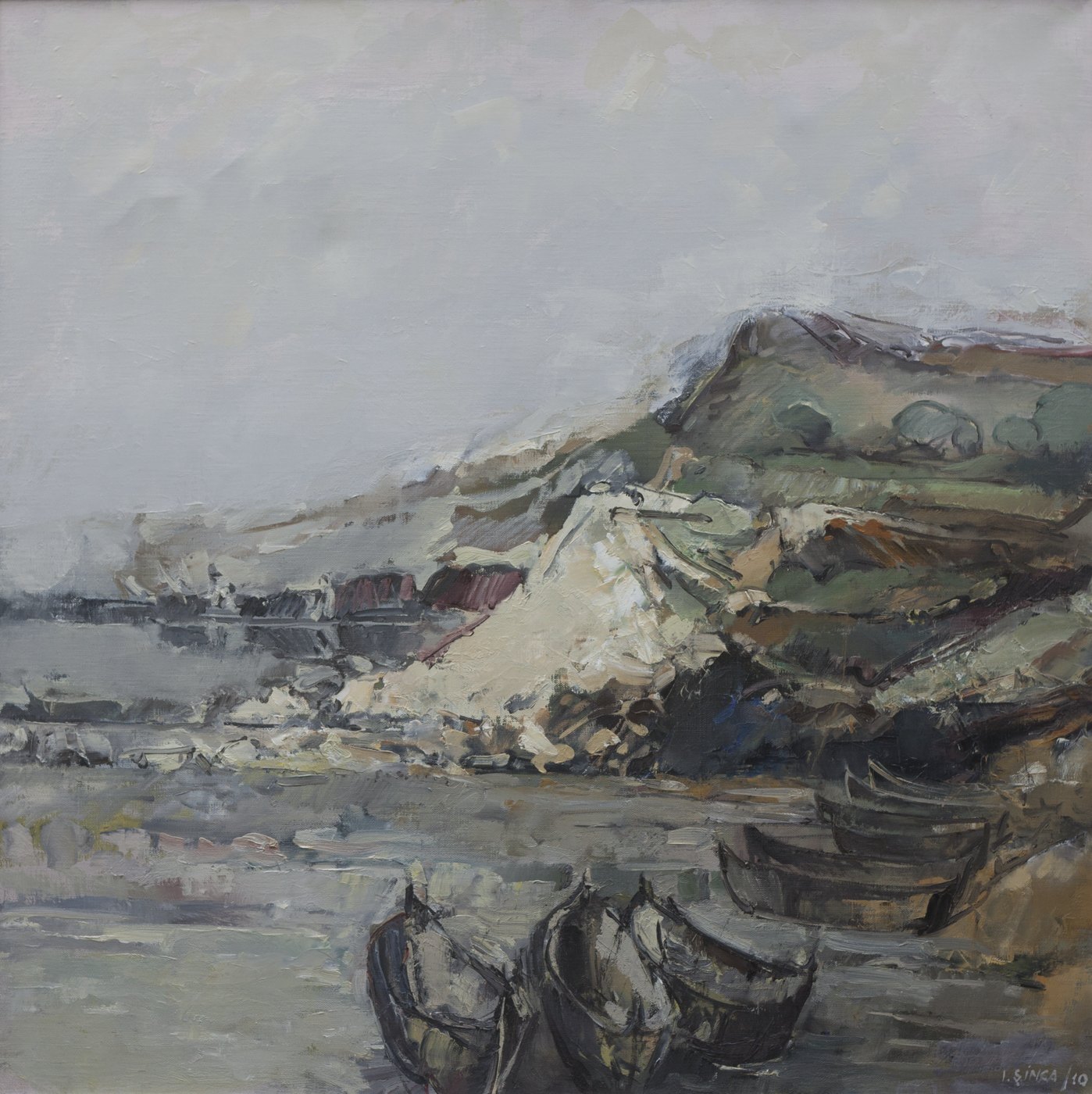
Shore 7
2010 · oil on canvas · 78 × 78 cm
Viscri
Bunești, Brașov County7 works2012—2013
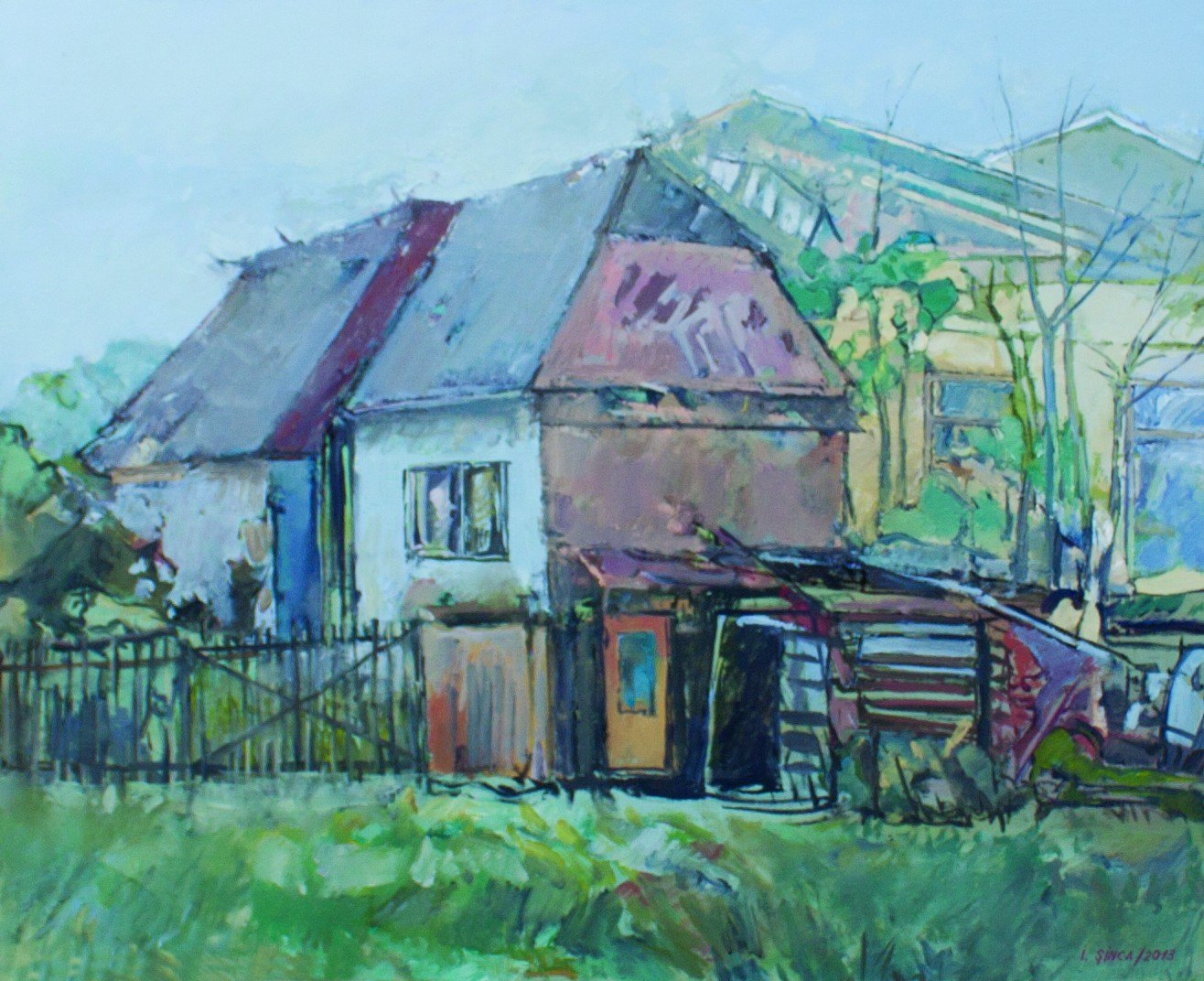
Saxon Houses 2
2012 · watercolour · 65 × 52 cm
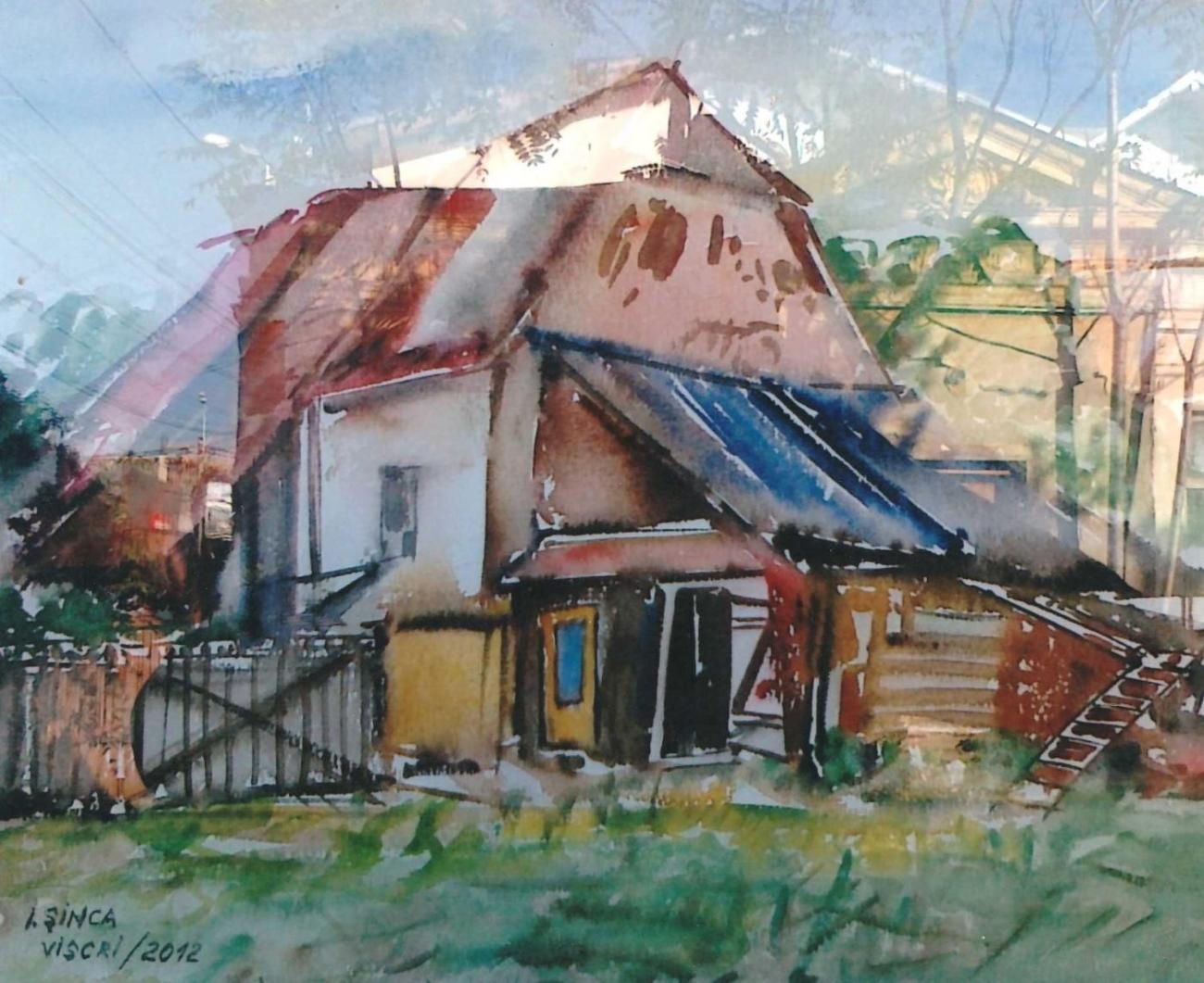
House at Viscri
2012 · watercolour · approx. 37 × 29 cm
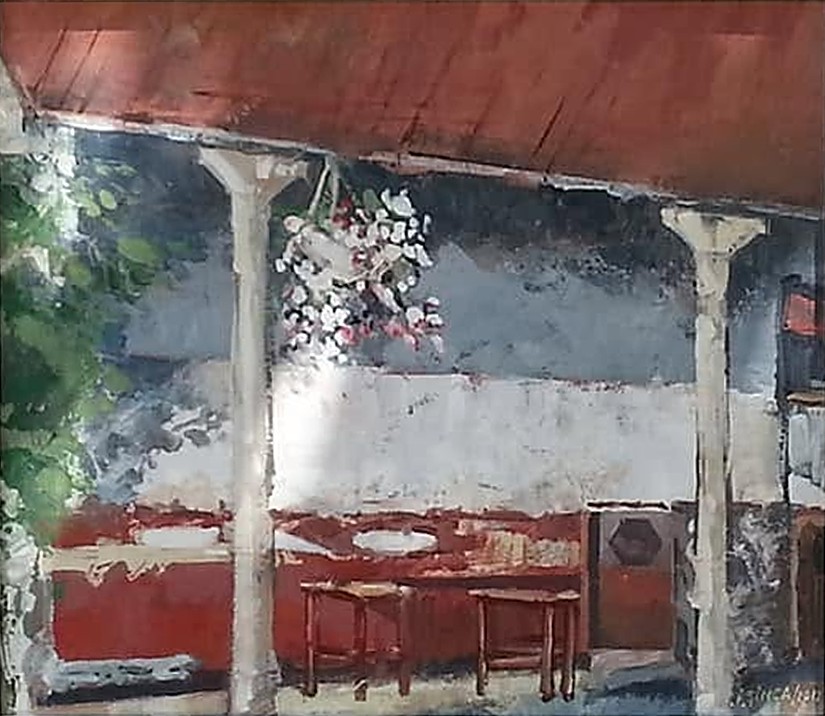
Flowers from Viscri
2012 · oil on canvas · 42.5 × 39.5 cm
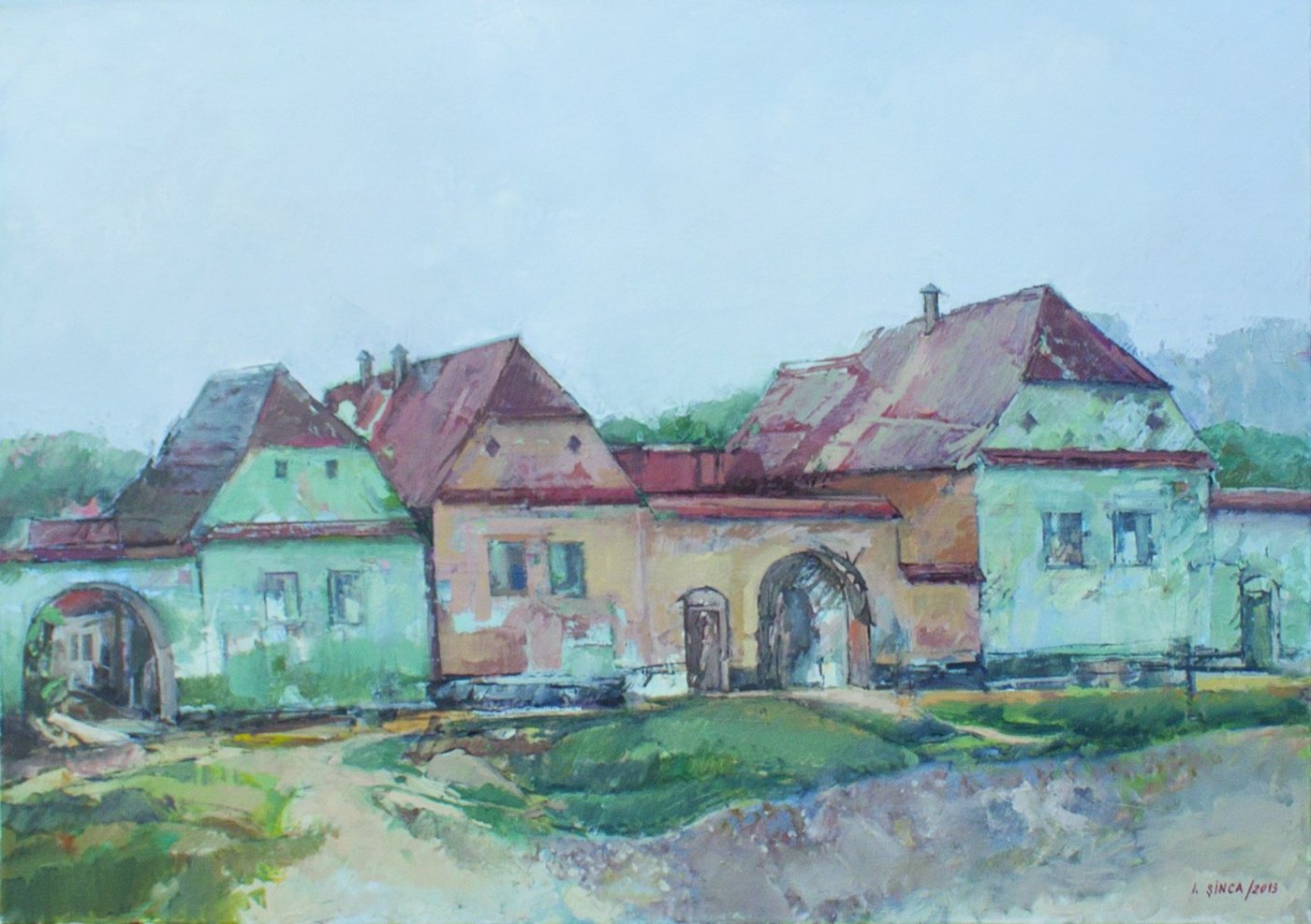
Saxon Houses 1
2013 · oil on canvas · 70 × 50 cm
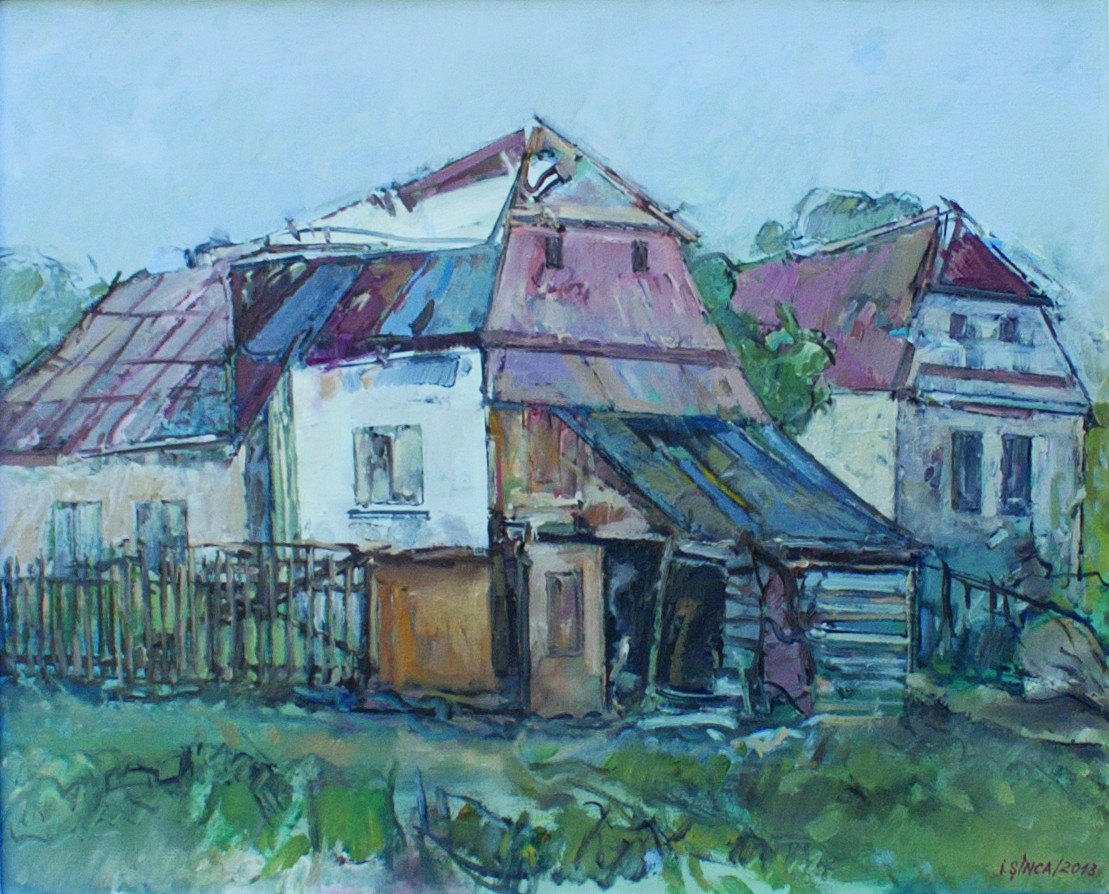
Saxon Houses 3
2013 · oil on canvas · 54 × 44 cm
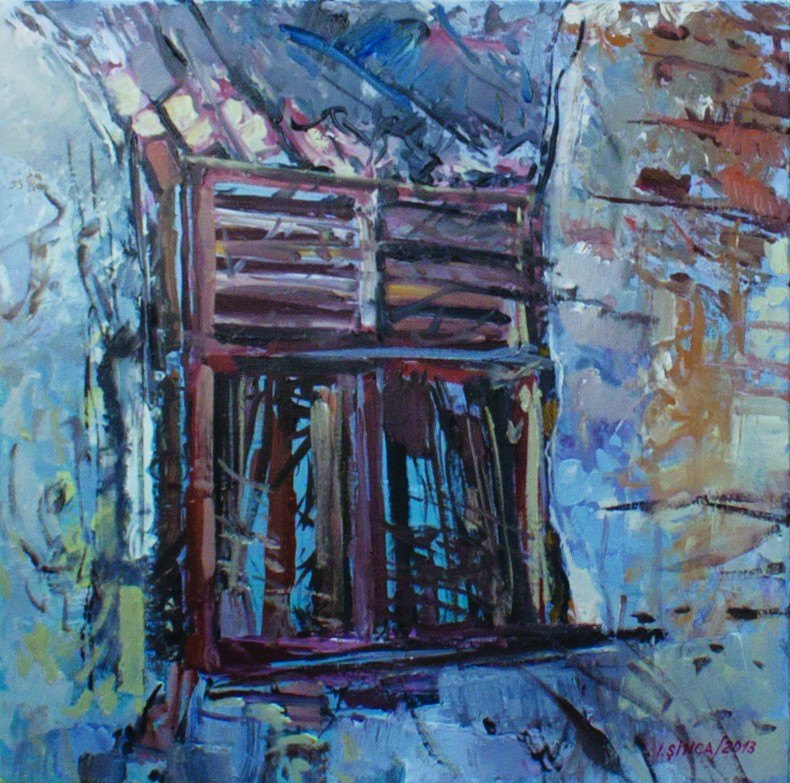
Saxon Houses 4
2013 · oil on canvas · 38 × 38 cm
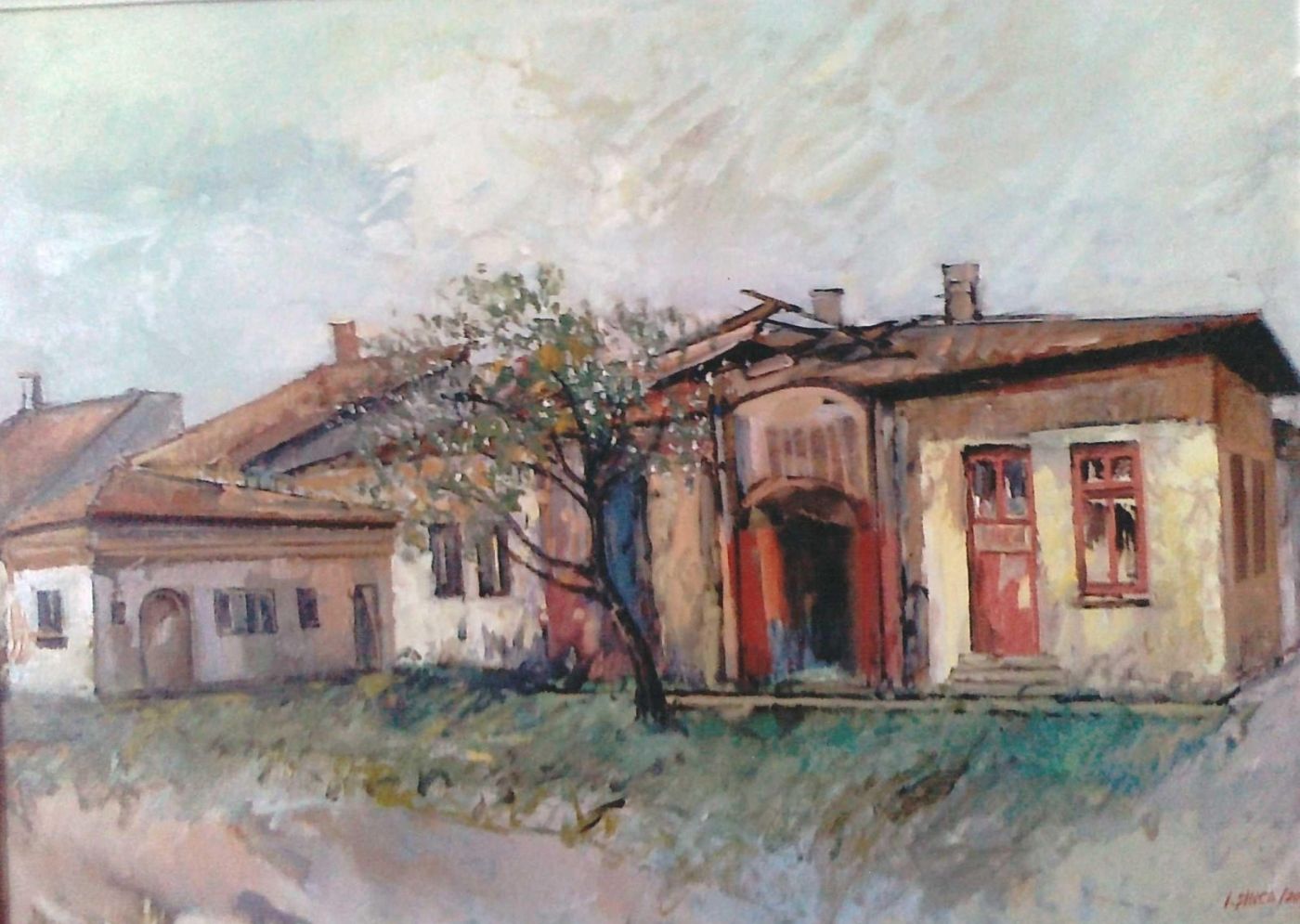
Saxon Houses at Viscri
2013 · oil on canvas · approx. 125 × 89 cm
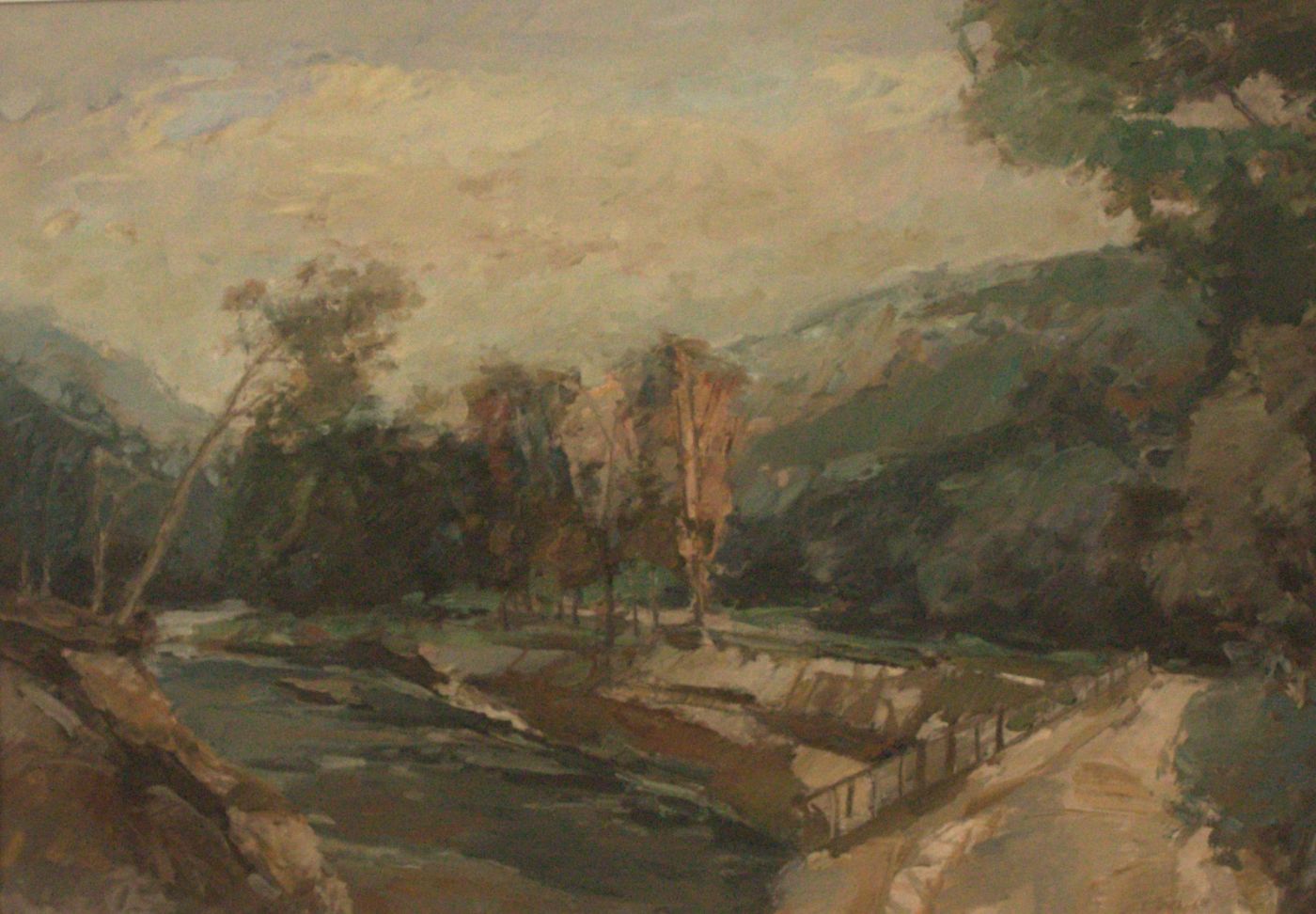
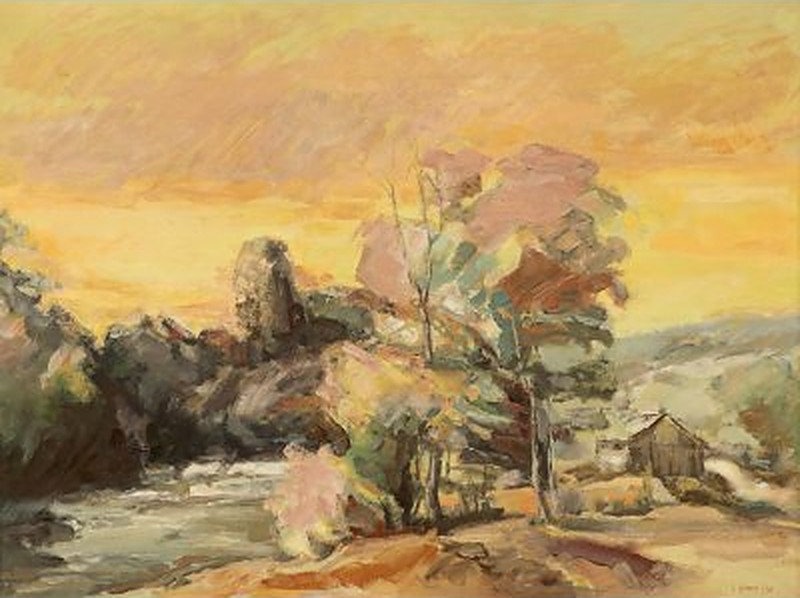
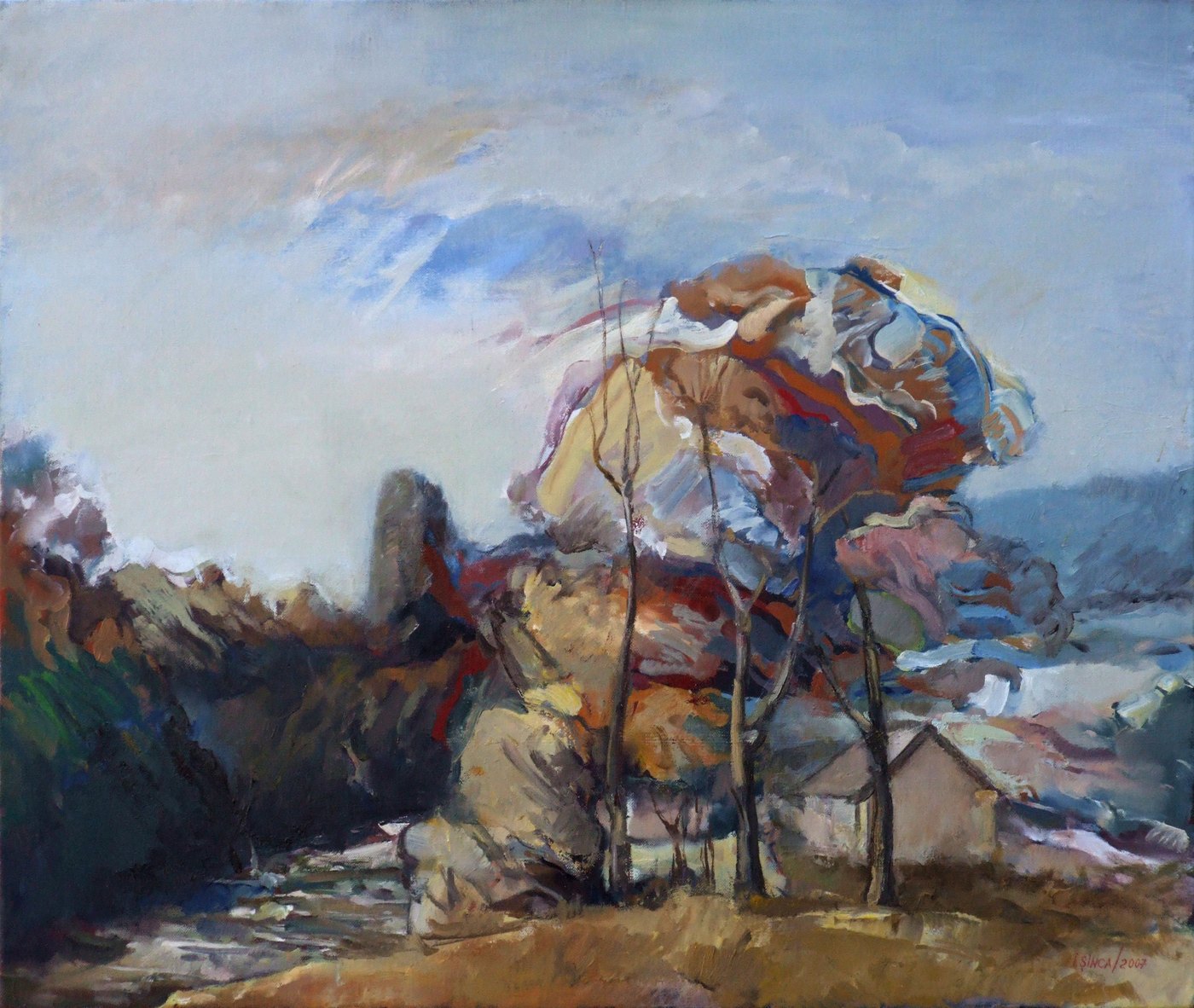
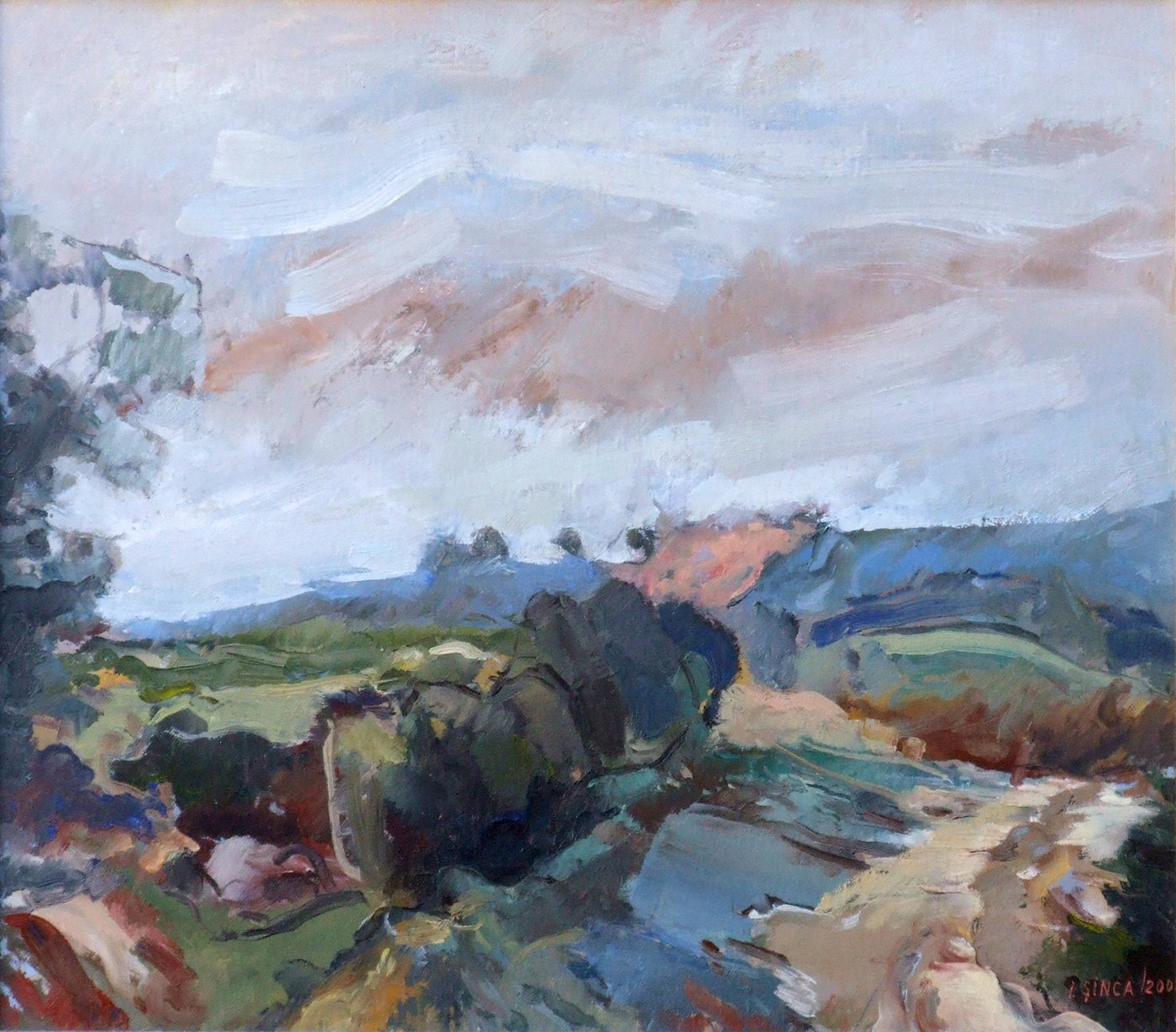
Valea Doftanei
Prahova County5 works1985—2007
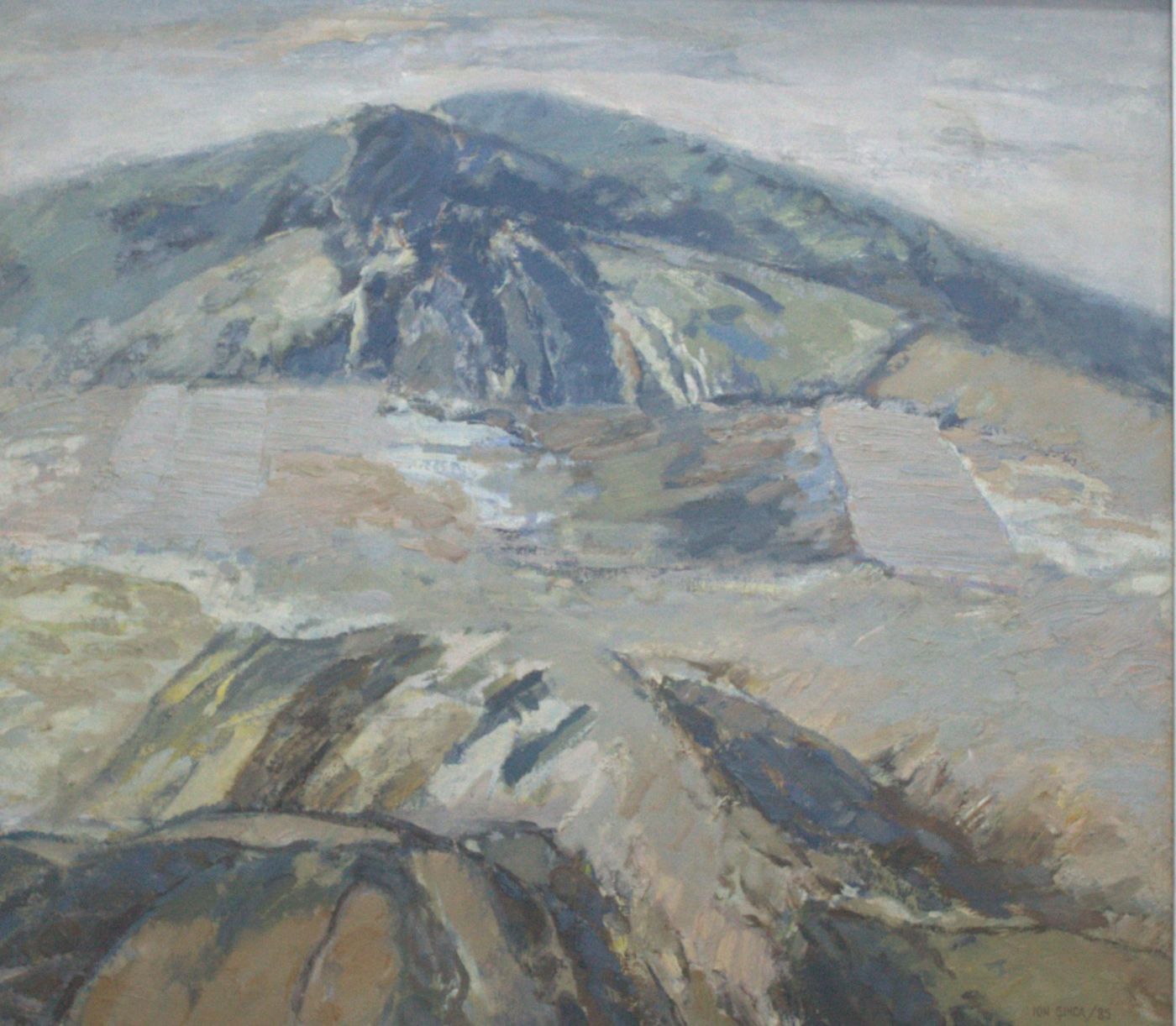
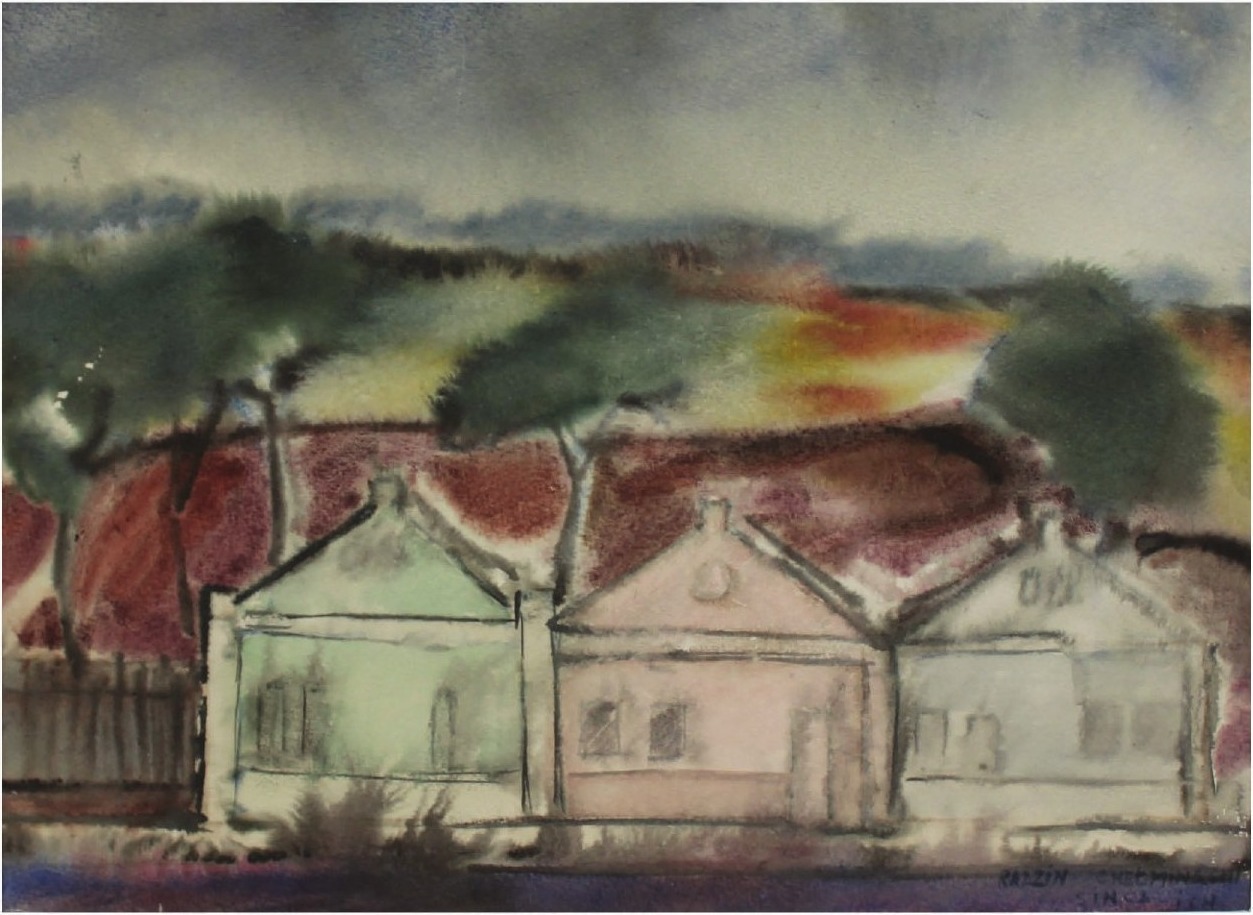
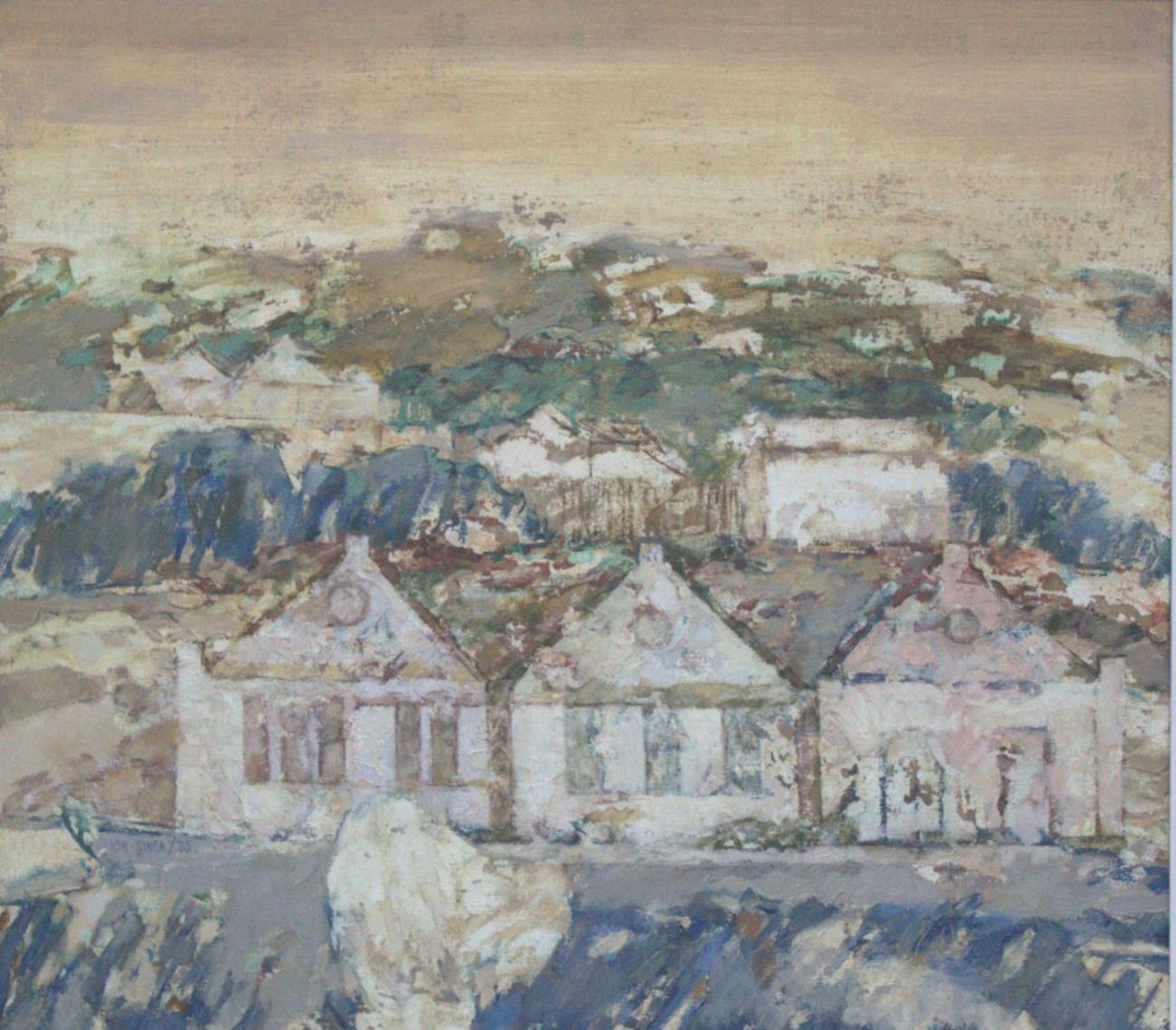
Radzyń Chełmiński
Poland2 works1984—1985
Aluniș
Prahova County1 work2007
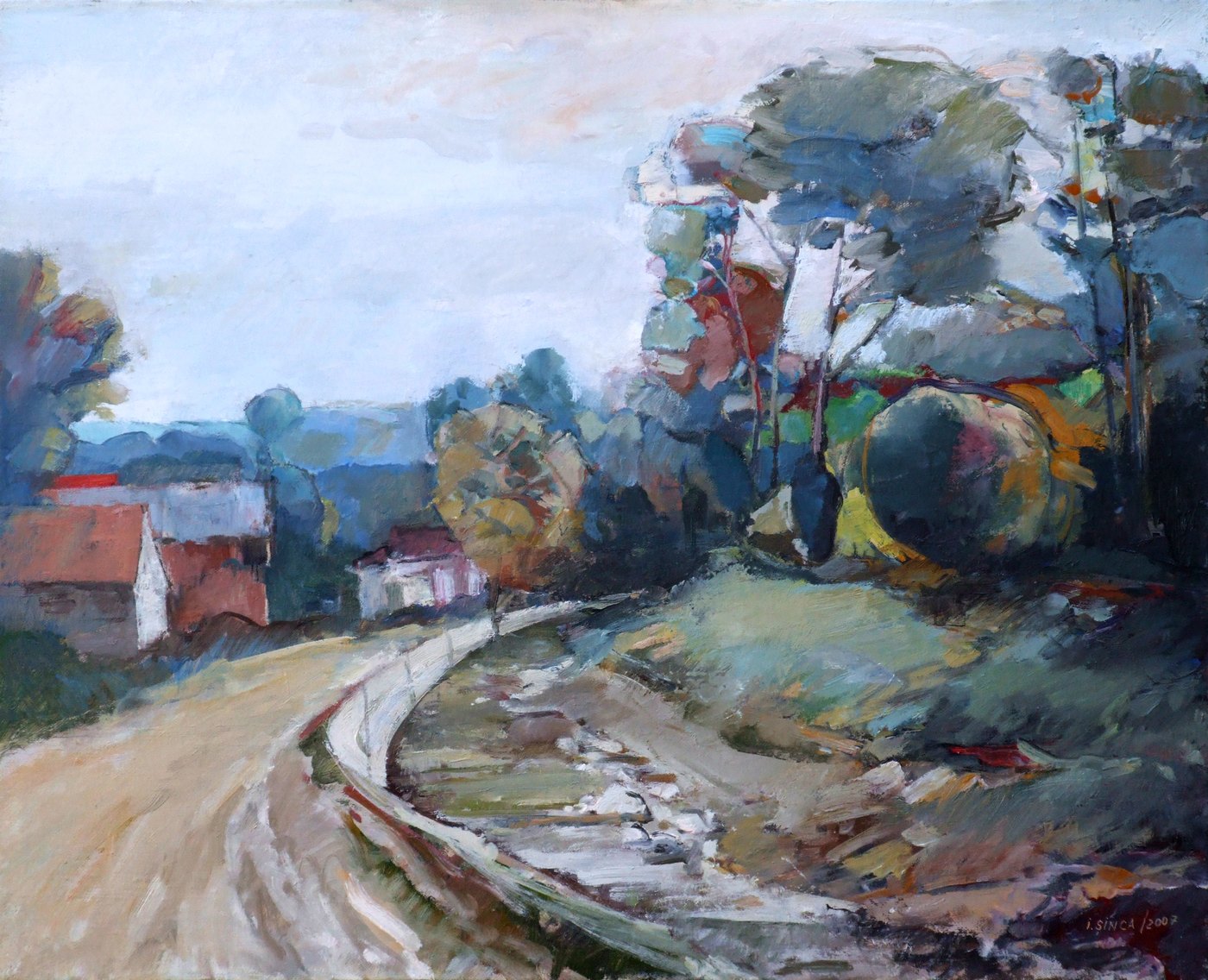
Breaza
Prahova County1 work2007
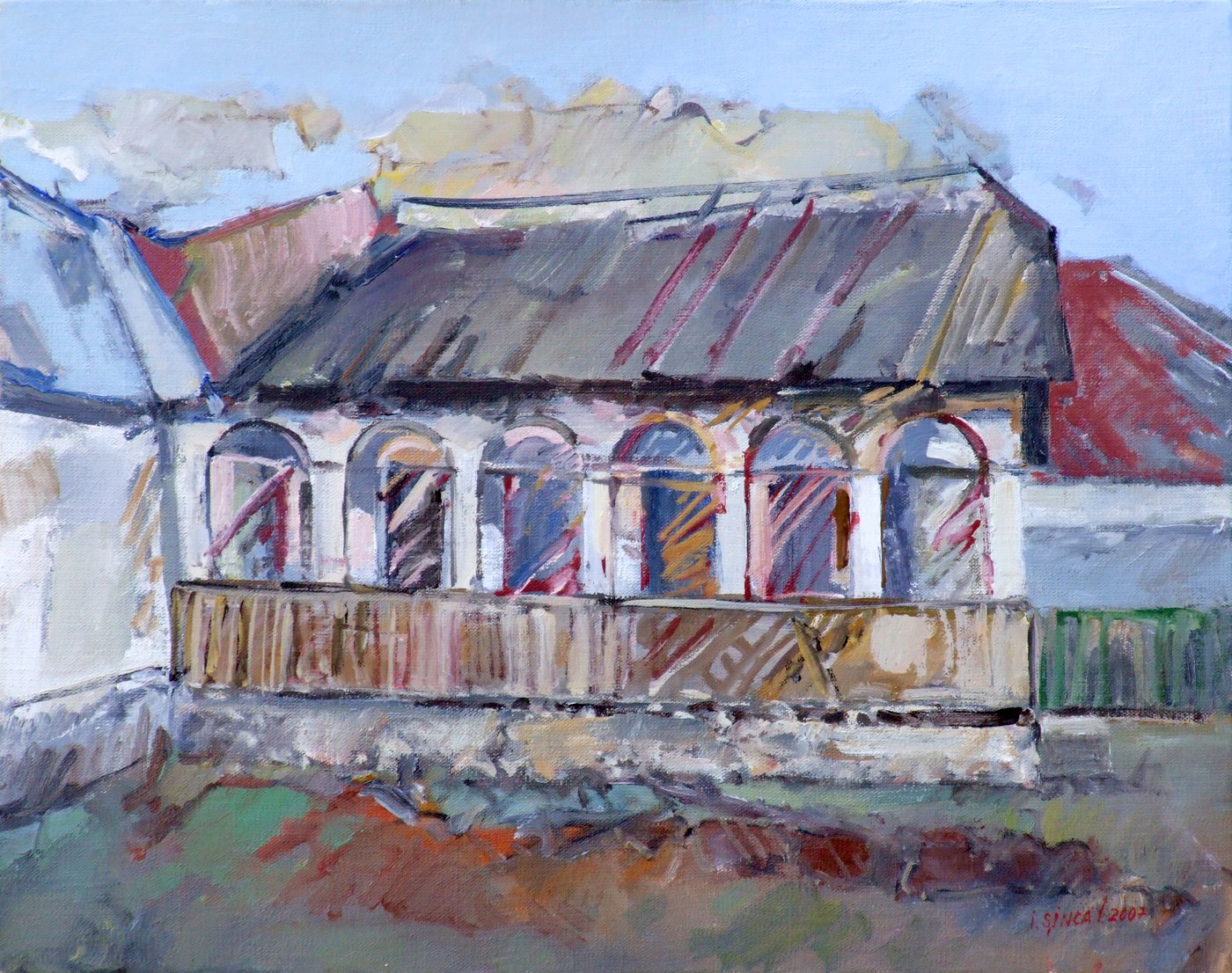
Măgurele
Prahova County1 work1994
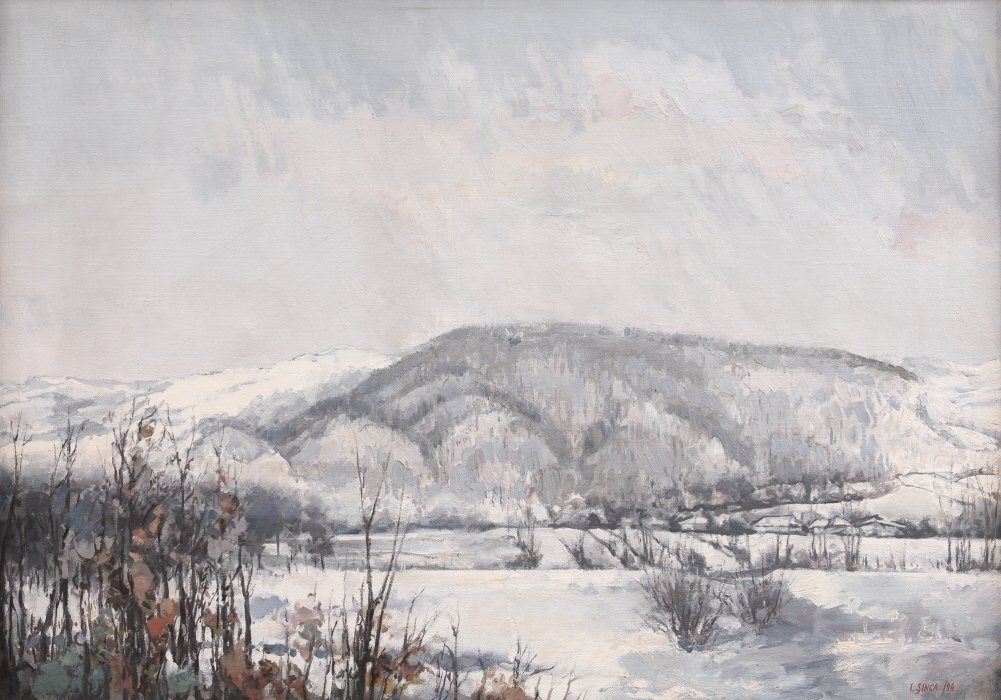
Podu Cheii
Brebu, Prahova County1 work2002
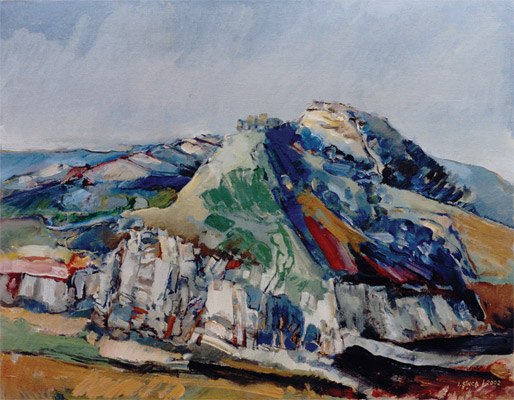
Rucăreni
Soveja, Vrancea County1 work2002
What is not on this map
133 works out of 216. For these, nowhere does it say where they were painted — not in the title, not in the exhibition catalogue, not in the family's notes. You can see a hill, a willow, a gully; you cannot see which hill. We could have placed them roughly, somewhere in Prahova, and the map would have looked richer. We did not: a map that guesses is no longer a map.
They are all gathered in one place, with a photograph and a year, on a page made so that someone can answer: Where was this painted? ↗ If you recognise a hill, a house or a fence, it takes one line from there.
Rucăreni has been found: a village in Soveja commune, in Vrancea County, some two hundred kilometres from home. It is the only place on this map that comes not from a painting trip but from a memory — the road he took through Vrancea to school as a young man. The painting is from 2002, which means he painted it almost thirty years later, from his head. The dot marks Soveja commune: the village is not listed separately in mapping databases, and the difference is under a kilometre.
Two things we assumed, told here so they can be corrected: Măgurele we placed in Prahova County, because that is where the rest of his world is, but the title does not say which Măgurele. And Strada Fortunei and the studio at Ion Creangă 15 we placed in Ploiești, where he taught for thirty years.
Every locality's coordinates were checked one by one, not written from memory. If you recognise a place in a work that has none, tell us — this part of the archive grows one work at a time. dd@m75.ro
Where was this painted? ↗ · Where the works are today ↗ · The archive of the work ↗